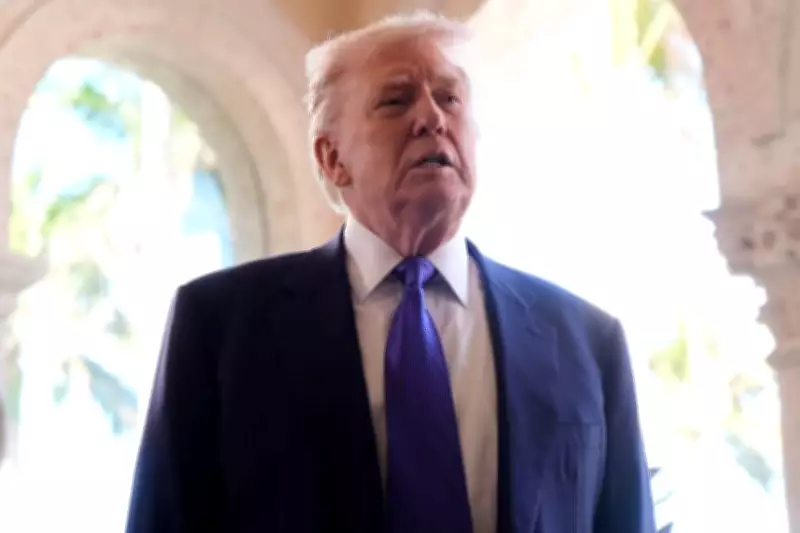
In a recent statement that has captured international attention, former United States President Donald Trump has articulated his hopes for a diplomatic resolution with Iran, while simultaneously casting doubt on the legitimacy of warnings issued by the country's Supreme Leader, Ali Khamenei, regarding potential regional warfare.
Trump's Optimistic Outlook on Iran Negotiations
Donald Trump, who served as the 45th President of the United States from 2017 to 2021, has publicly expressed a desire for the United States and Iran to forge a new agreement. This sentiment comes amidst ongoing tensions and complex geopolitical dynamics in the Middle East. Trump emphasized that a successful deal could pave the way for improved relations and stability in the region, highlighting the importance of diplomatic engagement over confrontation.
Context of US-Iran Relations Under Trump's Administration
It is crucial to recall that during Trump's presidency, the United States withdrew from the Joint Comprehensive Plan of Action (JCPOA), commonly known as the Iran nuclear deal, in 2018. This move was followed by the imposition of stringent sanctions on Iran, which significantly escalated hostilities between the two nations. Trump's current remarks suggest a potential shift in his approach, indicating a willingness to revisit negotiations, albeit with his characteristic emphasis on securing what he perceives as a favorable outcome for the United States.

Khamenei's Warning and Trump's Skepticism
Ali Khamenei, the Supreme Leader of Iran, has previously issued stern warnings about the possibility of regional war if diplomatic efforts fail. In his recent comments, Trump directly addressed these warnings, stating that the failure to reach a deal would serve as a test of Khamenei's assertions. Trump implied that if negotiations collapse and conflict ensues, it would validate Khamenei's predictions, whereas a successful agreement would demonstrate the effectiveness of diplomacy in averting such crises.
Analysis of Regional Implications
The Middle East has been a hotspot for conflicts involving various state and non-state actors, with Iran playing a pivotal role in regional politics. Khamenei's warnings are often viewed as a reflection of Iran's strategic posture, aimed at deterring external pressures. Trump's response underscores the high stakes involved in US-Iran diplomacy, where the outcomes could significantly impact not only bilateral relations but also the broader security landscape of the region. Experts note that his statements add a layer of urgency to ongoing diplomatic efforts, as the potential for miscalculation remains a concern.
Global Reactions and Future Prospects
International observers have been closely monitoring these developments, given the global implications of US-Iran relations. Countries in the region and beyond are likely assessing the potential for renewed negotiations and the risks associated with failure. Trump's hopeful tone may influence domestic and international discourse, potentially encouraging other stakeholders to engage more actively in facilitating a peaceful resolution.
As the situation evolves, the focus will remain on whether both sides can bridge their differences and achieve a durable agreement. Trump's remarks highlight the critical juncture at which US-Iran relations stand, with the path forward holding the promise of peace or the peril of heightened conflict.