Trump Signs Executive Order Targeting College Sports Governance
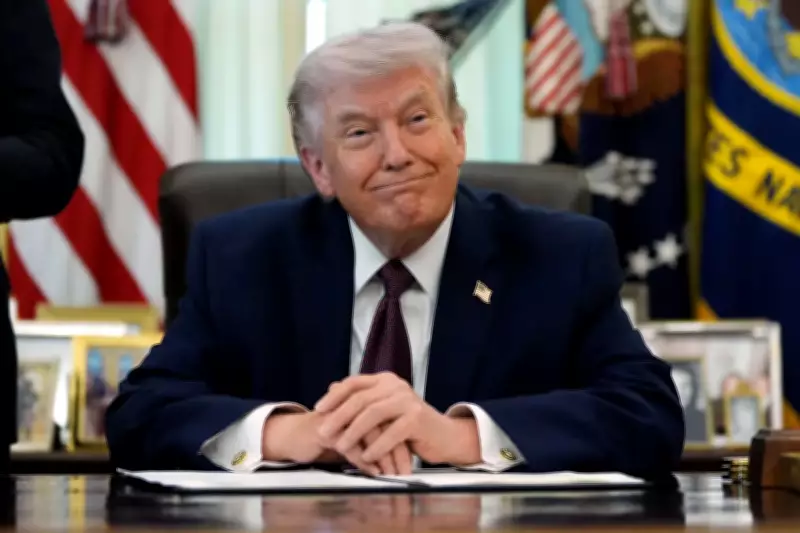
In a significant policy move, former President Donald Trump has signed an executive order that aims to fundamentally reshape key aspects of the college sports system by directly linking institutional compliance to federal funding eligibility. While immediate changes are not anticipated, the directive establishes a clear strategic direction that could have profound long-term consequences for athletic programs nationwide.
Federal Funding as Compliance Leverage
The executive order employs a familiar federal mechanism: financial pressure through funding eligibility. Trump has instructed relevant agencies to thoroughly examine whether institutions that violate evolving college sports regulations should maintain access to federal grants and contracts. This approach extends existing higher education policy models into the athletic realm, introducing substantial new financial risk for programs already grappling with escalating operational costs.
The timing of the signing was particularly notable, occurring just hours before the women's Final Four basketball tournament, thereby placing the policy announcement at the center of one of college sports' most prominent annual events. The order specifically targets three critical areas: eligibility standards, transfer policies, and the increasingly substantial financial flows within college athletics, where some elite programs now allocate more than twenty million dollars annually to support their athletes.

Multi-Agency Compliance Assessment Framework
The directive formally involves multiple federal entities in the compliance evaluation process, including the Department of Education, the Federal Trade Commission, and the Office of the Attorney General. The primary objective is not to impose immediate penalties but rather to construct a systematic framework where non-compliance carries tangible financial consequences. This represents a strategic shift toward creating institutional accountability through economic incentives rather than relying solely on voluntary adherence to existing regulations.
Structural Challenges in College Sports Governance
College sports governance operates through a fragmented structure involving the National Collegiate Athletic Association, various athletic conferences, and individual institutions. This decentralized system has historically impeded comprehensive legislative action. Trump has explicitly called upon the United States Congress to take decisive action, but lawmakers have struggled to reach consensus for over a year, even following a landmark 2.8 billion dollar settlement that substantially altered the financial architecture of college athletics.
Senator Maria Cantwell acknowledged the presidential directive, stating according to Associated Press reports, "I'm glad to know the President wants Congress to pass something," while highlighting ongoing bipartisan negotiations aimed at resolving these complex issues.
Specific Policy Proposals: Eligibility and Transfers
The executive order contains several specific policy proposals, most notably:
- A standardized five-year participation window for college athletes
- Limiting athletes to a single transfer during their collegiate career
- Allowing an additional transfer opportunity after completing a four-year degree
These proposals emerge during a period of unprecedented athlete mobility through transfer portals and increasing direct compensation from educational institutions. According to AP reporting, these developments have already generated legal challenges against the NCAA regarding eligibility restrictions. Reform advocates argue that clearer, more consistent regulations are essential for system stability.
Cody Campbell, a regent at Texas Tech University, expressed support for legislative efforts to stabilize the college sports environment through comprehensive policy action.

Anticipated Legal Challenges and Uncertainties
The executive order is expected to face substantial legal scrutiny. Trump himself previously acknowledged that such policy action would likely trigger litigation. Attorney Mit Winter explained to AP that institutions may face difficult choices between adhering to federal court rulings and complying with executive order requirements, predicting that litigation appears inevitable regardless of the path chosen.
This legal tension reflects broader judicial trends, with courts increasingly supporting athletes' rights in recent years, particularly concerning transfer freedoms and compensation structures. Any regulatory attempts to impose limitations will almost certainly face renewed legal testing.
Broader Implications Beyond Revenue Sports
The policy directive raises significant questions about the future viability of Olympic sports programs at collegiate institutions. These programs frequently depend on shared revenue models and could experience substantial impacts if funding structures undergo fundamental changes. Sarah Hirshland, CEO of the United States Olympic and Paralympic Committee, emphasized according to AP reports that the executive order signals the critical importance of sustaining investment in collegiate Olympic sports development.
Institutional Challenges: Balancing Policy and Finances
Many universities already confront severe financial pressures within their athletic departments. Major programs including Penn State and Florida State have reported substantial debts despite escalating spending on athlete support services. Simultaneously, institutions must navigate evolving federal expectations regarding compliance and governance.
NCAA President Charlie Baker emphasized that congressional action remains necessary to resolve current uncertainties within the college sports landscape. University leaders have expressed cautious concern, with University of Nebraska President Jeffrey Gold noting that while legal outcomes remain unpredictable, there exists genuine urgency in addressing the fundamental direction of collegiate athletics.
Gradual Implementation with Long-Term Consequences
The executive order does not produce immediate operational changes within college sports. Its ultimate impact will depend on several critical factors:
- How federal agencies interpret compliance requirements
- How judicial systems respond to legal challenges
- Whether Congress enacts complementary legislation
The policy direction is nevertheless clear: federal funding is being strategically positioned as a powerful leverage tool to influence college sports governance. While students and athletes may not observe immediate changes, effects will likely manifest gradually through altered program funding mechanisms, modified rule enforcement approaches, and institutional efforts to balance competitive excellence with regulatory compliance.