In a striking display of presidential priorities, Donald Trump momentarily set aside high-stakes discussions with the world's leading oil and gas executives this Friday to personally inspect the ongoing construction of the long-promised White House ballroom. The meeting, convened to strategize a massive investment in Venezuela's energy sector following the capture of its dictator, was punctuated by the President's keen interest in his pet renovation project.
A Proud Peek at the Ballroom
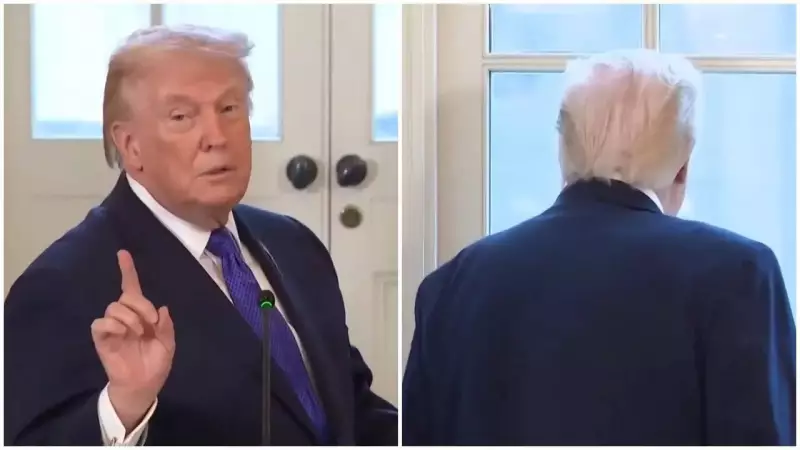
Hosting nearly two dozen top executives in the White House East Room, President Trump abruptly rose from his chair mid-sentence. He walked over to a window to peer outside at the construction site, narrating the view like a proud homeowner. "Wow. What a, what a view. This is the door to the ballroom," he remarked, inviting even the "fake news" to see the progress.
He used the moment to lament the current White House's space constraints, telling the gathered executives, "I said, 'If we had a ballroom, we'd have over a thousand people.'" Trump announced that the construction, which began in October 2025 after months of planning, is ahead of schedule and under budget. The White House confirmed the project is privately funded and costs taxpayers nothing.

The ballroom, slated for completion well before the end of Trump's term in 2029, is designed to be a state-of-the-art facility. It will feature bulletproof glass, drone-proof ceilings, and a capacity far exceeding the current largest room, which can seat only about 100 for a tight dinner. The project initially sparked controversy, with photos of the East Wing facade demolition in October 2025 drawing criticism from Democrats who accused the President of "destroying" the historic building.
The Core Agenda: A $100 Billion Venezuela Plan
The primary purpose of the high-profile gathering was to discuss a monumental investment plan for Venezuela's oil industry. This follows the successful U.S. military operation that captured the nation's dictatorial president, Nicolás Maduro, just last Saturday.
Addressing the executives from giants like Chevron, Exxon, Shell, Halliburton, and Reliance, President Trump outlined the deal. "The plan is for them to spend at least $100 billion to rebuild the capacity and the infrastructure necessary," he stated. He further revealed that Venezuela has agreed to allow the U.S. to immediately begin refining and selling up to 50 million barrels of its crude oil, an arrangement set to continue indefinitely.
The meeting was attended by key administration figures including Vice President JD Vance, Secretary of State Marco Rubio, Secretary of Energy Chris Wright, and Secretary of the Interior Doug Burgum.
Implications and Global Energy Shift
The dual focus of the event—a domestic symbol of prestige and a sweeping international energy deal—highlights the administration's multifaceted agenda. The Venezuela plan represents a significant geopolitical and economic move, aiming to rapidly revitalize the country's crippled oil production infrastructure with massive private investment.
For the global energy market, this signals a potential major shift in supply chains and investment flows, with American companies poised to lead the recovery of one of the world's largest oil reserves. Meanwhile, the White House ballroom stands as a personal legacy project for Trump, a physical embodiment of his approach to modernizing presidential traditions and hosting capabilities.
The incident underscores a unique blend of personal interest and statecraft, where the progress of a construction site momentarily shared the spotlight with a hundred-billion-dollar strategic energy initiative.