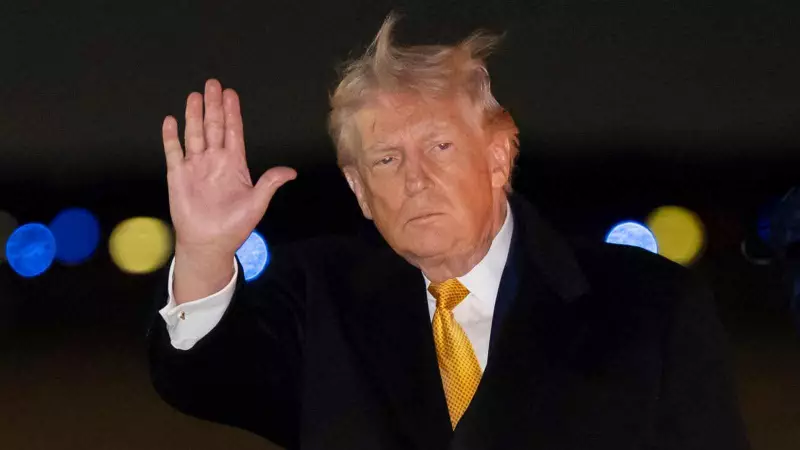
Former US President Donald Trump has issued a stark warning, pledging to authorise direct military action against powerful drug cartels operating in Mexico if he returns to the White House in the 2024 election. This aggressive proposal marks a significant escalation in his long-standing rhetoric on border security and the fight against narcotics trafficking.
A Campaign Trail Promise of Unprecedented Force
Outlining his vision for a second term, Trump declared he would treat these criminal organisations not merely as law enforcement problems but as hostile entities. He explicitly stated he would order the US military to "make appropriate use of special forces, cyber warfare, and other overt and covert actions" to dismantle cartel leadership, infrastructure, and financial networks. This plan, which he claims would be executed in partnership with the Mexican government, fundamentally challenges long-standing norms and treaties governing military action and sovereignty between the two neighbouring nations.
The announcement came during a detailed policy speech where he framed the cartels as an existential threat to American safety, blaming them for the flood of fentanyl and other deadly substances across the border. Trump cited the devastating human cost of the opioid epidemic in the United States as the primary justification for such a drastic measure.

Legal and Diplomatic Minefields Ahead
This proposed strategy immediately raises profound legal and diplomatic questions. The use of American military force on sovereign Mexican soil without explicit invitation would constitute a severe violation of international law and the United Nations Charter. Historically, Mexico has fiercely guarded its sovereignty and has consistently opposed any foreign military intervention within its borders.
Analysts point out that while the US military has conducted limited operations against cartels, such as intelligence sharing or supporting Mexican authorities, a full-scale offensive is an entirely different proposition. The 1846-1848 Mexican-American War, sparked by territorial disputes, remains a sensitive historical reference point that such a move could evoke. Furthermore, the Posse Comitatus Act generally restricts the use of the US military for domestic law enforcement, though its application on foreign soil is more complex.
Reactions and the Road to 2024
Initial reactions have been sharply divided. Supporters of Trump argue that extreme measures are necessary to combat what they see as an invasion of drugs and crime, framing it as a matter of national survival. Critics, however, warn of catastrophic consequences, including:
- A potential major diplomatic rupture with a key ally and trading partner.
- The risk of triggering widespread violence and instability in the region.
- Possible retaliation against American citizens or interests.
- Setting a dangerous global precedent for unilateral military interventions.
The Mexican government has not yet issued an official response to Trump's latest comments, but past administrations have unequivocally rejected similar suggestions. The proposal is set to become a central and contentious theme in the upcoming 2024 US presidential race, forcing a debate on the limits of border security policy and international cooperation. Whether this pledge becomes a concrete policy or remains campaign rhetoric will depend entirely on the outcome of the election.