In a striking declaration, former US President Donald Trump has reiterated his controversial stance on Greenland, stating the United States will pursue its interests on the massive Arctic island "whether they like it or not." He framed this ambition as a strategic necessity to prevent rivals like Russia or China from gaining a foothold.
Trump's Firm Stance on Greenland Acquisition
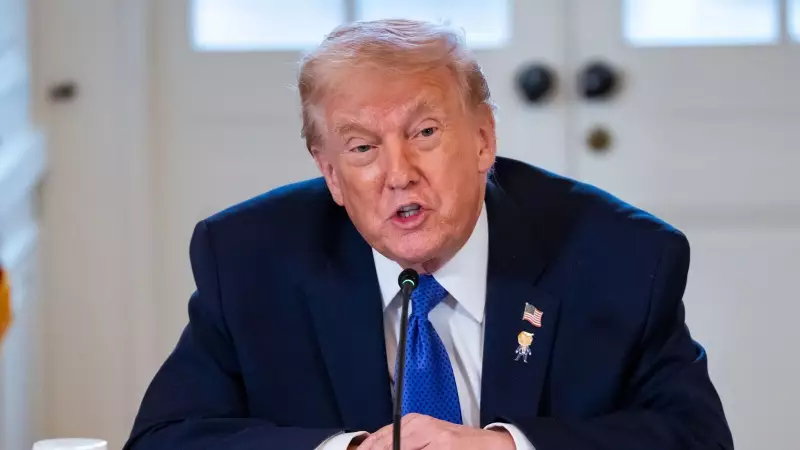
Speaking after a meeting with oil executives in the White House's East Room on Friday, Trump doubled down on his long-held desire for the US to acquire Greenland. He presented the move as a critical defensive play. "We're not going to have Russia or China as a neighbour," Trump stated emphatically, highlighting the geopolitical stakes he sees in the resource-rich Arctic region.
He outlined a two-pronged approach, favouring a negotiated deal but openly threatening a harder path if needed. "I would like to make a deal the easy way, but if not, we are going to do it the hard way... When we own it, we defend it...," Trump said, drawing a parallel to what he called the "horrible deal" made by the Obama administration with Iran.

Ownership Over Military Presence: Trump's Core Argument
When questioned on why outright ownership was necessary given the existing US military presence in Greenland, which could theoretically be expanded, Trump offered a clear distinction. He argued that true defence is rooted in sovereignty. "...one defends ownership and not leases," he asserted. This comment underscores his belief that contractual agreements like leases are insufficient compared to the permanent control conferred by ownership, especially in a region of growing global competition.
Geopolitical Implications and the Arctic Chessboard
Trump's comments, though made during his presidency, reflect ongoing and intensifying geopolitical tensions in the Arctic. The region's strategic importance has surged due to melting ice opening new shipping routes and access to untapped natural resources. Both Russia and China have significantly increased their economic and military activities in the Arctic in recent years, a development closely watched by Western powers.
By explicitly naming Russia and China as competitors who would "take over" Greenland if the US did not act, Trump positioned the potential acquisition not merely as a real estate transaction but as a vital national security imperative. His remarks continue to fuel discussions on how nations assert influence in the rapidly changing polar landscape, where the rules of engagement are still being defined.