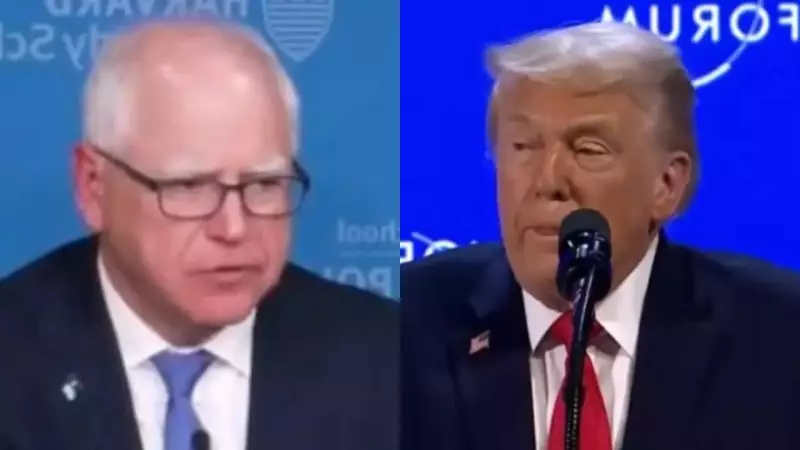
Trump and Minnesota Governor Hold Talks After Fatal Border Patrol Incident
United States President Donald Trump revealed on Monday that he received a telephone call from Minnesota Governor Tim Walz following a tragic shooting incident in south Minneapolis. The conversation occurred after Border Patrol agents fatally shot Alex Pretti during a federal immigration enforcement operation on Saturday morning along Eat Street. This marked the third shooting involving federal agents since Operation Metro Surge began and resulted in the second fatality.
Productive Dialogue Amid Growing Tensions
Amid escalating tensions with Immigration and Customs Enforcement following the deaths of Renee Good and Alex Pretti, Governor Tim Walz initiated contact with President Trump. Both leaders characterized their discussion as productive and respectful, focusing on collaborative approaches to address the situation. The call represented a significant diplomatic exchange between state and federal authorities during a period of heightened concern over immigration enforcement methods.
Trump's Social Media Response and Commitments
President Trump took to Truth Social to share details about their conversation, stating: "It was a very good call, and we, actually, seemed to be on a similar wavelength. I told Governor Walz that I would have Tom Homan call him, and that what we are looking for are any and all Criminals that they have in their possession."

He further elaborated: "The Governor, very respectfully, understood that, and I will be speaking to him in the near future. He was happy that Tom Homan was going to Minnesota, and so am I! We have had such tremendous SUCCESS in Washington, D.C., Memphis, Tennessee, and New Orleans, Louisiana, and virtually every other place that we have 'touched' and, even in Minnesota, Crime is way down, but both Governor Walz and I want to make it better!"
Walz's Office Outlines Key Discussion Points
Governor Walz's office provided additional context about the presidential conversation, emphasizing several critical outcomes. The Minnesota governor argued forcefully for impartial investigations into the Minneapolis shootings involving federal agents and advocated for reducing the number of agents operating within state boundaries.
According to official statements provided to FOX 9, President Trump agreed that the Minnesota Bureau of Criminal Apprehension should be permitted to conduct an independent investigation into Saturday's shooting. This commitment addressed a previous impasse where the Department of Homeland Security had blocked the state agency from the crime scene despite their lawful warrant.
The statement clarified: "The President agreed that he would talk to his Department of Homeland Security about ensuring the Minnesota Bureau of Criminal Apprehension is able to conduct an independent investigation, as would ordinarily be the case. The President also agreed to look into reducing the number of federal agents in Minnesota and working with the state in a more coordinated fashion on immigration enforcement regarding violent criminals."
Existing Cooperation and Federal Response
During their discussion, Governor Walz reminded President Trump about Minnesota's existing cooperation with federal immigration authorities. The Minnesota Department of Corrections already honors federal detainers by notifying Immigration and Customs Enforcement whenever a non-citizen enters state custody. Walz's office emphasized there has not been a single documented instance where the department released someone from state prison without facilitating a smooth custody transfer to federal authorities.
Meanwhile, the Trump administration announced through social media channels that Border Czar Tom Homan would be dispatched to Minnesota to oversee Immigration and Customs Enforcement operations. This deployment represents a direct federal response to the ongoing situation and demonstrates the administration's commitment to addressing concerns raised by state leadership.
The collaborative approach emerging from this high-level discussion suggests both parties recognize the need for balanced enforcement measures while ensuring proper investigative protocols and intergovernmental coordination.