Trump Doubles Down on Iran Victory Claims, Issues Warning to China
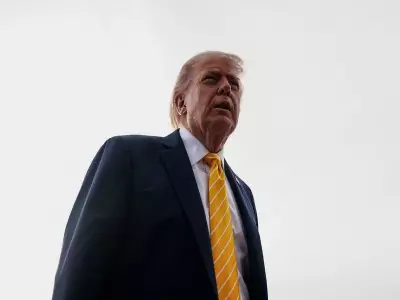
Former US President Donald Trump early Sunday reiterated his rhetoric of triumph against Iran, asserting that the United States has effectively dismantled Tehran's military infrastructure. In a bold statement, he cautioned China of severe repercussions should it be discovered supplying arms to the Islamic Republic, which is led by Mojtaba Khamenei.
Trump's Assertions on Iran's Military Capabilities
Trump declared, "They have no navy, radar, or air force. Their leaders are all dead... For many years he ruled; he's gone. With all of that, let's see what happens — but from my standpoint, I don't care." This comment underscores his belief in a decisive US military victory over Iran, framing it as a settled matter regardless of ongoing diplomatic efforts.
Warning to China Over Weapons Shipments
Addressing reports of China potentially shipping weapons to Iran, Trump issued a stark warning: "If China does that, China is going to have big problems." This statement highlights escalating tensions and the geopolitical stakes involved, as the US seeks to curb Iran's military resurgence through international pressure.

Ongoing US-Iran Peace Talks in Islamabad
Peace negotiations between the US and Iran are currently underway in Islamabad, with Trump's deputy JD Vance leading the American delegation alongside Iranian representatives. Trump commented on the talks, saying, "They've been meeting for many hours... We will see what happens. Regardless of that, we win... Maybe they make a deal; maybe they don't. It doesn't matter. From the standpoint of America, we win."
He further elaborated on economic gains, noting, "The boats are sailing up and heading out to our country. We are loading the huge tankers with oil and gas..." This suggests a focus on resource acquisition as part of the perceived victory.
Response on Iranian Assets and Negotiation Stance
When asked by ANI about the potential release of Iranian assets, Trump, referred to as the MAGA supremo, responded, "We will see what happens. We are in a deep negotiation with Iran, we win regardless. We have defeated them militarily... We are sweeping the Strait... Whether we make a deal or not, it makes no difference to me — and the reason is because we've won." He also noted, "We were not helped by Nato," emphasizing a unilateral approach to the conflict.
Background on US-Iran Talks
Meanwhile, the United States and Iran have initiated direct negotiations after over a month of full-scale military aggression. Pakistan is mediating efforts to defuse the crisis, which had led Tehran to close the Strait of Hormuz, disrupting global trade. The talks in Islamabad began on Saturday, following the announcement of a fragile two-week ceasefire, marking a rare face-to-face engagement between the two sides.
The US delegation is led by JD Vance, accompanied by special envoy Steve Witkoff and Jared Kushner. On the Iranian side, the team is headed by parliament speaker Mohammad Bagher Qalibaf and foreign minister Abbas Araghchi. These discussions represent a critical juncture in resolving tensions that have impacted international stability and economic flows.