Trump's Historical Misstatement at Davos Sparks Debate
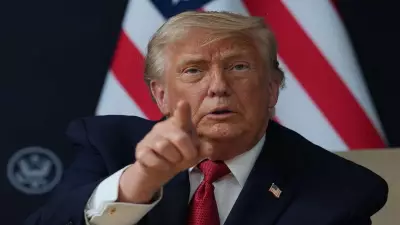
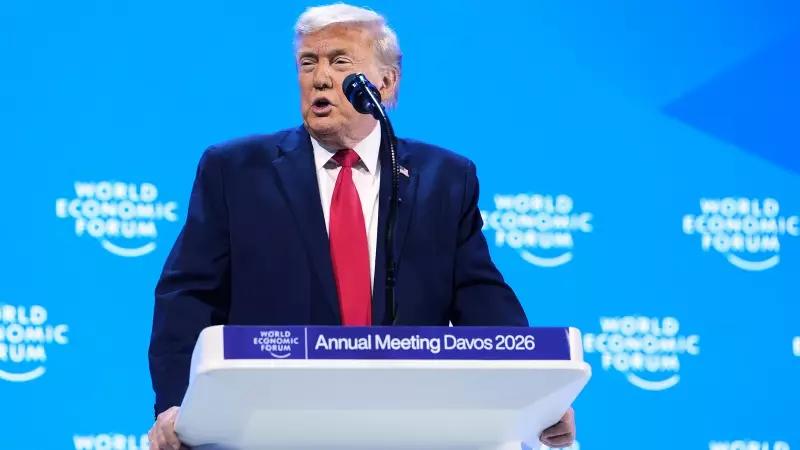
During his hour-long address at the World Economic Forum 2026 in Davos, former US President Donald Trump made a controversial historical assertion that has drawn criticism from historians and military experts. In his wide-ranging speech that touched on familiar themes including the Biden administration, renewable energy policies, and media criticism, Trump claimed: "Without us, right now, you'd all be speaking German and a little Japanese, perhaps."
The Greenland Controversy and Historical Context
Trump's remarks came during a segment where he criticized Denmark as "ungrateful" for refusing to relinquish Greenland, a territory he expressed interest in acquiring. He referenced World War II history, stating that Denmark fell to Germany within six hours and was unable to defend Greenland, compelling the United States to send forces to hold the territory.
While it's true that Denmark surrendered to Nazi Germany on April 9, 1940, during Operation Weserübung, historical records show that the United States didn't enter World War II until December 1941. Furthermore, Nazi forces in Denmark ultimately surrendered to British Field Marshal Bernard Montgomery at war's end.

Greenland's Complex Historical Status
The history of Greenland reveals a more nuanced story than Trump's characterization:
- Denmark-Norway began colonizing Greenland in 1721 following missionary efforts
- Denmark retained control after the Napoleonic Wars through the Treaty of Kiel (1814)
- The US confirmed Denmark's rights to Greenland in 1916-17 as part of the Danish West Indies purchase
- During WWII, the US signed the Greenland Treaty with Danish Ambassador Henrik Kauffmann in April 1941
- The treaty granted the US authority to establish military bases but didn't transfer ownership
Greenland remained under Danish sovereignty throughout this period, eventually achieving Home Rule in 1979 and self-rule in 2009.
The Soviet Union's Decisive Role in WWII
Historical evidence strongly contradicts Trump's assertion about American primacy in defeating Nazi Germany. Military historians emphasize that the Soviet Union played the decisive role in stopping the Nazi advance and ultimately defeating Germany.
Eastern Front: The Main Theater of War
By June 1944, after more than three years of intense fighting, Soviet forces had achieved several critical milestones:
- Halting the Nazi Wehrmacht's advance across Eastern Europe
- Stabilizing the front lines after initial setbacks
- Launching major counter-offensives that pushed German forces back
- Tying down and significantly weakening the bulk of German military resources
The Eastern Front accounted for approximately 75-80 percent of German military casualties throughout the war, demonstrating where the primary conflict occurred.
Comparative Sacrifices and Contributions
The human cost of the war reveals stark differences in national contributions:
- The Soviet Union suffered approximately 26-27 million deaths, including 8.7 to 10.7 million military personnel
- The United States lost about 400,000 military personnel during the entire conflict
- Key Soviet victories at Moscow (1941), Stalingrad (1942-43), and Kursk (1943) severely eroded German military capacity
While American industrial production and military support through Lend-Lease were significant contributions, the ground war against Nazi Germany was primarily fought and won by Soviet forces.
Allied Strategy and Timing
Historical records indicate that Soviet leader Joseph Stalin had been urging Western allies to open a second front in France since 1942. The delay until Operation Overlord in June 1944 led to suspicions that the Allies were allowing Germany and the Soviet Union to weaken each other.
Military analysts note that Allied campaigns in North Africa and Italy, while important, didn't draw significant German forces away from the Eastern Front. The scale of these operations was insufficient to relieve pressure on Soviet forces fighting the majority of German divisions.

Historical Perspective and Modern Implications
Trump's remarks reflect a broader pattern of historical simplification that has concerned experts. Similar statements were made in 2025 by White House Press Secretary Karoline Leavitt regarding France potentially "speaking German" without American intervention.
Historical accuracy matters because it shapes our understanding of international relations, alliance dynamics, and the true costs of global conflicts. Recognizing the Soviet Union's immense sacrifice and military contribution doesn't diminish American efforts but provides a more complete picture of World War II's complex reality.
The United Kingdom, while serving as a crucial staging ground for Operation Overlord, was economically and militarily exhausted by 1944. The combined efforts of all Allied powers were necessary for victory, but the evidence clearly shows that the Soviet Union bore the heaviest burden in defeating Nazi Germany on the European continent.