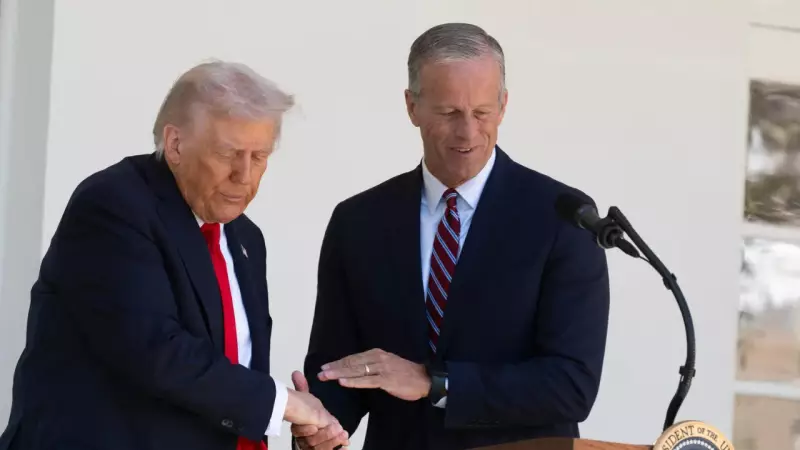
Former US President Donald Trump is ramping up pressure on Senate Republicans to eliminate the legislative filibuster, a move that is creating significant internal tensions within the party as the critical 2024 election year approaches.
GOP Resistance Meets Presidential Pressure
Despite Trump's repeated demands to scrap the 60-vote threshold to ease legislative gridlock, most Senate Republicans remain firmly resistant. The party, which has largely backed Trump on other major priorities, sees the filibuster as a cornerstone of Senate tradition and a key tool for the minority party. Senator Todd Young candidly admitted the numbers are not there to support Trump's push, stating he doesn't believe they are close to having the necessary votes.
This resistance is not new. Last month, during the record-long government shutdown, Majority Leader John Thune and most Senate Republicans rejected Trump's call to end the filibuster. Advisers note this issue is becoming a key leadership test for Thune, who must balance Trump's demands with the Senate's longstanding norms.

A Shifting Stance for Some Senators
While less than a quarter of Senate Republicans have shown any openness to ending or modifying the rule, a few notable figures have shifted their stance. Senator Ron Johnson reversed his position during the shutdown, publicly stating that Trump was right. Another, Senator John Cornyn, who is facing a primary challenge, has said he is open to reconsidering Senate traditions.
Trump's allies argue there is urgency to act now, fearing Democrats will scrap the rule if they regain power. Senator Tommy Tuberville suggested it's "just a matter of time" before Democrats eliminate it when they next hold the majority. Framing the push as a need to deliver results, Senator Josh Hawley said Trump is "the one who's right now pushing Congress to act."
An Enduring Disagreement Within a Working Relationship
Despite the clear disagreement on this fundamental procedural issue, both Trump and the Senate GOP leadership have maintained a working relationship. Trump last month called senators who rejected his push "very smart people" and has continued to praise Thune. A source familiar with Senate leadership described the filibuster fight as not being a "relationship dealbreaker."
This is not Trump's first attempt. During his first term, then-Majority Leader Mitch McConnell also declined to consider the move due to insufficient support. The debate resurfaces as Congress faces multiple deadlines early next year, including funding the government by January 30, addressing health costs, and completing the farm bill.
A White House official, when asked if Trump will continue pressing the issue, pointed to his Truth Social post. In it, Trump warned that Democrats would pack the Supreme Court "unless we TERMINATE THE FILIBUSTER, which will lead to an easy WIN of the Midterms, and an even easier WIN in the Presidential Election of 2028."
Nevertheless, several GOP senators remain adamant that the rule is staying. Senator John Kennedy dismissed the debate, stating plainly, "It's a moot issue. We're just not going to get rid of the filibuster." As the election year intensifies, this internal GOP struggle between presidential influence and institutional tradition is set to continue.