Trump Announces Tariffs on European Allies Over Greenland Ambitions
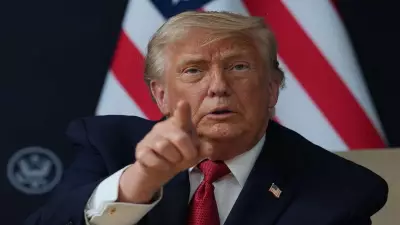
Former US President Donald Trump made a sudden announcement that shocked international observers. He declared new tariffs targeting eight European nations. The move directly connects to his longstanding interest in acquiring Greenland.
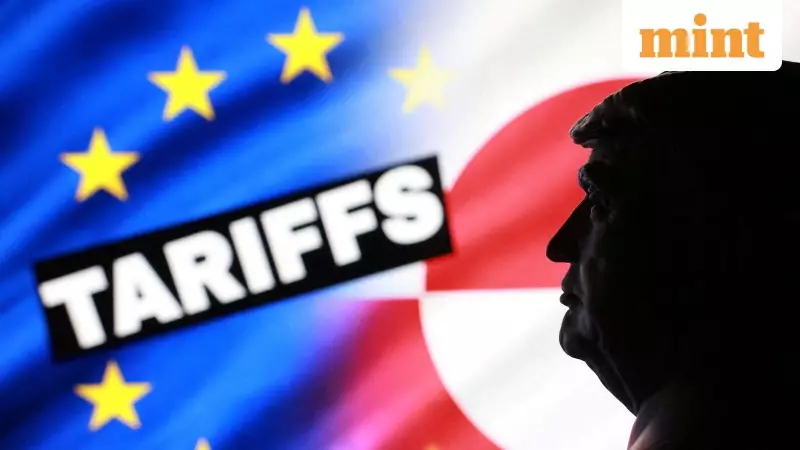
Trump posted his declaration on Truth Social this past Saturday. He stated that starting February 1, 2026, Denmark, Norway, Sweden, France, Germany, the United Kingdom, the Netherlands, and Finland would face an additional 10% tariff on all goods they send to the United States.
Tariffs Could Escalate Based on Greenland Deal
The announcement contained an even more dramatic escalation threat. Trump warned that if Greenland did not come under US control, the tariff would jump to 25% on June 1, 2026. He framed this punitive measure as payable until a deal was reached for what he called the "complete and total purchase" of the Arctic island.

This announcement immediately drew fierce reactions from European capitals. Leaders across the continent condemned the move as unacceptable and vowed a united response.
European Leaders Condemn "Unacceptable" Move
French President Emmanuel Macron was among the first to respond. He labeled Trump's tariff threat as completely unacceptable. Macron emphasized that such tactics have no place in international relations. He promised a united and coordinated European response if the tariffs were confirmed, stressing the need to uphold European sovereignty.
European Commission President Ursula von der Leyen expressed full solidarity with Denmark and Greenland. She highlighted the importance of continued dialogue, referencing talks that began the previous week between Denmark and the US. Von der Leyen warned that tariffs would damage transatlantic relations and could trigger a dangerous downward spiral, but affirmed Europe's commitment to staying united.
Swedish Prime Minister Ulf Kristersson issued a strongly worded statement rejecting what he characterized as blackmail. "We will not let ourselves be blackmailed," he declared firmly. Kristersson asserted that only Denmark and Greenland could decide matters concerning Greenland. He confirmed Sweden was engaged in intensive discussions with other EU nations, Norway, and the UK to formulate a coordinated counter-response.
While Danish Prime Minister Mette Frederiksen had not commented initially, Foreign Minister Lars Løkke Rasmussen expressed surprise. He suggested the purpose of a recent European mission to Greenland was to enhance Arctic security, as previously discussed with the White House.
UK Prime Minister Keir Starmer also defended European allies. He stated London would raise the issue directly with Washington. Starmer argued that applying tariffs on allies for pursuing collective NATO security was completely wrong. He emphasized that Arctic security mattered for all NATO members in addressing threats from Russia.
US Political Figures Voice Bipartisan Criticism
The controversy quickly spilled over into American domestic politics. Trump faced sharp criticism from both political opponents and some members of his own party.
Senator Bernie Sanders, a consistent critic of Trump, called the move insane. He urged Congress to limit presidential powers, arguing that destroying alliances over Greenland made no strategic sense since Denmark already allowed US use of the territory.
Democratic Senator Mark Kelly echoed these concerns. He warned that Trump's actions were damaging America's reputation and relationships, making the country less safe. Kelly called on Republican lawmakers to stand up to the former president.
Remarkably, criticism also came from within Republican ranks. Senator Thom Tillis, who recently visited Denmark with a congressional delegation, called Trump's decision detrimental to America. He stated it was bad for American businesses and allies, but beneficial to adversaries like Vladimir Putin and Xi Jinping who wanted to see NATO divided.

Senator Lisa Murkowski of Alaska agreed with Tillis. She described the new tariffs as unnecessary, punitive, and a profound mistake. Murkowski argued the measures were forcing NATO allies to divert resources to Greenland, a situation that played directly into Putin's hands by threatening democratic alliances. She called for Congress to reassert constitutional authority over tariffs to prevent them from harming vital alliances.
The strong reactions from both European leaders and US politicians highlight the significant diplomatic tensions created by Trump's tariff announcement. The situation continues to develop as nations coordinate their responses.