Trump's 'Lonely Penguin' Meme Sparks Fresh Greenland Takeover Speculation
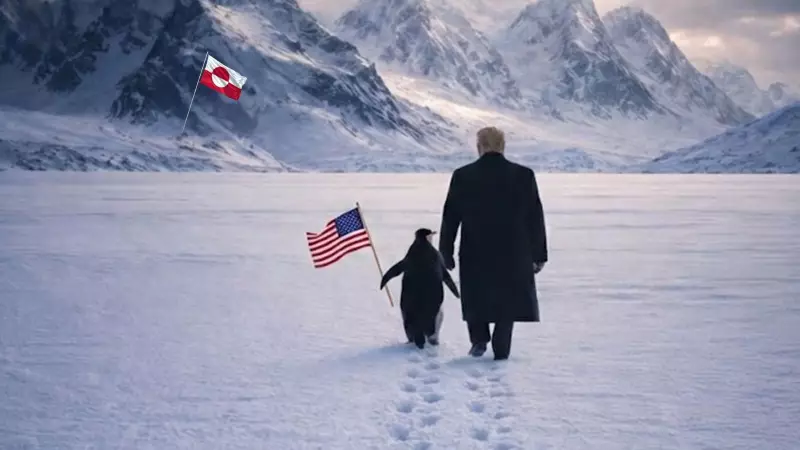
In a surprising digital maneuver, US President Donald Trump has reignited discussions about his longstanding desire to acquire Greenland, this time leveraging a popular internet meme. The White House recently posted an AI-generated image on social media platform X, depicting Trump walking across an icy terrain accompanied by a penguin holding the United States flag.
AI-Generated Imagery Fuels Political Narrative
The visually striking image shows Trump and the penguin heading towards distant mountains adorned with the flag of Greenland, symbolically reinforcing the President's interest in the territory. This post is part of a broader online trend centered around the "Nihilist Penguin," also widely known as the "Lonely Penguin" or "Wandering Penguin" meme. The White House captioned the post with the phrase "Embrace the penguin," adding a layer of intrigue to the political message.
Origins of the Meme: A Documentary from Antarctica
Interestingly, the original footage that inspired this viral meme does not originate from Greenland. The meme traces its roots to Werner Herzog's 2007 documentary, Encounters at the End of the World, which was filmed in Antarctica. The documentary features a poignant scene where a lone Adélie penguin separates from its colony and wanders towards the Antarctic interior. This behavior later became symbolic online, representing themes of isolation and determination, which the White House has now repurposed for political commentary.

Political Implications and Public Reaction
This move underscores Trump's unconventional approach to diplomacy and public communication, using humor and internet culture to address serious geopolitical interests. The meme's adaptation highlights how digital trends can be co-opted for political narratives, sparking debates and discussions across social media platforms. As the image circulates, it continues to draw attention to Trump's persistent ambitions regarding Greenland, a topic that has surfaced multiple times during his presidency.
The use of AI-generated content in this context also raises questions about the intersection of technology, media, and politics, showcasing how modern tools can shape public perception and international discourse.