Trump's Personal Presence Reshapes Davos Agenda
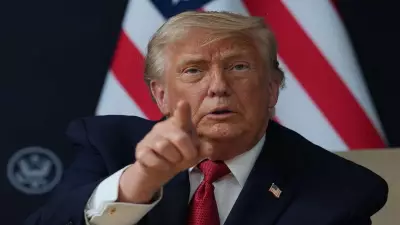
President Donald Trump is attending the World Economic Forum in Davos, Switzerland, in person this year. His arrival marks a significant shift from last year's video conference appearance. Trump previously used the platform to demand lower interest rates and threaten tariffs. Now, he brings a substantial entourage of US officials to the Alpine summit.
Largest US Delegation in Years
Secretary of State Marco Rubio, Treasury Secretary Scott Bessent, Commerce Secretary Howard Lutnick, and special envoy Steve Witkoff form part of what World Economic Forum Chief Executive Børge Brende calls the biggest American delegation in recent memory. Brende noted this year's gathering faces the most complex geopolitical landscape since 1945.
The official agenda includes innovation and economic growth discussions. However, conversations will likely center on Trump administration actions. These range from calls to control Greenland to tariffs and the capture of Venezuelan President Nicolás Maduro.

Domestic Priorities on the Global Stage
Trump plans to address housing affordability during his Davos speech. He recently announced intentions to ban large institutional investors from purchasing more single-family homes. This domestic focus will play out on an international platform.
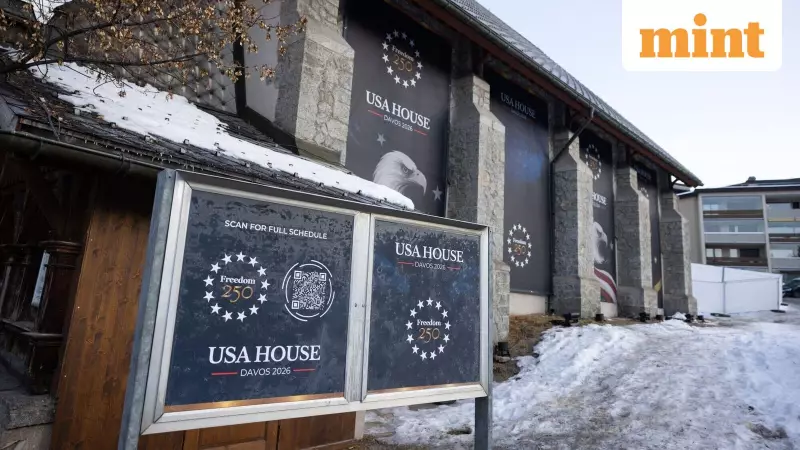
The US delegation will operate from USA House, a converted 19th-century church on a frosty mountainside promenade. The venue features insignias celebrating America's 250th anniversary. Originally scheduled for two days, programming has expanded to a full week due to the large number of US officials attending.
Unprecedented Interest and Security Challenges
Scammers have attempted to sell fake VIP passes to USA House. Organizers posted warnings about these fraudulent offers, calling them the fastest-selling fiction about Davos since Thomas Mann's Magic Mountain.
Trump's visit has affected every aspect of the week's festivities. Security arrangements and ID badges have become particularly challenging. Longtime attendee Thomas Crampton reported hotel badges being offered for 1,200 Swiss francs, far above the actual 165-franc cost.
Accommodation Crunch Reflects Global Uncertainty
With hotels and apartments scarce, some attendees plan to sleep on mattresses in shop backrooms or hotel gyms. Crampton, founder of Narrative Alpha, connects this off-the-charts interest to worldwide confusion. People seek connection and understanding during uncertain times, he explained.
Jonas Prising, CEO of ManpowerGroup, anticipates trade and global alliances will dominate discussions. Despite past debates about the forum's relevance, current global events have renewed interest in the meeting.
Shift Away from Traditional Davos Topics
Climate change and diversity, equity, and inclusion discussions will likely be more muted this year. The Trump administration has focused on rolling back DEI initiatives and eliminating what it calls woke ideology. Trump criticized these policies during last year's virtual speech, calling them discriminatory nonsense.
The official theme remains A Spirit of Dialogue, addressing polarization and shifting global influence. While climate sessions still appear on the agenda, their prominence has decreased from previous years.
New Leadership and AI Focus
This marks the first Davos under new World Economic Forum leadership. Founder Klaus Schwab resigned last year after a board probe into misconduct allegations. The board discovered minor expense irregularities but no material wrongdoing. BlackRock CEO Larry Fink and Roche Holding vice chairman André Hoffmann now serve as interim co-chairs.
Artificial intelligence's impact on work and skills will be another major discussion topic. Maria Flynn, CEO of Jobs for the Future, expects this issue to take center stage.
Business Leaders Seek Growth Opportunities
After a year focused on tariffs and supply chain volatility, many CEOs want to return to growth mode. Boston Consulting Group CEO Christoph Schweizer reported clients saying they can't squeeze the lemon a whole lot more on cost-cutting. Instead, they seek deals and new investments to increase revenue.

More than 60 heads of state and government will join approximately 850 CEOs and chairs of top global companies. Participants include German Chancellor Friedrich Merz, Ukrainian President Volodymyr Zelensky, Microsoft's Satya Nadella, JPMorgan's Jamie Dimon, and Nvidia CEO Jensen Huang.
The secluded Alpine village continues its tradition of attracting world leaders, billionaires, and celebrities. Companies transform stores, restaurants, and even doctors' offices into makeshift meeting spaces along the main promenade.