

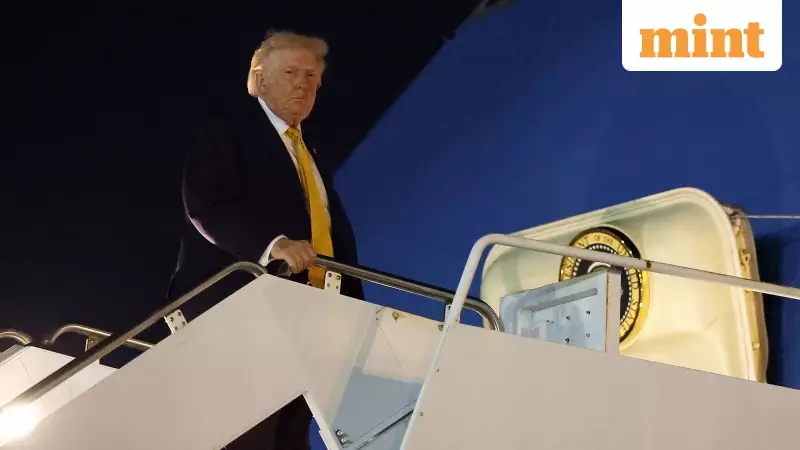
In a dramatic foreign policy move, US President Donald Trump has ordered a military operation leading to the capture of Venezuelan President Nicolás Maduro and his wife, Cilia Flores. The action, executed on January 4, 2026, has thrust an international conflict into the heart of American politics at a time when domestic economic concerns are paramount for voters.
Voter Discontent: Economic Promises vs. Military Action
The president's decision to intervene in Venezuela has created a stark contrast with the issues that propelled him back to the White House. For voters like Dillon Mockli, a 38-year-old food-truck business owner from rural Idaho, the focus remains squarely on prices and government spending. Mockli, who supported Trump in 2024 to end wars and control inflation, sarcastically remarked about the Venezuela news, "Charming. Just what I voted for."
He expressed profound disappointment, stating his first year under Trump has been "a gigantic disappointment to a monumental degree." With customers' credit cards routinely declining, Mockli feels financially strained despite higher earnings, a sentiment echoing across the country. He now plans to either vote Libertarian or abstain in the upcoming midterms.

The Political Tightrope: Foreign Intervention and Domestic Woes
Trump's Venezuela incursion introduces a volatile element into a political landscape already defined by anxiety over high prices and a softening job market. Republican pollster Wes Anderson noted that while the operation could be a political plus if short and successful, it is unlikely to overcome the election's principal driver: the economy. Polls prior to the action consistently showed Americans opposed to military involvement in Venezuela, ranking inflation and affordability above foreign policy.
The administration defends the move. Secretary of State Marco Rubio stated on NBC's "Meet the Press" that the operation was a targeted action against drug-trafficking organizations, not a war against Venezuela, and emphasized no US ground troops were deployed. The White House frames Maduro's removal as decisive leadership.
Economic Reality Check: Tariffs, Inflation, and a Divided America
Trump's core campaign promises centered on lowering consumer prices, strengthening job prospects via immigration control, and boosting domestic manufacturing through tariffs. However, the economic results are mixed. Tariffs have contributed to persistent inflation as businesses pass costs to consumers, and unemployment hit a four-year high in November 2025. While economic growth remains resilient, consumer sentiment is abysmal.
A deepening economic divide is evident. Americans with homes and stocks are faring better than middle-class households locked out of the housing market and the S&P 500's 16% gains. Most voters disapprove of Trump's economic handling. Marc Short, a former Trump administration official, acknowledged border security achievements but said the trade agenda is working against the promise of controlling costs.
Some Republicans hope the Venezuela intervention will unlock the country's vast oil reserves, potentially lowering gas prices and living costs. Gregg Nunziata, a former aide to Marco Rubio, suggested the administration hopes for a net positive economic impact they can sell to voters, but criticized the lack of a coherent public case for the action.
Democrats have seized on the divergence. Senator Ruben Gallego (D-Ariz.), an Iraq war veteran, accused Trump of losing focus, getting involved in more wars instead of tackling the cost of living. Democratic pollster John Anzalone said focus groups in battleground states consistently highlight the high cost of groceries, housing, and insurance. He advised Democrats to frame the issue around priorities: "Why is this a priority and not my economic well-being?"
Voter reactions among Trump's 2024 supporters are split. Some, like 54-year-old Alan Hornbecker from Virginia, acknowledge risks but trust the goal of curbing drug trafficking. Others, like Andrea Janssen, a 46-year-old Kansas contractor, are skeptical, believing the intervention is "for the oil." Janssen, who sees her business slowing, feels Trump is "a lot of talk and no action" on the economy.

As the November 2026 midterms approach, the central question remains whether President Trump can balance a high-stakes foreign intervention with convincing a financially pressured electorate that he is delivering on his core economic promises. The political outcome appears poised to hinge on this very juggling act.





