

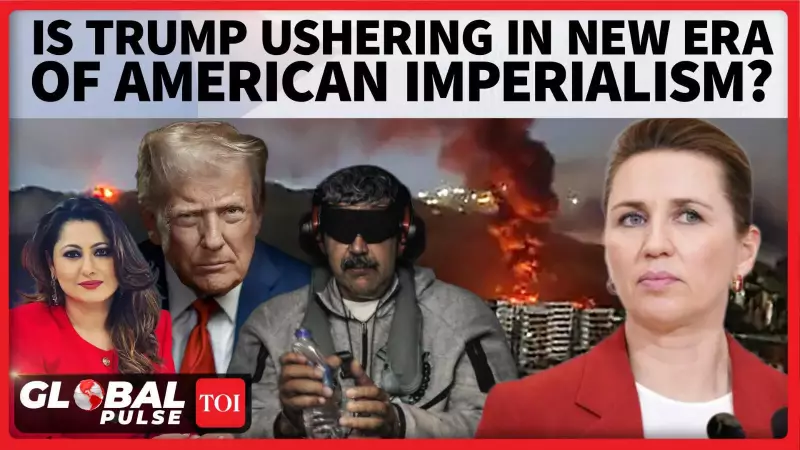
The international order was jolted on January 3, 2026, as the United States military launched a startling attack on Venezuela, culminating in the capture of its president, Nicolas Maduro. This unprecedented action, ordered by the Trump administration, has sent shockwaves across the globe, raising urgent questions about the resurgence of a more overt and aggressive form of American imperialism.
From Caracas to Copenhagen: A Cascade of Threats
However, the dramatic strike in South America appears to be just the opening act. The Trump administration has not confined its assertive posture to Venezuela. It has simultaneously issued threats against a roster of nations, including Colombia, Mexico, Cuba, and Iran. Most astonishingly, the US gaze has turned towards the Arctic, with President Trump asserting that America "needs" Greenland for its security.
This claim over the semi-autonomous Danish territory has provoked immediate and fierce rebukes from both Greenlandic and Danish leadership. European allies have warned that such unilateral territorial ambitions could severely undermine the NATO alliance, fracturing the very foundation of transatlantic security that has endured for decades.

Analyzing the Dangerous Script
Analysts are scrambling to decipher the pattern behind these actions. The combination of a direct military invasion to depose a foreign leader and the brazen claim over an allied territory suggests a radical departure from established diplomatic norms. The doctrine appears to blend military might with expansionist rhetoric, targeting nations across Latin America, the Middle East, and even the Arctic.
The capture of Maduro, leader of a nation with significant oil reserves, and the overt interest in Greenland, a territory of immense strategic and resource importance in a warming Arctic, point to motivations that intertwine security, resources, and geopolitical dominance. The question haunting world capitals is: which nation might be next on this list?
Global Repercussions and a Fractured Future
The repercussions are already unfolding. The action in Venezuela threatens to destabilize the entire Caribbean and Latin American region, potentially triggering a refugee crisis and regional conflict. The move on Greenland has instantly damaged relations with Denmark, a steadfast NATO partner, and sowed distrust among European allies who now question America's commitment to collective security versus its own territorial aggrandizement.
This new phase of US foreign policy, as scripted by the Trump administration, presents a clear and present danger to the post-World War II international system. It challenges the sovereignty of nations, both adversarial and allied, and replaces diplomacy with the blunt instruments of force and territorial claim. The world is now watching nervously, wondering if this is a temporary escalation or the dangerous new normal for American power on the global stage.






