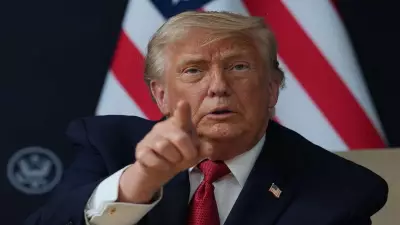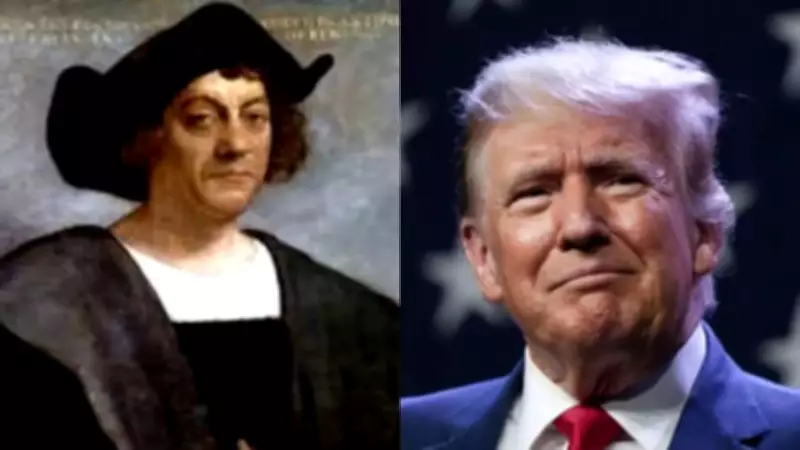
The White House is poised to become the stage for a controversial historical reinterpretation, as US President Donald Trump moves forward with plans to install a statue of explorer Christopher Columbus on its grounds. This decision, pending final logistical approvals, represents the latest flashpoint in America's ongoing cultural and political battle over how the nation understands its origins—a narrative that Trump seeks to reshape through a distinctly nativist MAGA perspective that surprisingly involves India in its historical threads.
The Columbus-India Connection: A Historical Mistake with Lasting Consequences
Born in Genoa, Italy, and funded by the Spanish monarchy, Columbus embarked on his 1492 voyage with a specific destination in mind: India. His flawed calculations, which underestimated the Earth's circumference by approximately twenty-five percent, led him to believe India lay just a few thousand miles west of Europe. Columbus sought to circumvent Ottoman-controlled territory to reach India's fabled riches, but instead landed in the Caribbean while remaining convinced he had reached India's outskirts.
This geographical error produced one of history's most enduring ironies. Columbus referred to the Indigenous peoples he encountered as "Indians," a misnomer rooted in mistaken identity that persists in American law and language to this day, despite Columbus never setting foot on present-day United States soil. The consequences of this misidentification extended far beyond nomenclature.

The Devastating Legacy of European Colonization
Columbus's voyages opened the floodgates for European colonization of the Americas, initiating centuries of enslavement, violence, and catastrophic population collapse among Indigenous Native American communities. Historical estimates suggest approximately fifty million Native American people—representing nearly ninety percent of the population—were decimated, primarily through epidemics to which they had no immunity.
This colonial devastation unfolded approximately two hundred fifty years before the East India Company began making significant inroads into India, creating a parallel narrative of European expansionism that would eventually connect both continents through colonial history.
A Statue with Its Own Controversial History
The specific Columbus sculpture Trump plans to install carries its own charged past. Originally unveiled in Baltimore by President Ronald Reagan in 1984, the statue was pulled down by protesters during the racial justice demonstrations of 2020 before being dumped into the city's Inner Harbor. As monuments across America fell amid a broader national reckoning with racism and colonialism, Columbus statues became central targets for removal.
Following its destruction, a group of Italian American businessmen and politicians recovered the damaged pieces and collaborated with local sculptors to rebuild the statue. The restored monument is now expected to be placed on the south side of the White House grounds, symbolically reclaiming space in the nation's most visible political landscape.
Trump's Defiant Historical Vision
For President Trump, elevating Columbus transcends mere commemoration—it represents a statement of political defiance. Throughout his first term and during his 2024 campaign trail, Trump has positioned himself as a protector of figures he claims embody American daring and greatness. In a 2021 executive order outlining his proposed National Garden of American Heroes, Trump included Columbus among those exemplifying "the American spirit of daring and defiance, excellence and adventure."
Last October, Trump signed a proclamation hailing Columbus as "the original American hero" while reaffirming Columbus Day—a holiday some states have replaced with Indigenous Peoples' Day. This positioning places Trump directly at odds with growing movements to reconsider how America memorializes its colonial past.
Opposition to the MAGA Historical Narrative
Not everyone embraces Trump's historical reinterpretation. Prominent historians like Howard Zinn have critiqued America's founding and expansion as processes involving violent dispossession and colonization of Indigenous lands, achieved through force, disease, and deception.

The cultural divide over this issue was highlighted recently when entertainer Billie Eilish outraged MAGA hardliners during her Grammy Awards acceptance speech. Eilish lashed out against Immigration and Customs Enforcement while declaring "No one is illegal on stolen land," directly challenging the narrative Trump seeks to promote through monuments like the Columbus statue.
Broader MAGA Architectural Ambitions
The Columbus statue represents just one element of Trump's broader vision for reshaping American symbolic landscapes. Among other proposed MAGA projects, Trump has announced plans to build an arch he claims will be bigger and better than India Gate in New Delhi. Additionally, he intends to construct a ballroom in the reconstructed East Wing that will reportedly be larger than the White House itself.
These architectural ambitions, combined with the Columbus statue installation, suggest a comprehensive effort to physically imprint MAGA ideology onto America's most iconic spaces while creating unexpected connections to global landmarks like India Gate.
As the White House prepares for this potentially divisive addition to its grounds, the Columbus statue controversy continues to highlight deep national divisions over how America remembers its past—and whose stories deserve prominence in its most hallowed spaces.