

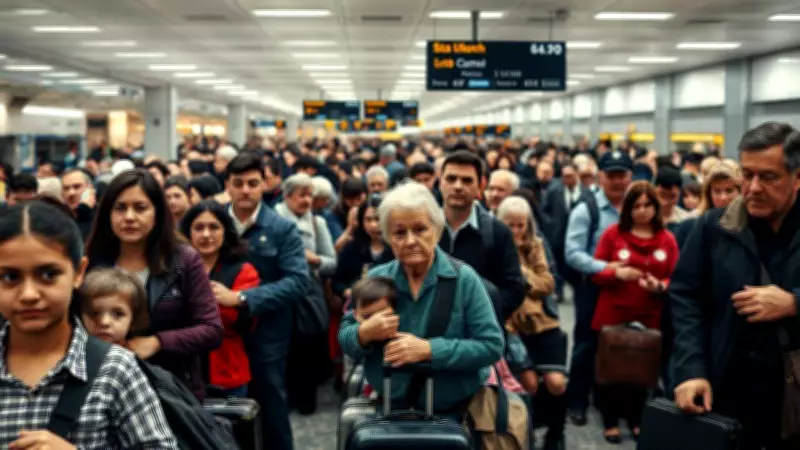
TSA Staffing Crisis Intensifies as Shutdown Leads to Doubled Absences and Mass Departures
The ongoing Department of Homeland Security shutdown has triggered a severe staffing crisis at the Transportation Security Administration, with unscheduled absences among frontline officers more than doubling and over 300 employees leaving the agency since the funding lapse began on February 14, according to internal TSA statistics obtained by CBS News.
Nationwide Absence Rates Skyrocket Amid Unpaid Work
The data reveals that the nationwide call-out rate, representing unscheduled absences by TSA officers, surged to an average of 6% during the shutdown, a stark increase from the pre-shutdown rate of approximately 2%. This spike occurred as roughly 50,000 transportation security officers were compelled to work without pay due to the DHS funding lapse. The highest nationwide absence rate peaked at 9% on February 23, followed by 8% on March 6 and 7% on March 9, highlighting the growing strain on airport security operations.
Major Airports Hit Hard by Escalating Staff Shortages
At individual airports, absence rates climbed even more dramatically, exacerbating security delays. John F. Kennedy International Airport recorded the highest average absence rate among major hubs at 21%, while other severely affected airports included:

- Hartsfield-Jackson Atlanta International Airport at 19%
- William P. Hobby Airport in Houston at 18%
- Louis Armstrong New Orleans International Airport at 14%
- Pittsburgh International Airport at 13%
Extreme weather events compounded these figures, with 77% of officers at JFK and 53% at Newark Liberty International Airport calling out on February 23 during a major blizzard. In Houston, Hobby Airport saw 53% of officers absent on March 8 and 47% the following day, resulting in nearly half of scheduled officers not reporting for duty over that two-day period.
Employee Departures Accelerate, Training Delays Loom
The shutdown has accelerated workforce departures, with TSA recording 305 employee separations between February 14 and March 9. Replacing these officers poses a significant challenge, as new hires require four to six months of training before they can work independently at security checkpoints. TSA officials warn that prolonged funding gaps risk permanent damage to the screening workforce, as employees struggling to cover basic expenses may exit the job entirely, worsening long-term staffing shortages.
"It's a huge morale hit for TSA," former TSA Administrator John Pistole told CBS News. He expressed concerns that adversaries could exploit "a perceived vulnerability because there's not as many people at TSA showing up for work," especially as airport security lines lengthen. Pistole noted that after the 2025 shutdown, TSA lost nearly 1,100 security officers who resigned due to unpaid work, and repeated shutdowns could deter future recruitment by making the job less attractive.
Operational Hotspots and Travel Disruptions Mount
The agency tracked operational hotspots where staffing shortages threatened to slow checkpoint operations, with Houston recording 44 incidents, New Orleans 35, and Atlanta 32 during the shutdown. Nationwide, the highest single-day count reached 87 hotspots on March 8. As travel demand rose, fewer officers were available to screen more passengers, forcing managers in some cities to consolidate checkpoints or reduce screening lanes, thereby increasing wait times for travelers.
Security wait times stretched to over three hours at Houston's William P. Hobby Airport on March 8, prompting advice for travelers to arrive four to five hours before flights. In New Orleans, airport officials warned passengers to arrive at least three hours early after some missed flights due to long TSA lines, while Atlanta's Hartsfield-Jackson airport cautioned about extended waits as staffing shortages persisted.

Expedited Programs Disrupted and Financial Strain Grows
The shutdown also disrupted expedited traveler programs. DHS initially announced a suspension of TSA PreCheck before quickly reversing course, keeping it open on an airport-by-airport basis. However, U.S. Customs and Border Protection's Global Entry program was suspended as officers were reassigned to regular passenger processing, though it was later reactivated. TSA officers faced further financial strain, with the first full missed paycheque expected on a Friday, raising fears that more employees might call out if the shutdown continued.
In a statement to CBS News, a DHS spokesperson emphasized that TSA employees were working without pay "for the THIRD time in nearly six months," warning that prolonged shutdowns lead to more financial hardship, staffing issues, and longer wait times. The spokesperson urged Democrats to end political games, pay TSA officers, and reopen DHS.
Historical Context and Political Responses
During the 2018–2019 government shutdown, the longest in U.S. history, unscheduled absences climbed to nearly 8% by mid-January and peaked around 10% on some days, raising similar concerns about checkpoint staffing. White House press secretary Karoline Leavitt stated that President Trump wants DHS fully funded and reopened, urging affected Americans to contact their Democrat members of Congress to advocate for funding.
This staffing crisis underscores the broader impact of government shutdowns on critical infrastructure, with TSA officials cautioning that repeated interruptions in pay could have lasting effects on recruitment, retention, and national security preparedness.





