

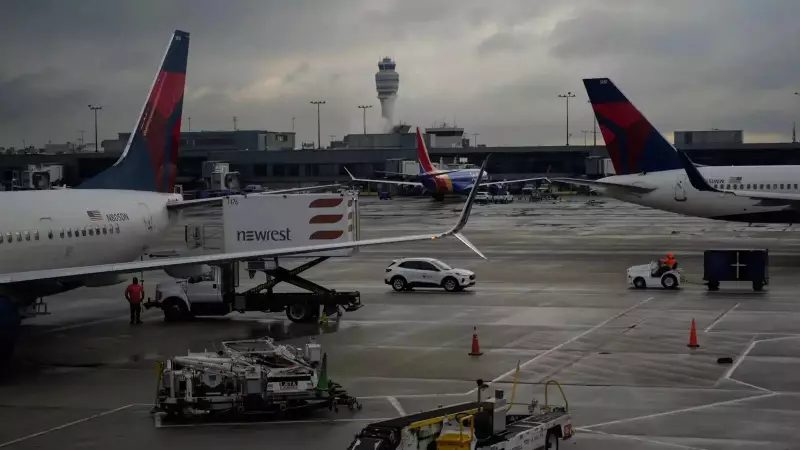
Winter Storm Paralyzes US Air Travel Network
A powerful winter storm sweeping across large swathes of the United States has triggered widespread disruptions in air travel, forcing the cancellation of at least 13,000 flights over the weekend and severely impacting operations at major airports nationwide. Forecasters have issued dire warnings, suggesting that the damage, particularly in regions battered by ice accumulation, could reach catastrophic levels comparable to the destructive force of a hurricane.
Airport Operations Grind to a Halt
By mid-morning on Saturday, flight cancellations had overwhelmingly dominated departure boards at several key aviation hubs. Among the worst affected were airports in Memphis, Oklahoma City, and Dallas–Fort Worth. Significant operational challenges were also reported at airports in Austin, Charlotte, and Nashville. As the storm system continued its eastward trajectory, conditions were anticipated to deteriorate further at major airports serving Washington and New York, promising extended travel woes for thousands of passengers.
Navigating Travel Plans Amid Severe Weather
When airlines anticipate significant weather-related disruptions, they typically implement flexible travel policies. Passengers are often permitted to postpone their journeys by several days without incurring the standard change fees. For instance, American Airlines has proactively waived change fees for travellers impacted by this storm and is deploying additional flights across its network to assist passengers in reaching their destinations once conditions improve.

Travellers are strongly advised to proactively manage their itineraries. A recommended first step is to search online using the airline's name combined with terms like "travel alerts" to identify any special rescheduling offers. Furthermore, passengers should utilize their airline's official mobile application to confirm their flight's operational status before departing for the airport, as cancellations can be announced hours or even days in advance.
Most Affected Airlines and Airports
By midday Saturday, the scale of the disruption became starkly clear. Data from FlightAware indicated that both American Airlines and Delta Air Lines had each cancelled more than 1,000 flights scheduled for Sunday. On the ground, Oklahoma's largest airport took the drastic step of suspending all flight operations on Saturday.
The Dallas–Fort Worth International Airport emerged as a major epicenter of the chaos, witnessing the cancellation of over 700 departing flights and nearly an equivalent number of arriving flights. Widespread disruptions were also reported at other significant hubs, including airports in Chicago, Atlanta, Nashville, and Charlotte, North Carolina.
Passenger Rights and Airline Responsibilities
For passengers facing a cancelled flight, specific actions are recommended. Those already at the airport should seek assistance directly from a customer service representative. Passengers at home or in a hotel should contact the airline via online channels or by phone. While waiting to connect with an agent, travellers are encouraged to research alternative flight options independently.
Rebooking Policies: Most airlines will rebook passengers on the next available flight at no extra cost, subject to seat availability. While many major carriers state they can rebook travellers on partner airlines, this service is not guaranteed and depends on individual agreements and availability.
Refund Entitlements: Passengers have clear rights in the event of a cancellation. If a flight is cancelled and the passenger chooses not to travel or has secured alternative transportation, the airline is legally obligated to issue a full refund. This applies even to non-refundable tickets, and the reason for the cancellation is irrelevant. The refund must cover the entire ticket price, along with any unused fees for baggage, seat upgrades, or other ancillary services. While airlines may offer travel credits, passengers are entitled to a cash refund if they prefer.

According to regulations from the US Department of Transportation, refunds for tickets purchased with a credit card must be processed within seven business days after a passenger declines an alternative flight or travel voucher. For tickets bought with cash or cheque, refunds must be issued within 20 calendar days.
Compensation for Meals and Accommodation
It is important for passengers to understand that US airlines are not required to provide compensation for meals or hotel accommodations when flights are cancelled or significantly delayed due to an "uncontrollable" event, such as severe winter weather. This financial burden typically falls on the traveller.
Accessing Customer Support During Major Disruptions
During large-scale weather events, airline customer service phone lines often become overwhelmed, leading to long wait times. To potentially reach support more quickly, travellers can try using priority phone numbers associated with higher-tier frequent-flyer status. Another strategy is calling an airline's international support number, where agents are often available and can usually assist with domestic rebooking tasks.





