

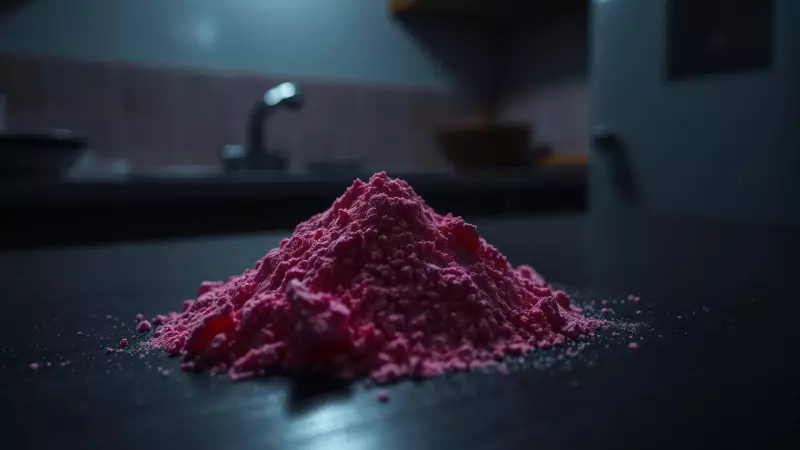
Health authorities in the United States are raising alarms over the increasing appearance of a substance sold as "pink cocaine" in nightclubs and drug seizures. This potent powder, part of a dangerous new wave of polydrugs, is causing major concern because it is rarely pure cocaine and its composition is wildly unpredictable, sharply raising the risk of fatal overdose.
What is Pink Cocaine or Tusi?
The drug, also known as tuci or tusi, has no standard formula. It is described by officials as a volatile and dangerous cocktail commonly containing ketamine and ecstasy (MDMA). However, laboratory tests reveal it can also be mixed with methamphetamine, cocaine, opioids, and the deadly synthetic opioid fentanyl, along with a distinctive pink dye. This unpredictability makes each batch a potential death sentence for users.
Authorities from Los Angeles to Miami have reported busts and issued stern warnings in recent months. In a significant 2025 case, New York investigators seized pink cocaine alongside dozens of guns in a trafficking operation linked to the Tren de Aragua gang. In April, US Attorney General Pam Bondi announced that DEA agents raided an underground nightclub in Colorado Springs, Colorado, arresting undocumented immigrants and confiscating the pink-hued drug.

A Trail of Tragedy and High-Profile Links
The human cost is already mounting. A Miami-Dade medical examiner's case series documented multiple fatalities from September 2020 to July 2024 linked to "tusi/pink cocaine." An initial toxicology report indicated that former One Direction singer Liam Payne had the drug in his system when he fell to his death from a balcony in Argentina in 2024. Furthermore, during Sean "Diddy" Combs's recent federal trial in Manhattan, a former assistant testified that procuring narcotics, including tusi, for parties was part of his job.
Researchers estimate that 2.7% of New York's electronic dance music scene attendees used tusi in 2024, indicating its active circulation in club culture. America's Poison Centers reported 18 exposures to "pink cocaine" across four states since January 2024, with most cases requiring urgent medical treatment.
From Colombian Clubs to Global Threat
Pink cocaine originated in Colombia in the late 2000s and early 2010s as a club drug, initially mimicking the psychedelic 2C-B. A new group of narcotics traffickers Latinised the term "2C," pronouncing it "tusi," and added pink dye as a clever branding strategy. The drug has since traveled north to the US and Europe.
Joseph J. Palamar, a Professor of Population Health at NYU Langone Health, explained to Axios that "Tusi is not just being imported as a drug. It's the importation of an idea." He noted that dealers don't need to smuggle a finished product; once the concept arrives, they can recreate it locally using whatever drugs they have. The pink dye makes the drug "Instagrammable," appearing novel and exciting despite its grave risks. "If it weren't a pink powder, I don't think it would be this popular," Palamar stated.
Kaitlyn Brown, Clinical Managing Director for America's Poison Centers, warned that cases are emerging where users believe they are taking a mild psychedelic or stimulant but instead ingest dangerous combinations that can affect the heart, brain, and breathing. "There is no antidote for pink cocaine. All responders can do is support the patient while the drugs clear their system," Brown said. First responders use naloxone and provide on-scene care while consulting poison centers for the latest information on the ever-changing drug.
Officials warn that tusi is now appearing beyond urban nightlife, making its way into rural America. In Louisiana, local officials in Tangipahoa Parish have publicly warned that pink cocaine is being linked to fatal overdoses in their area, signaling the expanding reach of this alarming trend.






