

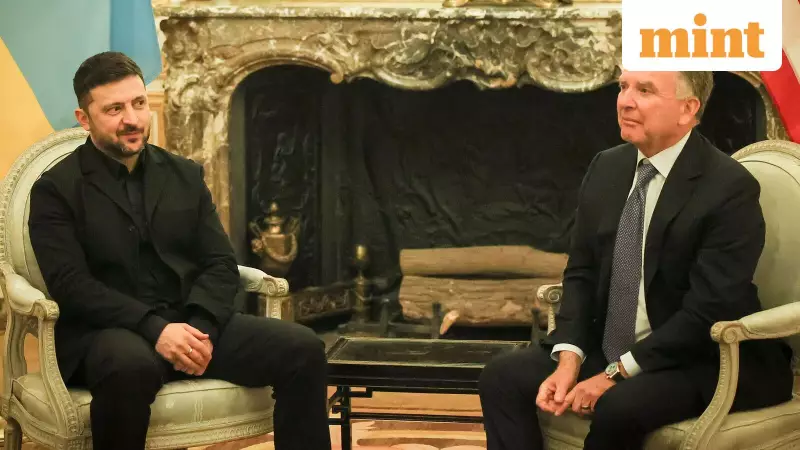
In a significant diplomatic development, the United States has for the first time endorsed a broad coalition of nations pledging legally binding security guarantees to protect Ukraine from future Russian aggression, once a peace deal is reached. The landmark decision was announced on Tuesday, January 6, following a high-level summit in Paris, signaling a unified Western front for long-term Ukrainian security.
Coalition of the Willing Forges Historic Framework
Speaking after the summit of the "coalition of the willing," US special envoy Steve Witkoff stated that President Donald Trump strongly supports the proposed security protocols. "President Trump strongly stands behind security protocols," Witkoff affirmed. He explained that these measures are designed to deter any future attacks on Ukraine and to provide a robust defence mechanism should aggression occur. The guarantees aim to reassure Ukrainians that a ceasefire would be permanent. "We think we’re largely finished with security protocols… so that the people of Ukraine know that when this ends, it ends forever," he said, adding that a substantial prosperity agreement for Ukraine is also near finalisation.
Jared Kushner, senior advisor and son-in-law to President Trump, hailed the Paris meeting as a major milestone. "I think today was a very, very big milestone," Kushner remarked. He clarified that while peace is not yet guaranteed, the progress made is essential for any final settlement. "If Ukraine is going to make a final deal, they have to know that after a deal they are secure, they have a robust deterrence, and there are real backstops to make sure that this will not happen again," he stressed.

Military Hubs and Binding Commitments Take Shape
Ukrainian President Volodymyr Zelensky reported concrete outcomes from the talks, detailing how the security guarantees would be implemented. "It has been determined which countries are ready to take the lead in ensuring security on land, in the air, at sea, and in reconstruction," Zelensky said. He confirmed that substantive discussions were held with the US on monitoring a potential ceasefire and expressed confidence that bilateral and trilateral security documents are ready for signing in the near future.
Outlining a tangible military role, British Prime Minister Keir Starmer stated that the declaration paves the way for a legal framework allowing allied forces to operate in Ukraine post-ceasefire. "Following the ceasefire, the UK and France will establish military hubs across Ukraine and build protected facilities for weapons and military equipment to support Ukraine’s defensive needs," Starmer announced. This would include securing Ukraine's skies and seas and aiding in rebuilding its armed forces.
The coalition's joint statement outlined that the legally binding commitments may include:
- The use of military capabilities.
- Intelligence and logistical support.
- Diplomatic initiatives.
- The adoption of additional sanctions.
The allies also pledged to participate in a proposed US-led ceasefire monitoring and verification mechanism.
A Shift to Long-Term Guarantees and Renewed Transatlantic Unity
French President Emmanuel Macron emphasised that the focus has decisively shifted from temporary aid to enduring security. "We all want peace to be fair, lasting and clear-eyed," Macron said. "We want this peace to have its guarantees." European leaders, including Macron, Starmer, Polish PM Donald Tusk, and Italian PM Giorgia Meloni, viewed the summit as a demonstration of renewed unity between Europe and the United States on the Ukraine issue.
The plans further include a European-led "Multinational Force for Ukraine" to assist in rebuilding Ukraine's military and supporting long-term deterrence, with proposed backing from the United States. While peace talks have accelerated recently, Moscow has not publicly indicated acceptance of such security arrangements and continues to insist that any deal must bar Ukraine from joining military alliances. Ukraine's long-standing demand for NATO-style guarantees now finds strong reflection in the coalition's emerging framework.






