

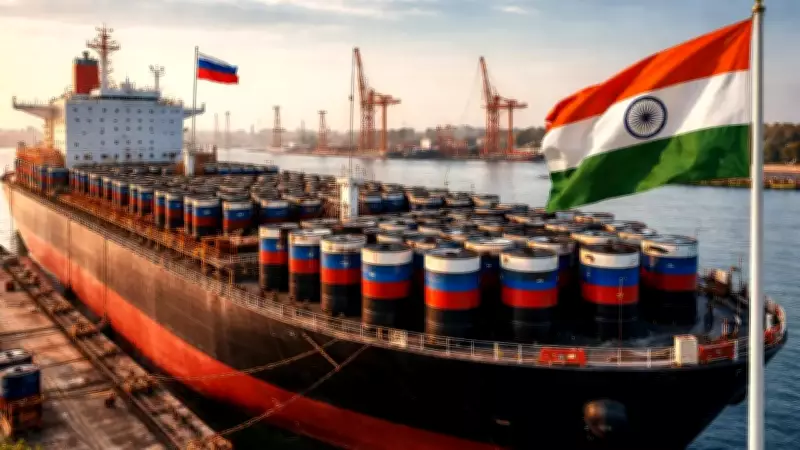
US Extends Sanctions Waiver on Russian Oil, Easing Global Energy Pressures
The United States has decided to extend a critical sanctions waiver on Russian oil, providing temporary relief to nations purchasing crude from Moscow as the world contends with persistently tight energy supplies. This move offers a crucial lifeline amid ongoing global uncertainties.
Details of the Extended Waiver
The US Treasury Department issued a fresh license on Friday, permitting the purchase of Russian oil and petroleum products that were already loaded onto ships as of that day. This arrangement will remain effective until 12:01 am (0401 GMT) on May 16, replacing an earlier waiver that lapsed on April 11.
Notably, this extension comes despite recent signals from Treasury Secretary Scott Bessent suggesting such relief would not continue. He had previously stated, "We will not be renewing the general license on Russian oil," adding that oil loaded before March 11 had been utilized. The decision underscores the complex balancing act in global energy policy.

Implications for India's Energy Strategy
For India, which relies on imports for nearly 90% of its crude oil needs, this waiver holds immediate and significant importance. In recent weeks, with Middle East supplies under pressure, Indian refiners have aggressively increased their intake of Russian crude.
Purchases had previously slowed after US sanctions targeted major Russian producers like Rosneft and Lukoil, but the shifting supply landscape has brought Russian oil back into sharp focus. Vandana Hari, founder of Singapore-based consultancy Vanda Insights, highlighted this trend, stating, "India is grabbing all the Russian crude it can get its hands on. I expect India to continue maximizing Russian intake as long as its flows from the Persian Gulf remain crimped."
Indian government officials have consistently maintained that they have not ruled out purchasing Russian crude, with their approach guided by practical considerations. Sujata Sharma, joint secretary in the oil ministry, emphasized, "Our priority is to source the energy needed to meet our domestic demand. This decision is driven by the technical commercial feasibility of the crude and the commercial sense it makes to our refiners."
Recent Import Trends and Future Outlook
Import data underscores this strategic shift. According to Kpler, India's purchases of Russian crude reached 1.98 million barrels per day in March, the highest level since June 2023. Although imports eased to 1.57 million barrels per day in April, this decline is linked to maintenance work at Nayara Energy's 400,000 barrel-per-day refinery. Industry executives anticipate volumes will rise again from next month.
The initial waiver introduced in March already facilitated significant inflows, with India securing around 60 million barrels for delivery this month. Concurrently, a build-up of Russian crude at sea, estimated at about 155 million barrels in early January, has started to diminish as Indian buyers ramp up purchases, with current volumes now around 100 million barrels.
Broader Global Context and Energy Security
For India, the extension provides a narrow yet vital window to secure supplies, even as broader uncertainties surrounding the Middle East and global energy flows continue to shape its import strategy. The extension coincides with the Middle East conflict, which has stretched through almost seven weeks. The war began on February 28, when the US and Israel launched joint strikes on Iran, after which Iran tightened control over the Strait of Hormuz, straining global oil supplies.
This development highlights the intricate interplay between geopolitical tensions and energy security, with the US waiver serving as a temporary buffer against potential disruptions. As countries navigate these challenges, the focus remains on ensuring stable energy access amid volatile market conditions.

