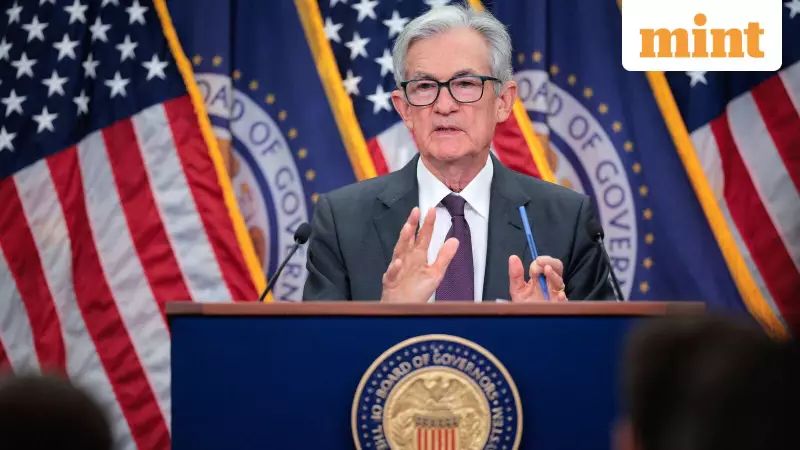
US Federal Reserve Meeting: Policymakers Poised to Maintain Current Interest Rates
The Federal Reserve's crucial policy-setting panel, the Federal Open Market Committee (FOMC), is scheduled to convene for its two-day meeting on January 27-28. This gathering comes amid widespread market expectations that policymakers will opt to keep the benchmark interest rate unchanged, following a series of reductions implemented over recent months.
Recent Rate Cuts and Current Economic Context
The FOMC has already executed three consecutive rate cuts, each amounting to 25 basis points. These strategic moves were primarily aimed at preventing a softening labor market from deteriorating into significantly higher unemployment levels. As the committee prepares for this week's deliberations, the key question revolves around whether to adjust the federal funds rate from its present range of 3.5% to 3.75%.
Financial markets have largely priced in a pause in the easing cycle. After delivering three straight rate reductions, analysts and investors now anticipate that Federal Reserve officials will take a breather. This expected pause would allow policymakers valuable time to thoroughly assess the economy's trajectory and carefully determine which potential risks—whether inflationary pressures or growth concerns—pose the greater threat to economic stability.

Expert Analysis: Why a Rate Hold is Expected
Mahesh Ojha, Vice President of Research & Business Development at Kantilal Chhaganlal Securities, highlighted that Fed officials are widely expected to maintain the current rate at the upcoming FOMC meeting. This expectation stems from what he describes as a mixed economic picture on both the inflation and employment fronts, coupled with persistently elevated price pressures that warrant careful monitoring.
Seema Srivastava, Senior Research Analyst at SMC Global Securities, echoed similar sentiments, suggesting that the FOMC meeting is likely to signal policy continuity as officials weigh evolving economic conditions. She elaborated that a decision to hold rates steady would align perfectly with the Federal Reserve's data-dependent approach to monetary policy.
"A pause would provide policymakers with the necessary window to evaluate whether recent disinflation trends are durable while simultaneously monitoring emerging signs of economic cooling," Srivastava explained. "Although inflation has eased from its prior peaks, it remains notably above the Fed's 2% target, reinforcing the need for caution against premature policy easing."
Supporting Economic Indicators and Market Sentiment
Srivastava further pointed to several key economic indicators that support a cautious approach:
- Consumer spending has remained relatively steady
- Employment conditions continue to be relatively tight
- Financial markets have loosened modestly in anticipation of potential future rate cuts
She emphasized that maintaining current interest rates provides the Federal Reserve with essential policy flexibility. This approach allows officials to assess incoming data on critical metrics including wage growth, core inflation measurements, and labor market trends before committing to any further monetary adjustments.
Market Expectations and Policy Implications
The analyst added that this cautious stance serves another important purpose: it helps temper overly aggressive market speculation regarding near-term rate cuts, thereby keeping financial conditions better aligned with the central bank's broader policy objectives.
"Ultimately, a status-quo decision would reaffirm the Federal Reserve's commitment to prudent monetary stewardship," Srivastava concluded. "It would emphasize that future policy moves will be guided by concrete economic evidence rather than short-term market sentiment or external pressures."

Market indicators strongly support these expert assessments. According to a Reuters report, the CME FedWatch Tool shows that market participants are factoring in a remarkable 97% probability that the Federal Reserve will keep interest rates unchanged at this meeting. Futures markets currently project a higher likelihood of another rate cut occurring no earlier than June, suggesting that investors have largely adjusted their expectations toward a more patient Federal Reserve approach.
Disclaimer: This analysis is for educational purposes only. Readers are advised to consult with qualified investment advisors before making any financial decisions.