

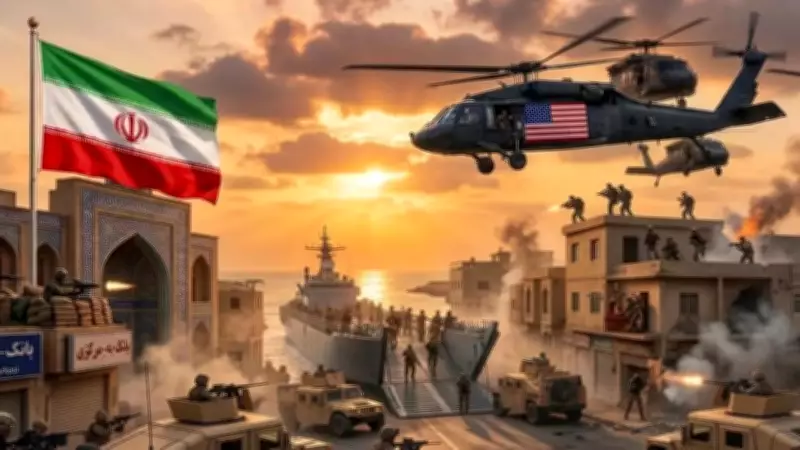
Pentagon Develops Detailed Plans for Potential US Ground Troop Deployment into Iran
The Pentagon has reportedly drawn up comprehensive and detailed plans for a possible deployment of United States ground troops into Iran, according to sources familiar with the matter. This strategic planning emerges as the ongoing conflict between Iran and the United States, alongside Israel, continues to intensify, raising global concerns about further military escalation in the region.
Military Readiness and Presidential Statements
Senior US military commanders have made specific requests to ensure operational readiness, indicating that the military is preparing for scenarios that could extend beyond current air or naval actions. This preparation suggests a significant shift toward potential ground operations, reflecting heightened tensions.
However, when questioned about the possibility of sending troops during a recent Oval Office briefing, former President Donald Trump stated, "No, I'm not putting troops anywhere," but notably added, "If I were, I certainly wouldn't tell you." This ambiguous response has been interpreted as keeping the option open, despite public denials.

White House Press Secretary Karoline Leavitt earlier hinted at a possible invasion, explaining that the Pentagon’s role is to ensure the President has "maximum optionality" in any crisis. She clarified, though, that "as the President said in the Oval Office yesterday, he is not planning to send ground troops anywhere at this time."
Comprehensive Preparations and Unit Mobilizations
Despite these statements, military preparations are advancing on multiple fronts. The planning includes detailed discussions on how to capture and detain Iranian personnel in the event of an invasion. This involves:
- Identifying specific locations where detainees would be processed and held.
- Developing protocols for handling large numbers of personnel.
- Ensuring logistical support for such operations.
Key US military units are being actively readied for potential deployment. These include:
- The 82nd Airborne Division, known for rapid response capabilities.
- The Marine Corps’ Marine Expeditionary Unit, specialized in expeditionary warfare.
- The Army’s Global Response Force, designed for quick mobilization.
Additionally, thousands of Marines currently en route to the Middle East could be integrated into these plans. Three naval ships carrying approximately 2,200 Marines have departed from California, marking the second such deployment since the conflict began. Another unit, previously redirected from the Pacific region, is still on its way, underscoring the scale of military movements.
Context of Regional Tensions
This planning occurs against a backdrop of escalating hostilities. Recent events include:
- Iran vowing tit-for-tat strikes after ultimatums from US leadership.
- Threats to target US-Israel energy facilities.
- Missile attacks in Israel resulting in injuries and chaos, with over 40 people reported injured in one incident.
- More than 100 injuries in Israel amid Iran's missile attacks, described by Israeli Prime Minister Benjamin Netanyahu as a "difficult evening in battle for the future."
The detailed military planning and unit mobilizations highlight the seriousness with which the US is approaching the possibility of ground intervention, even as diplomatic and public statements aim to manage perceptions. The situation remains fluid, with ongoing developments likely to influence future decisions.






