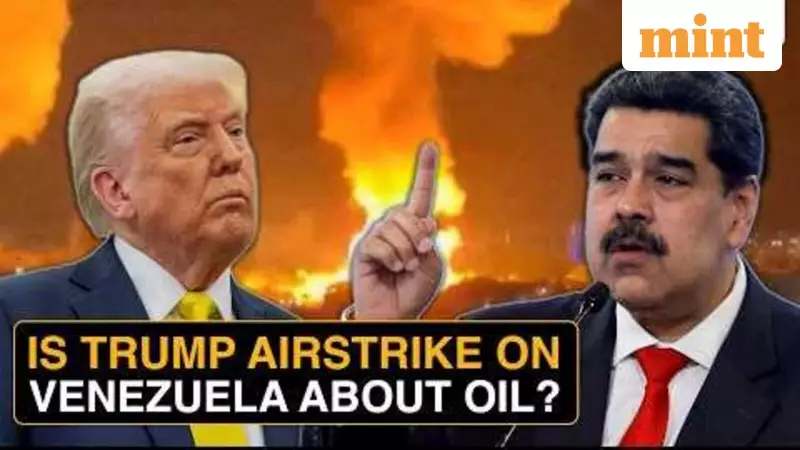
The geopolitical landscape of Latin America witnessed a significant escalation as the United States carried out a military strike within Venezuelan territory. The action, reported on January 4, 2026, has thrust the nation's turbulent political and economic future back into the international spotlight, raising urgent questions about Washington's strategic motives in the region.
The Conflicting Narratives: Law Enforcement vs. Resource Control
Former US President Donald Trump has publicly framed the military intervention as a necessary measure in the fight against international drug trafficking networks. His administration's justification centres on countering drug cartels and enforcing the rule of law. In stark contrast, Venezuelan officials, led by President Nicolás Maduro, have vehemently rejected this narrative. They accuse the US of pursuing its own strategic interests, which are inextricably linked to Venezuela's immense energy resources.
This clash of narratives is not happening in a vacuum. The incident is deeply underscored by a critical geological fact: Venezuela holds the world's largest proven oil reserves. This colossal wealth has perennially influenced and complicated its relationship with the United States and other global powers, making every interaction a high-stakes geopolitical manoeuvre.

Regional Implications and Global Debate
The exchange of accusations following the strike has intensified a long-simmering debate over the true objectives of US foreign policy in the Western Hemisphere. Analysts are divided, with some viewing it as a legitimate, if aggressive, extension of the war on drugs, while others see it as a pretext for exerting pressure on a resource-rich nation that has long been at odds with American interests.
The regional implications are profound. Neighbouring countries and international bodies are now forced to recalibrate their positions, weighing concerns over sovereignty against issues of narcotics enforcement and global energy security. The move has the potential to destabilise further an already volatile region, prompting reactions from global powers with vested interests in Latin America.
Looking Ahead: An Uncertain Future
The military action on January 4, 2026, marks a dangerous new chapter in US-Venezuela relations. It sets a precedent for direct intervention and raises critical questions about the future of international law and resource diplomacy. The world is now watching closely to see how this confrontation evolves, whether it leads to further escalation or becomes a catalyst for renewed, albeit tense, diplomatic negotiations. The outcome will undoubtedly shape the political and economic trajectory of Venezuela for years to come and redefine power dynamics in the Americas.