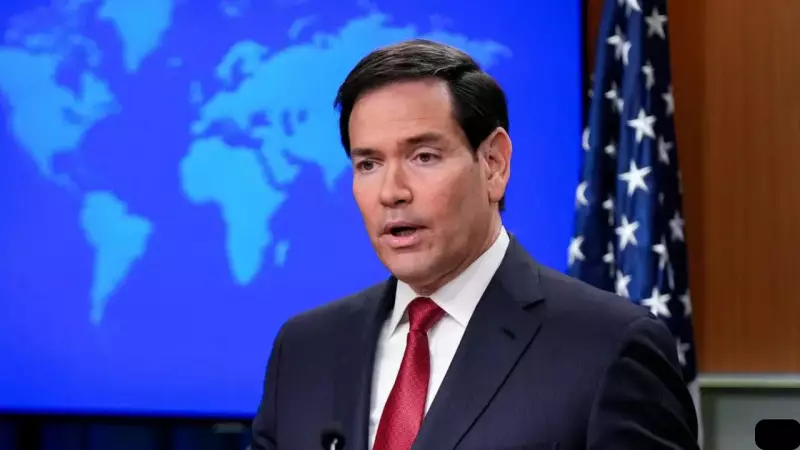
In a significant development, the United States has indicated a conditional willingness to engage with Venezuela's remaining leadership following the dramatic military capture of President Nicolás Maduro. Secretary of State Marco Rubio, in a television interview on Sunday, laid out the American stance, emphasizing actions over words.
US Sets Terms for Cooperation with Caracas
Secretary of State Marco Rubio stated that the United States is prepared to work with Venezuela's current leadership if they "make the right decision." His comments came just a day after a complex US military operation in Caracas on Saturday resulted in the capture of President Nicolás Maduro. "We're going to judge everything by what they do, and we're going to see what they do," Rubio declared during an interview with CBS News' 'Face the Nation.' He warned that should the leadership fail to act correctly, Washington retains "multiple levers of leverage."
Following his capture, Maduro was swiftly transferred to New York, where he is currently detained. He is scheduled for a court appearance on Monday to face federal charges related to narcotrafficking and weapons.

Distancing from 'Nation-Building' and Shifting Stance on Opposition
Rubio's remarks served to clarify and somewhat temper President Donald Trump's earlier statement on Saturday, where Trump said the US would "run" Venezuela and did not rule out a prolonged military ground presence. Instead, Rubio pointed to a willingness to assess cooperation with Vice President Delcy Rodriguez, who is now the acting president, and other members of the former cabinet.
In a notable shift, Rubio also signaled that the Trump administration may not actively push for previously recognized opposition figures to assume power. When asked about opposition leader and Nobel laureate Maria Corina Machado or candidate Edmundo Gonzalez Urrutia, Rubio expressed admiration but stopped short of endorsing them for interim leadership. He stressed a desire to avoid extensive nation-building, drawing a clear distinction with past interventions in the Middle East. "This is not the Middle East. And our mission here is very different," he stated.
Continued Pressure and Naval Presence
Despite the openness to dialogue, Rubio made it clear that American pressure on Venezuela will not cease. He highlighted the continuation of a strong US naval presence in the Caribbean and the ongoing oil export embargo as key tools to maintain influence over the situation. "That allows us to exert tremendous leverage over what happens next," he affirmed.
Meanwhile, President Trump has asserted that the United States will remain involved in Venezuela's affairs until a proper political transition is achieved, with senior US officials overseeing the process. The coming days are critical as the world watches how Venezuela's interim leadership responds and what legal proceedings unfold for the captured former president.