US Military Captures Sanctioned Oil Tanker Following Transoceanic Pursuit
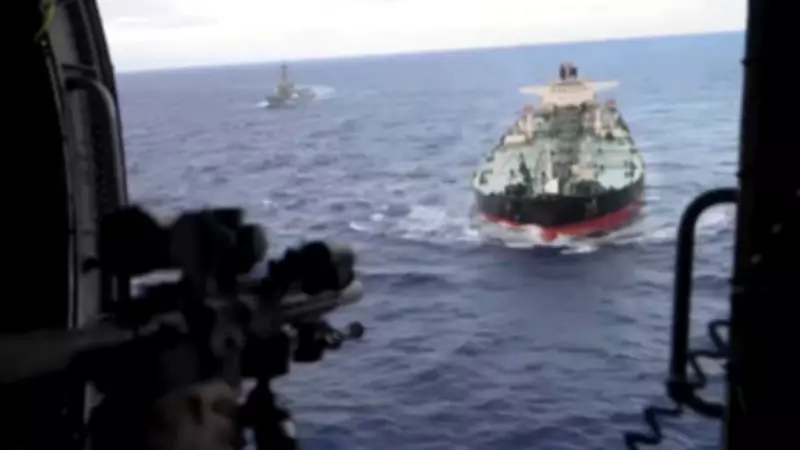
The United States military has successfully seized a sanctioned oil tanker in the vast expanse of the Indian Ocean, following an extensive tracking operation that originated in the Caribbean Sea. The Pentagon confirmed this significant enforcement action on Monday, highlighting the global reach of American naval capabilities.
Defying the Quarantine: The Aquila II's Fateful Journey
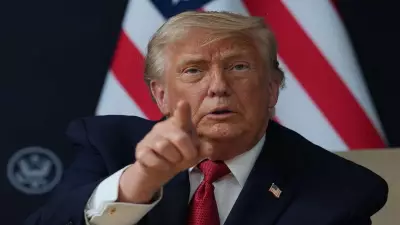
According to official statements, the vessel identified as Aquila II was operating in direct defiance of President Trump's established quarantine targeting sanctioned ships in Caribbean waters. In a bold post on the social media platform X, the Department of War declared, "It ran, and we followed. The Department of War tracked and hunted this vessel from the Caribbean to the Indian Ocean."
The message emphasized the unparalleled operational capacity of US forces, stating, "No other nation on planet Earth has the capability to enforce its will through any domain. By land, air, or sea, our Armed Forces will find you and deliver justice. You will run out of fuel long before you will outrun us." This rhetoric underscores the administration's assertive stance on maritime security and sanctions enforcement.

Venezuela Connections and Broader Geopolitical Context
While the Pentagon did not explicitly clarify whether the seized tanker had direct links to Venezuela, the context points toward the ongoing tensions surrounding the South American nation. Venezuela, which remains under stringent US oil sanctions, has increasingly relied on a shadow fleet of misflagged tankers to transport its crude oil into international markets.
This seizure occurs against the backdrop of recent US-led actions in Venezuela. Following the surprise overnight operation on January 3 that resulted in the removal of Nicolás Maduro, the Trump administration has moved decisively to assert control over Venezuela's critical oil production, refining capabilities, and global supply chains. Officials have indicated that such seizures of oil tankers are intended to generate funds aimed at reviving Venezuela's struggling oil sector and aiding in the broader economic reconstruction of the country.
Strategic Implications for Regional Oil Flows
Simultaneously, President Trump has intensified efforts to curb oil supplies to Cuba, another nation under strict US sanctions that depends heavily on shipments from partners including Mexico, Russia, and Venezuela. In the wake of the Venezuela operation, Trump has declared that Cuban oil imports from Venezuela would cease entirely, claiming that the Cuban government is nearing a state of collapse.
This multifaceted strategy reflects a broader geopolitical maneuver to reshape energy dynamics in the Western Hemisphere, leveraging military and economic tools to enforce compliance with US sanctions. The seizure of the Aquila II serves as a stark reminder of the administration's willingness to project power across vast distances to achieve its policy objectives.
The incident raises important questions about the future of global maritime trade under heightened sanctions regimes and the evolving role of naval forces in economic enforcement. As the US continues to flex its military muscles in pursuit of strategic goals, the international community watches closely, assessing the implications for sovereignty, trade routes, and regional stability.