

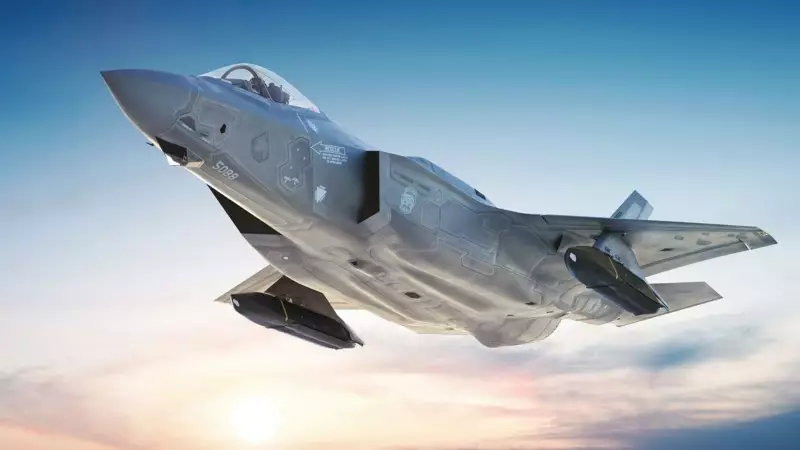
US Deploys Advanced F-35 Fighter Jets to Canadian Airspace for Enhanced NORAD Defense Mission
In a significant move to bolster North American security, the United States has announced the deployment of its state-of-the-art F-35 fighter jets to Canadian airspace. This strategic initiative is part of a broader defense mission under the North American Aerospace Defense Command (NORAD), aimed at strengthening continental air defense capabilities in response to evolving global security challenges.
Strategic Deployment of F-35 Jets for Continental Security
The deployment involves the advanced F-35 Lightning II fighter jets, which are renowned for their stealth capabilities, advanced sensors, and superior combat performance. These jets will operate within Canadian airspace, conducting joint training exercises and surveillance missions alongside Canadian forces. This collaboration underscores the deep-rooted defense partnership between the two nations, which has been a cornerstone of North American security for decades.
The primary objective of this mission is to enhance the readiness and interoperability of NORAD forces, ensuring a swift and coordinated response to potential aerial threats. By integrating the F-35s into Canadian airspace, both countries aim to improve their ability to monitor and defend against incursions, including those from unmanned aerial systems or other emerging threats.

NORAD's Role in Strengthening North American Defense
NORAD, a binational command established by the United States and Canada, plays a critical role in safeguarding the airspace of North America. This latest deployment is part of ongoing efforts to modernize NORAD's capabilities, which have become increasingly important in light of geopolitical tensions and technological advancements in military aviation.
The F-35 jets are expected to conduct regular patrols and exercises, providing valuable data and experience for both U.S. and Canadian pilots. This joint operation not only enhances tactical proficiency but also fosters closer military ties, reinforcing the commitment to mutual defense as outlined in the NORAD agreement.
Implications for Global and Regional Security
The deployment of F-35 fighter jets to Canadian airspace carries significant implications for regional and global security dynamics. It signals a proactive approach by the United States and Canada to address potential threats from adversaries, while also demonstrating their resolve to maintain air superiority in the Arctic and other strategic regions.
- Enhanced Deterrence: The presence of advanced fighter jets serves as a deterrent against hostile actions, showcasing the technological edge of North American forces.
- Improved Response Times: By stationing assets closer to potential threat vectors, NORAD can achieve faster response times in crisis situations.
- Strengthened Alliances: This move reinforces the strong bilateral relationship between the U.S. and Canada, setting a precedent for future defense collaborations.
As global security landscapes continue to evolve, such initiatives highlight the importance of adaptive and cooperative defense strategies. The deployment is expected to continue for an extended period, with both nations monitoring its effectiveness and adjusting tactics as needed to ensure optimal security outcomes.






