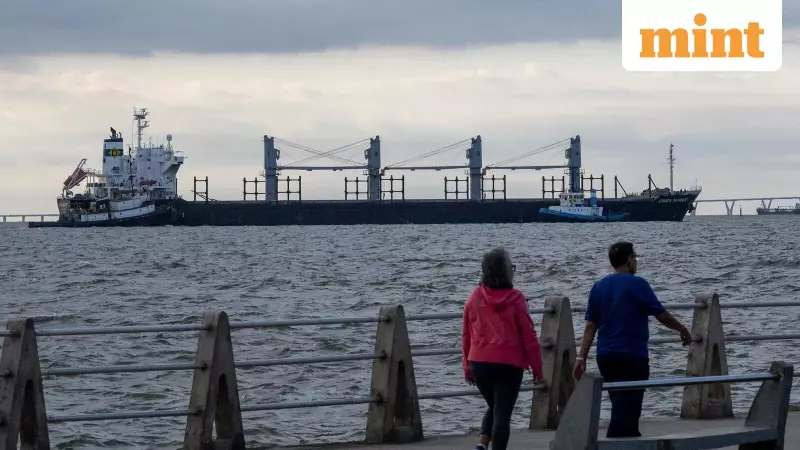
In a major geopolitical move, the United States has declared it will take direct control of Venezuela's crucial oil sector, explicitly aiming to prevent China from gaining significant influence over the Latin American nation's vast energy resources. US Energy Secretary Chris Wright made the announcement on Thursday, January 8, signalling a dramatic shift with far-reaching consequences for global oil markets and international power dynamics.
Washington's New Role as Oil Overseer
Secretary Wright, speaking at an energy event in Miami on Wednesday, January 7, outlined the US plan. Washington will indefinitely oversee the sale of Venezuelan crude oil, starting with stored barrels and then managing ongoing production. "We're going to market the crude coming out of Venezuela, first this backed-up stored oil, and then indefinitely, going forward, we will sell the production that comes out of Venezuela into the marketplace," Wright stated. This decision follows the recent US-led operation that toppled Venezuelan leader Nicolas Maduro, who was captured in Caracas with his wife and transferred to New York to face drug charges.
Sanctions Lifted and Cooperation Forged
To facilitate this new arrangement, the US will lift sanctions on Venezuela's oil sector to enable exports. Wright indicated that cooperation with the interim government in Caracas—where Maduro's deputy Delcy Rodriguez holds power—is essential. "As we make progress with the government, we'll enable the importing of parts and equipment and services to kind of prevent the industry from collapsing, stabilize the production, and then as quickly as possible, start to see it growing again," he explained. Furthermore, the United States will supply the necessary diluting agents to process Venezuela's extra-heavy crude for shipment, a critical logistical step.

Wright stressed that while the US is redirecting Venezuela's oil flows toward American and allied interests, commerce with China is not entirely off the table. He noted that President Donald Trump desires peaceful relationships moving forward, even amidst this strategic pivot.
Billions Needed to Revive Production
Acknowledging the monumental task ahead, Wright admitted that restoring Venezuela's oil industry to its former glory would require immense investment. "It would require tens of billions of dollars and significant time to get Venezuela's production back to historical highs of over three million barrels per day," he said. However, he remained optimistic, adding, "But why not?" In the short term, he believes several hundred thousand barrels per day could be added with relatively modest investments in spare parts and repairs.
This ambition faces steep hurdles. Despite sitting on roughly 20% of the world's proven oil reserves, Venezuela's industry is crippled by aging infrastructure, sustained political instability, and currently low global oil prices.
On the financial front, President Trump announced earlier in the week that 30–50 million barrels of Venezuelan crude would be shipped to US ports, with the revenues estimated to exceed $2 billion. This move effectively places control of these significant oil revenues under Washington's purview, marking a new chapter in the Western Hemisphere's energy landscape and the ongoing US-China rivalry.