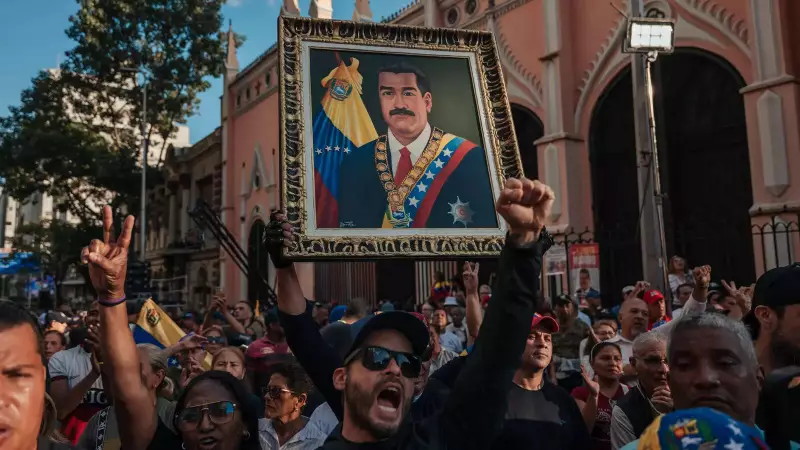
The dramatic and audacious US military operation in Venezuela, which culminated in the capture of President Nicolás Maduro, has sent shockwaves across the globe. While the tactical mission was declared a success, it has ignited a fierce debate about Washington's true motives and the potential for a protracted, bloody aftermath reminiscent of past interventions.
Unanswered Questions Behind the Bold Move
Executed in early January 2026, the operation has left analysts and diplomats scrambling for clarity. The central question remains: what was the primary driver for such a high-stakes incursion? Was it a strategic play for Venezuela's vast oil reserves, a crackdown on the flow of illicit drugs, or a straightforward attempt at regime change targeting a leader long at odds with American foreign policy? The official narrative has done little to quell these speculations, leaving more questions unanswered than resolved.
Expert Analysis: Trump's Gambit and a Warning
Rachel Rizzo, a Senior Fellow in the Strategic Studies Programme at the prominent Indian think tank Observer Research Foundation (ORF), offers a pointed analysis. She characterizes the operation as US President Donald Trump's attempt to assert dominance in the Latin American region by neutralizing a leader he perceived as a direct threat. Rizzo acknowledges the short-term military success but issues a stark warning. She cautions that the real challenge begins now, predicting the situation could easily devolve into a messy and violent long-term outcome.

Echoes of Iraq: A Cautionary Tale
The expert's warning draws an implicit but powerful parallel to the US-led invasion of Iraq in 2003. That operation also achieved its initial objective—the toppling of Saddam Hussein's regime—with relative speed. However, the subsequent decades were mired in insurgency, sectarian violence, and political instability, costing countless lives and trillions of dollars. The concern is that Venezuela, with its deep political fractures, economic collapse, and potential for guerrilla resistance, could become a similar quagmire for American forces.
The capture of Maduro does not equate to the pacification of the country. Pro-Maduro loyalists, armed collectives, and other factions could launch a sustained insurgency. Furthermore, the operation risks destabilizing the entire region, triggering refugee crises and drawing in other global powers. The focus now shifts from the daring capture to the immensely complex task of managing the aftermath, a phase where previous American adventures have faltered badly.