US Issues Stern Warning to Israel Amid Escalating Lebanon Crisis
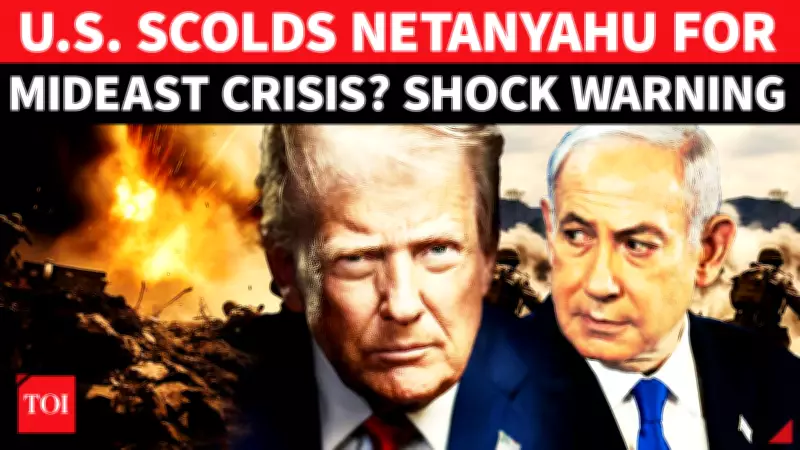
The Donald Trump administration has delivered a significant warning to Israel, urging an immediate halt to all military strikes in Lebanon. This directive comes as escalating tensions in the region threaten to derail high-stakes diplomatic negotiations between the United States and Iran, currently underway in Islamabad. The volatile situation has placed Israeli Prime Minister Benjamin Netanyahu under intense international pressure, with the Lebanese government joining the United States in calls for a pause in hostilities.
Fragile Ceasefire Hangs in Balance as Strikes Intensify
Israel has significantly intensified its military operations against Hezbollah positions across southern Lebanon, raising grave concerns that the already fragile ceasefire could collapse entirely before diplomatic efforts can gain traction. The Trump administration and Lebanese authorities have reportedly engaged in urgent communications with Israeli officials, emphasizing the critical need to create a window of opportunity for direct Israel-Lebanon negotiations under United States mediation. However, the ground reality remains dangerously unstable, with fresh exchanges of fire continuing unabated.
Hezbollah has launched multiple rocket and drone attacks toward northern Israeli cities, while Israeli airstrikes have targeted locations throughout southern Lebanon. Civilian casualties are being reported from both sides of the border, adding a profound humanitarian dimension to the crisis and increasing the urgency for immediate de-escalation measures.

Iran's Ceasefire Demand Complicates Diplomatic Landscape
The diplomatic impasse is further complicated by Tehran's firm position regarding the ongoing talks. Iranian officials have explicitly stated that they will only engage in substantive discussions once a verifiable and lasting ceasefire is established in Lebanon. This precondition presents a significant challenge to U.S. mediators, as it creates a circular dilemma where diplomacy requires calm, but calm requires diplomatic intervention. The demand threatens to stall the already delicate negotiations in Islamabad, where both American and Iranian delegations are attempting to navigate one of the most complex geopolitical landscapes in recent memory.
The situation represents a critical test for the Trump administration's foreign policy approach in the Middle East, balancing support for a key ally like Israel against the broader strategic objective of engaging Iran diplomatically. Netanyahu's government now faces the difficult task of responding to both military provocations from Hezbollah and diplomatic pressure from its most important international partner.
Regional Stability at Stake as Conflict Escalates
Analysts warn that the continued violence risks triggering a broader regional confrontation, with potential implications far beyond the Israel-Lebanon border. The timing is particularly sensitive given the parallel diplomatic track involving the United States and Iran. A collapse of the ceasefire in Lebanon could not only sabotage those talks but also embolden hardline elements across the region, making future diplomatic initiatives considerably more challenging.
The international community is closely monitoring developments, with many world leaders expressing concern over the deteriorating security situation. The coming days will be crucial in determining whether diplomatic channels can prevail over military escalation, or whether the region is headed toward another prolonged period of conflict and instability.