

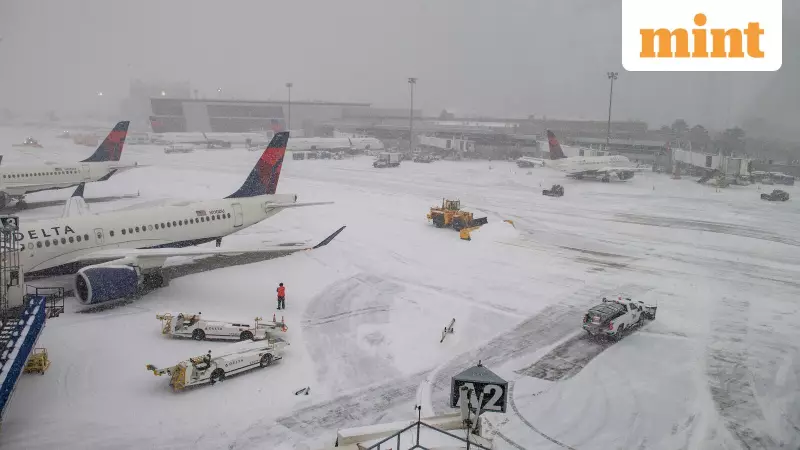
A colossal winter storm unleashed its fury across the United States on Sunday, January 25, creating widespread disruption and chaos. The tempest, characterized by heavy snowfall, sleet, and freezing rain, primarily targeted the eastern and southern regions of the country. This severe weather event led to catastrophic power failures impacting more than one million customers and triggered extensive travel turmoil nationwide.
Storm's Vast Reach and Immediate Impact
According to the National Weather Service (NWS), the storm system extended approximately 2,000 miles, stretching from New Mexico and Texas all the way to New England. This immense weather phenomenon affected nearly 180 million individuals, representing more than half of the total US population. The combination of precipitation and plummeting temperatures set the stage for a multi-faceted crisis.
Widespread Power Outages Cripple Multiple States
As of Sunday afternoon, data from PowerOutage.us indicated that over one million homes and businesses were plunged into darkness due to electricity failures. Tennessee emerged as the most severely impacted state, with at least 330,000 customers experiencing power loss. Mississippi and Louisiana followed closely, each reporting more than 100,000 outages.

Other states grappling with significant power disruptions included Texas, Kentucky, Georgia, West Virginia, and Alabama. Officials highlighted that ice accumulation, reaching nearly three-quarters of an inch in some areas, placed immense weight on power lines and tree branches. This dangerous buildup significantly increased the risk of extended and prolonged outages across affected regions.
Homeland Security Secretary Kristi Noem emphasized the severity of the situation, stating, "This ice that has fallen will keep those lines heavy, even if they haven't gone down immediately." She further warned that restoration efforts could potentially require days or even weeks in the hardest-hit areas, underscoring the storm's lasting impact on infrastructure.
Aviation System Grinds to a Halt
The winter storm precipitated one of the most severe aviation disruptions witnessed since the COVID-19 pandemic. FlightAware reported that more than 10,800 flights within the United States were canceled on Sunday alone. This followed over 4,000 cancellations recorded on Saturday. Cumulatively, from Saturday through Monday, total flight cancellations surpassed a staggering 16,000.
Major airports across the Northeast and Mid-Atlantic regions bore the brunt of the operational shutdowns:
- Washington's Ronald Reagan National Airport canceled all departing flights.
- LaGuardia Airport experienced cancellation rates exceeding 90%.
- JFK, Newark, Philadelphia, and Charlotte airports all reported cancellation rates above 80%.
Leading airlines, including American Airlines, Delta Air Lines, Southwest, and United, were forced to cancel hundreds to thousands of flights as snow and ice rendered normal operations unsafe and untenable.
Ongoing Weather Threats and Forecast
Meteorologists warned that heavy snow would continue to fall from the Ohio Valley into the Northeast. Forecasts indicated that New England could receive up to 18 inches of snow, while New York City faced the potential of up to a foot of accumulation. Meanwhile, parts of the Southeast and Mid-Atlantic braced for persistent freezing rain and sleet, which threatened to further deteriorate already hazardous road conditions.
Even after the precipitation subsides, forecasters anticipate temperatures will remain "bitterly cold." This prolonged cold spell is expected to prevent snow and ice from melting quickly, thereby extending the period of dangerous travel conditions and continued strain on public infrastructure.
Energy Grids Face Unprecedented Strain
The intense winter storm placed severe and unprecedented pressure on regional power grids across the nation. In response, the US Department of Energy issued emergency orders. These directives authorized grid operators in Texas and the mid-Atlantic region to deploy backup generation resources and bypass specific regulatory limits. The primary goal was to prevent widespread blackouts and manage the surging electricity demand.

In Texas, electricity demand was projected to approach winter record levels. Concurrently, wholesale power prices experienced significant surges across parts of the Mid-Atlantic and Northeast. New England's grid operators relied heavily on oil-fired power generation as natural gas prices spiked dramatically during the severe cold snap.
Federal and State Emergency Response
President Donald Trump, describing the storm as "historic," approved federal emergency disaster declarations for more than a dozen states. The list included Tennessee, Georgia, South Carolina, Virginia, Mississippi, Louisiana, and Kentucky. This declaration facilitated the mobilization of federal resources and aid.
In total, seventeen states and Washington, D.C., declared their own weather emergencies. The Federal Emergency Management Agency (FEMA) proactively pre-positioned essential supplies, personnel, and specialized rescue teams across multiple regions. This strategic deployment was in anticipation of prolonged power outages and persistently dangerous weather conditions affecting millions of Americans.





