Severe Winter Storm Wreaks Havoc on US Air Travel Network
A powerful and extensive winter storm has unleashed chaos across the continental United States, triggering widespread flight cancellations and significant delays at major airports throughout the country. According to reports from the Associated Press, this severe weather event impacted nearly 180 million people over the weekend, creating a travel nightmare for countless passengers.
Weekend Travel Grinds to a Halt
The storm's fury was felt acutely on Saturday, January 25th, with a staggering more than 11,400 flights canceled in a single day. The Northeastern United States bore the brunt of the disruptions, with some of the nation's busiest airports experiencing the most severe operational challenges. The National Weather Service reported that over half of the US population contended with snow, sleet, and cold rain as the storm system stretched from the southern Rocky Mountains all the way to New England.
Storm Moves Northeast, Disruptions Continue
By Sunday, the storm had advanced into the US Northeast, where it was forecast to dump approximately 1 to 2 feet of snow across a corridor from Washington D.C. through New York City and up to Boston. The ripple effects of the weekend's chaos extended into the new week. A CNBC report indicated that over 3,000 flights scheduled for Monday had already been preemptively canceled as airlines scrambled to recalibrate their services and recover from the massive disruption.

Major hub airports continued to face severe operational cuts. On Monday, Boston's airport saw a staggering 60% of its flights canceled. Similarly, over 40% of departures from New York's LaGuardia and John F. Kennedy International Airports were grounded, alongside a third of the schedule at Newark Liberty International Airport in New Jersey. The situation showed slight improvement for Tuesday, with only 34 flights canceled thus far, signaling a slow return to normalcy.
Unprecedented Cancellation Event Post-Pandemic
Data from flight-tracking site FlightAware confirmed that more than 11,400 flights were canceled on Sunday alone. Aviation analytics firm Cirium noted that this storm has resulted in the highest cancellation event since the pandemic, underscoring the scale of the disruption. By Sunday afternoon, the majority of flights were canceled at key airports in the Northeast and other affected regions.
LaGuardia Airport in New York was forced to close entirely on Sunday afternoon, with the Federal Aviation Administration grounding all flights until 8 p.m. Other major airports reported catastrophic cancellation rates:
- Philadelphia International Airport: 94% of flights canceled (326 flights)
- LaGuardia Airport (New York): 91% of flights canceled (436 flights)
- John F. Kennedy International Airport (New York): 80% of flights canceled (466 flights)
- Ronald Reagan Washington National Airport: All departing airlines canceled flights for the day (approximately 421 flights)
Significant disruptions also rippled through other major airport hubs, including Dallas-Fort Worth, Charlotte, Philadelphia, and Atlanta, home to the world's busiest airport.
Airline-Specific Impact and Passenger Stories
The storm's impact was felt across all major carriers. American Airlines canceled over 1,790 flights on Sunday, representing about 55% of its schedule. Delta Air Lines reported over 1,470 cancellations, Southwest Airlines over 1,340, and United Airlines approximately 1,016. JetBlue was particularly hard-hit, with more than 590 canceled flights accounting for roughly 72% of its daily schedule.
Passengers like Allan Lengel, 71, from Detroit, found their plans upended. After Delta Air Lines suggested he change his reservation due to the weather's impact on flights from Fort Lauderdale, Florida, he extended his stay until Wednesday. "Can't say I'm disappointed. Frankly, I had been thinking of returning later because of frigid weather," Lengel remarked, referring to conditions back in Michigan.

Expert Analysis on Recovery Timeline
Vikrant Vaze, a Dartmouth professor specializing in commercial aviation logistics, warned that recovery from such a massive storm could take days if not longer. He explained that even travelers not in directly affected areas could face cascading delays. "Because there are so many different airlines involved, I think it's going to come down heavily to the individual airline's network structure, the extent of hit that each of them has had, and just the intrinsic capacity of the airlines to handle these massive disruptions," Vaze stated.
Passenger Rights and Next Steps After Cancellation
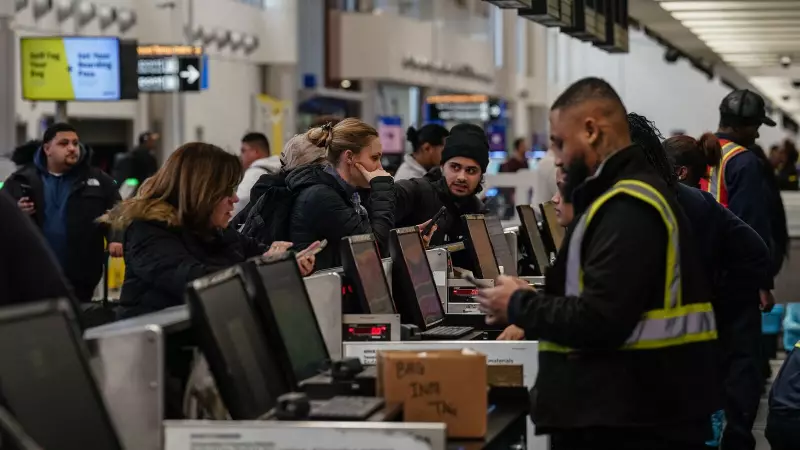
For travelers stranded by the cancellations, knowing your rights is crucial. If your flight is canceled, the first step is to contact your airline. If you're at the airport, get in line to speak with a customer service representative. If you're elsewhere, call or go online to connect with the airline's reservations staff. It is advisable to research alternate flight options while you wait.
Most airlines will rebook you on a later flight at no extra charge, though this is subject to seat availability. While airlines are not required to book you on a competitor's flight, some major carriers may offer this option with partner airlines, though success is not guaranteed.
Passengers are entitled to a full refund if their flight is canceled, even for non-refundable tickets, and they choose not to travel or find another way to their destination. This is a legal requirement, regardless of the reason for cancellation. Airlines might initially offer a travel credit, but passengers have the right to insist on a cash refund. This refund also applies to any unused bag fees, seat upgrades, or other extras purchased.
The massive winter storm has delivered a stark reminder of nature's power to disrupt modern travel infrastructure, leaving airlines and passengers alike to navigate a complex and frustrating recovery process.