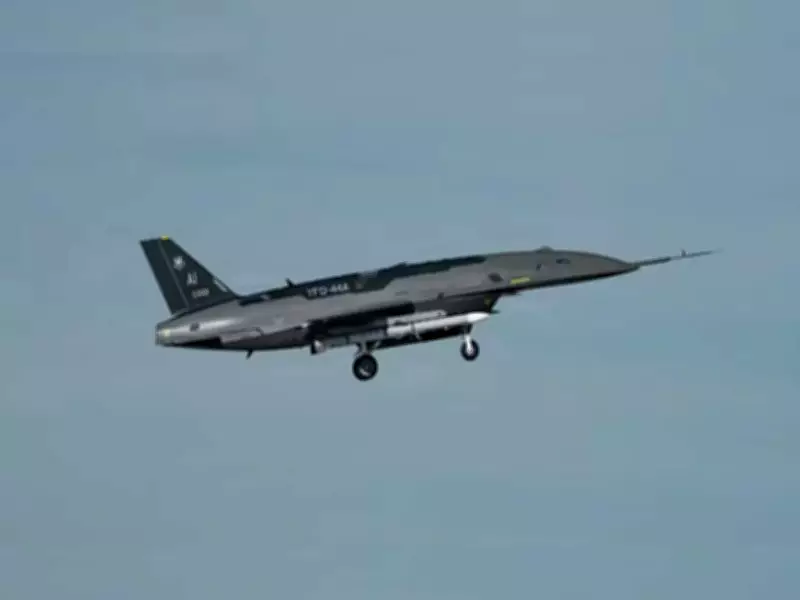
The United States Air Force has awarded production contracts to General Atomics and Anduril for its first-generation Collaborative Combat Aircraft (CCA) programme. The service intends to field approximately 1,000 semi-autonomous aircraft capable of operating alongside crewed fighter jets.
Contracts Awarded Ahead of Schedule
The Air Force awarded engineering, manufacturing, and production contracts to General Atomics for the FQ-42A and to Anduril for the FQ-44A under CCA Increment 1 air vehicles. Officials stated that the contracts were granted four months ahead of schedule after both platforms satisfied mission requirements during a competitive selection process.
Strategic Importance
General Ken Wilsbach, US Air Force Chief of Staff, emphasized the transformative nature of the programme. "Collaborative Combat Aircraft change how we project power and generate mass in highly contested environments," he said. "Delivering this capability to our warfighters faster ensures our forces maintain the tactical edge required to deter and, if necessary, defeat any adversary."

US Secretary of the Air Force Troy Meink noted that the contracts would help the service field more than 150 combat-capable CCAs by the end of the decade.
Industry Reactions
General Atomics confirmed that the award marks the beginning of production deliveries for the FQ-42A, a purpose-built uncrewed fighter aircraft. David R Alexander, President of General Atomics Aeronautical Systems, called it an exciting day for the company and the nation. "Moving to production on FQ-42A is the result of an extraordinary partnership and many years of investments between General Atomics and the U.S. Air Force. We've been preparing for this order, and manufacturing is already well underway," he added.
The company reported that the aircraft progressed from contract award to first flight in just 15 months, with the prototype YFQ-42A completing its maiden flight in August 2025. The modular design supports various mission requirements and human-machine teaming operations.
Anduril also welcomed the decision, describing it as a departure from traditional defense procurement. Brian Schimpf, CEO and Co-Founder of Anduril, stated, "There is no time to waste on business as usual. With the CCA program, Secretary Kendall and the Air Force have embraced a fast-moving, forward-looking approach to field autonomous systems at speed and scale."
Mission Autonomy Software Contracts
In addition to the air vehicle contracts, the Air Force awarded mission autonomy software contracts to six companies: Anduril, General Atomics, Lockheed Martin, Northrop Grumman, RTX Collins Aerospace, and Shield AI. Three firms—Anduril, RTX Collins Aerospace, and Shield AI—received additional production options to accelerate software delivery.
"Mission autonomy is the cornerstone of the CCA concept, and leveraging a competitive, multi-vendor environment ensures we capture the latest technology," Meink added.
Future Plans
The US Air Force intends to field around 1,000 combat-capable CCAs, with software and hardware development carried out through a continuous competition model aimed at reducing costs and accelerating innovation.