Trade deal stalled over political red line on Pakistan tariffs
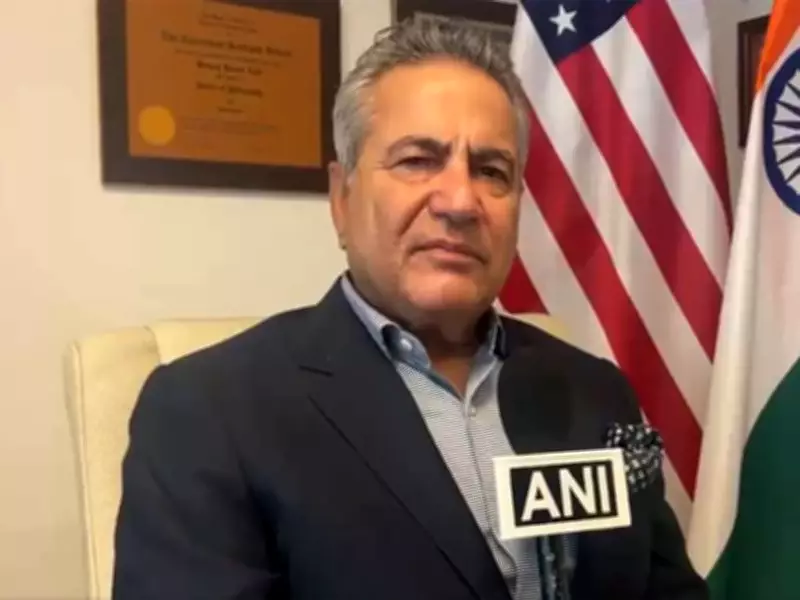
The stalled India-US trade deal has hit a wall that has little to do with spreadsheets or supply chains. It is, at its core, about raw electoral politics, according to Mukesh Aghi, President and CEO of the US-India Strategic Partnership Forum (USISPF). Speaking to ANI ahead of the USISPF Leadership Summit 2026 in Washington on Monday, Aghi said the issue is not technical but political.
"India's position has been: we want preferential tariffs, meaning give us lower tariffs than our neighbours, because that makes us more competitive. It's not about 10% or 20%; it's about being lower than our neighbours," Aghi explained. The neighbour in question is Pakistan. Currently, the tariff on India is 12.5%, while Pakistan's is 10%. "No political leader in India will accept that because it would essentially cost them elections," he said.
Trump administration understands India's constraint
Aghi believes the Trump administration understands this constraint. "That has to be sorted out, and I think that's where the administration will huddle and see how to find a solution that is a win-win for both India and the US," he said. The remarks come at a sensitive moment. India has already pushed back publicly against suggestions that US trade incentives were linked to the India-Pakistan ceasefire earlier this year. New Delhi's Ministry of External Affairs stated clearly that trade "didn't come up" in those discussions.

The tariff gap adds another layer of discomfort, as even while India was engaged in military tensions with Pakistan, Washington was offering Islamabad a more favourable tariff rate. Aghi emphasised that the USISPF Summit itself is focused on forward momentum rather than friction. "The Summit is about celebrating the success between the two countries," he said, highlighting priority areas such as artificial intelligence, quantum computing, critical minerals and space cooperation.
Critical minerals partnership seen as win-win
On critical minerals, Aghi described a strategic pivot away from dependence on Chinese supply chains. "What we saw last year was a strong message: you can't depend on China for critical minerals because you risk being held hostage to their supply chain," he said. Under the emerging framework, India would anchor processing and raw material sourcing, while the US would provide capital and technology, calling it "a win-win proposition."
Yet a broader trade breakthrough remains elusive. Until Washington addresses the tariff disparity and aligns India's tariff treatment with or below that of Pakistan, New Delhi's negotiators will find it politically difficult to finalise any agreement with the US.
Minister Piyush Goyal confirms political red line
This political red line was independently confirmed on another global platform by Union Commerce and Industry Minister Piyush Goyal. Speaking at the India Global Forum's 'UK-India Week 2026: Capital Frontiers' in London, Goyal clarified that while the broad contours of the Bilateral Trade Agreement have already been ironed out with the Donald Trump administration, New Delhi will finalise the pact only after securing a clear tariff edge over regional competitors.
Goyal detailed that the commercial pact remains on hold as India seeks a revised framework from Washington that guarantees lower duties for Indian exports compared to other Asian economies. "The whole deal was centred around that competitive advantage we got with that 18 per cent over our neighbours and competing countries. We were lower than all our neighbouring countries and all our ASEAN countries other than Singapore. That is why the deal was attractive for us," he said.
The initial blueprint was formulated when reciprocal tariffs under the US International Emergency Economic Powers Act (IEEPA) subjected Indian goods to a 50 per cent duty. Under that specific arrangement, Washington was to lower duties for India to 18 per cent, placing Indian businesses at a distinct advantage over competing regional nations. However, recent legal changes in the US tariff structure have necessitated a re-evaluation of the terms before the agreement can be executed.