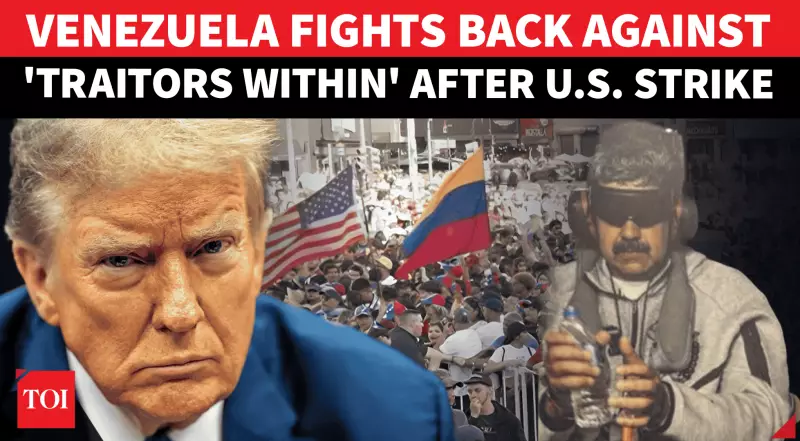
Venezuela has been thrown into a state of severe crisis and political uncertainty following a stunning development: the capture of its former President, Nicolás Maduro, by United States forces. The event, which took place recently, has triggered a chain of dramatic reactions both within the South American nation and across the globe.
Emergency Rule and Crackdown in Caracas
In response to the operation, the government in Caracas has declared a state of emergency. Authorities have issued orders for the arrest of any individuals found celebrating or expressing support for Maduro's capture. The warning is clear: those who dissent face the prospect of significant jail terms. This move signals a harsh crackdown aimed at suppressing any public jubilation over the former leader's fate.
Meanwhile, a swift consolidation of power is underway within the country. Siblings Jorge Rodríguez and Delcy Rodríguez are now at the helm, effectively controlling both the nation's parliament and the interim presidency. This rapid shift in the power structure indicates a determined effort to maintain governmental control despite the seismic event.

Maduro's Day in Court and Global Diaspora Reaction
As Venezuela grapples with internal measures, Nicolás Maduro has made his initial appearance in a federal court in New York. Facing serious charges that include narco-terrorism, the former president has entered a plea of not guilty. This legal proceeding marks a significant moment, placing a former head of state before the U.S. judicial system.
The news has electrified the vast Venezuelan diaspora scattered worldwide. Reactions among expatriates and exiles are a potent mix of joy, profound relief, and lingering fear. Many see this as a long-awaited moment of accountability and a potential turning point for their homeland. However, this hope is tempered by deep anxiety for family and friends who remain inside Venezuela, uncertain of how the escalating situation and government crackdown will affect their safety.
A Nation on Edge
The capture of Nicolás Maduro represents more than just a geopolitical event; it is a deeply personal and national shockwave. While some segments of the global community and the diaspora view it as a step toward justice, the immediate aftermath within Venezuela is one of tightened control and suppressed expression. The nation now watches as power consolidates under new figures while its former leader faces a foreign court. The path forward for Venezuela remains fraught with uncertainty, balancing between the hope for democratic change and the grim reality of an internal political clampdown.
The events of early January 2026 have set the stage for a complex new chapter in Venezuela's turbulent history, with implications that will resonate far beyond its borders.