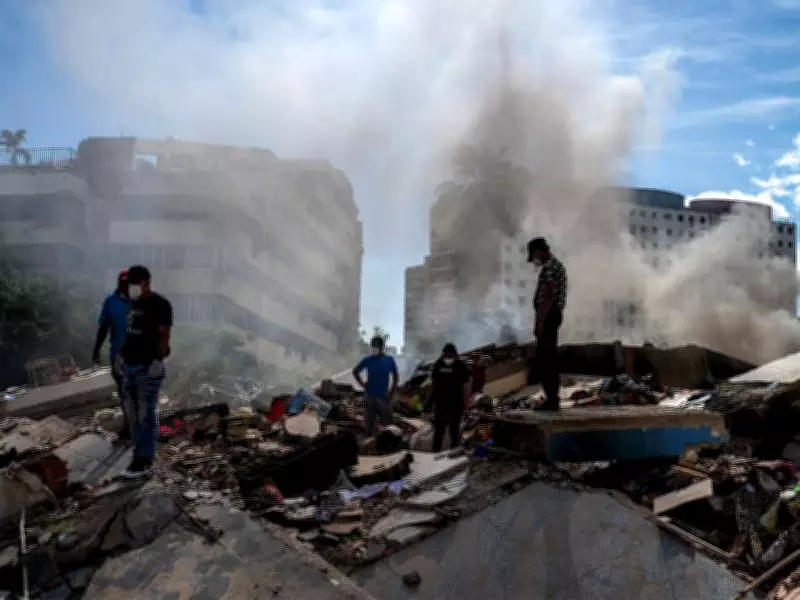
At least 1,450 people have died since last week's powerful earthquakes struck Venezuela, according to a top lawmaker, as reported by CNN. The US Southern Command confirmed that frantic rescue efforts are ongoing, with first responders assisting US Marines as they climb through rubble in search of survivors.
US Southern Command Leads International Rescue Operations
In a post on X, the US Southern Command stated: "Racing against the clock to save lives in Venezuela: First responders assist a U.S. Marine climbing through rubble during a search for survivors in earthquake-damaged structures. Operating day and night, these crews continue to support international search and rescue operations across the hardest-hit communities. At the direction of SOUTHCOM, assigned U.S. military forces are supporting US Department of State-led U.S. disaster assistance to the people of Venezuela."
Venezuelan Government Response
Venezuelan Acting President Delcy Rodriguez announced on Sunday the creation of a presidential commission to assess the condition of housing and infrastructure damaged by the earthquakes. She also extended school closures for another week, according to CNN. Rodriguez highlighted the rescue of an 11-year-old boy in Caraballeda, stating: "In these hours, every life is hope for Venezuela."

Economic and Political Context
The strongest quake to hit Venezuela in more than a century comes at a critical time for the country. Venezuela's economy, once booming, had already been crippled by years of US-led sanctions, hyperinflation, government corruption, and mismanagement of the oil sector, despite sitting on the world's largest oil reserves. Its GDP has shrunk by roughly 80% since 2013, as per CNN. The US capture of former President Nicolas Maduro in January further destabilized the nation. In his place, Rodriguez has been cautiously liberalizing the economy and courting foreign oil companies, while seeking relief from crushing sanctions. Although the US has eased sanctions and oil production has gradually increased, inflation remains high, and ordinary citizens continue to struggle with low pay.