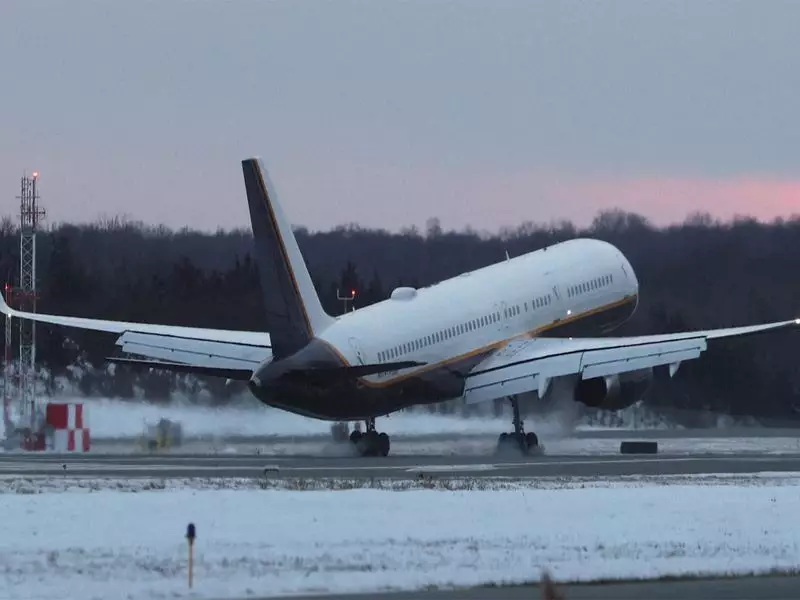
Venezuelan President Nicolas Maduro, accompanied by his wife Cilia Flores, has arrived in New York City to participate in the high-level segment of the United Nations General Assembly. This visit follows a significant and unusual event: the US military's capture of a Venezuelan government aircraft.
The Journey to New York and the Preceding Incident
The couple landed at John F. Kennedy International Airport on a commercial flight. Their arrival marks Maduro's first visit to the United States in several years and comes under the diplomatic protection of a US-issued visa for the UN event. However, the trip was preceded by a major diplomatic and security incident.
Just days earlier, on September 16, a US military aircraft intercepted and forced a Venezuelan government Boeing 747 to land in Florida. The aircraft, which was en route from Mexico to Venezuela, was seized under allegations of violating US export control laws related to sanctions. This action, described as a "capture" by the Venezuelan government, added a layer of tension to Maduro's subsequent travel to American soil.

Agenda at the United Nations General Assembly
President Maduro is scheduled to address the 78th session of the UN General Assembly on Wednesday, September 20. His speech is anticipated to cover several critical global issues. He is expected to strongly advocate for a multipolar world order, pushing back against Western hegemony. Furthermore, he will likely address the urgent need for reform within the United Nations system itself, arguing for a more equitable and representative global governance framework.
Other key topics on his agenda include the ongoing challenges in global food and energy security, exacerbated by conflicts and sanctions. Maduro is also poised to condemn the long-standing economic sanctions imposed on Venezuela by the United States and other nations, which he blames for the country's economic hardships.
Diplomatic Implications and Future Relations
This visit occurs amidst a complex and fragile state of relations between Washington and Caracas. The Biden administration has shown limited engagement, including granting sanctions relief for Venezuela's oil sector in a bid to stabilize global energy markets. However, core disputes over democracy, human rights, and the legitimacy of Maduro's government remain deeply entrenched.
The seizure of the Venezuelan aircraft just before Maduro's UN appearance is a stark reminder of the underlying hostilities. Analysts suggest that while the UN platform provides a venue for dialogue, the incident underscores the significant trust deficit and the potential for rapid escalation between the two nations. Maduro's presence in New York will be closely watched for any informal diplomatic contacts or signals regarding the future of this strained bilateral relationship.
In conclusion, Nicolas Maduro's journey to New York is more than a routine diplomatic mission. It is a high-stakes visit shadowed by a recent military confrontation, setting the stage for a significant address at the UN that will challenge existing global power structures while navigating the precarious path of US-Venezuela relations.