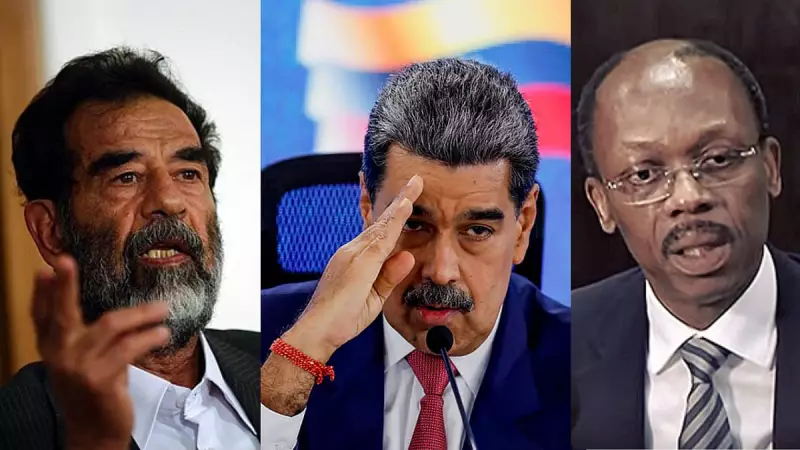
In a stunning and unprecedented military action, the United States has captured the sitting President of Venezuela, Nicolás Maduro, alongside his wife, Cilia Flores. The operation, ordered by US President Donald Trump, was executed in the early hours of Saturday, 4 January 2026, sending immediate shockwaves through the international community and raising profound questions about sovereignty and foreign intervention.
The Dawn Raid and Its Immediate Aftermath
The details emerging from the event point to a meticulously planned military manoeuvre. United States forces successfully apprehended Venezuelan leader Nicolás Maduro and First Lady Cilia Flores on Saturday morning. While the precise location of the capture remains undisclosed, the action represents a dramatic escalation in the long-standing political and economic crisis that has gripped Venezuela for years. The operation was authorised directly by the White House, marking one of the most audacious foreign policy moves in recent memory.
Historical Precedents and Global Reactions
This event draws immediate and inevitable comparisons to other historical instances where foreign leaders were seized by external powers. Analysts are already referencing the capture of former Iraqi dictator Saddam Hussein by US forces in 2003. The parallel highlights the gravity of the situation, suggesting that the United States has moved from applying diplomatic and economic pressure to direct, kinetic action against the Caracas regime. The global reaction is expected to be sharply divided, with some nations condemning the act as a violation of international law, while others may view it as a necessary step to resolve the protracted Venezuela crisis.

Uncharted Territory: Implications and Future Scenarios
The capture of President Maduro plunges Venezuela into a state of profound uncertainty. The immediate questions centre on the legitimacy of the current government, the potential for a power vacuum, and the risk of internal conflict or civil unrest. Furthermore, this action sets a significant precedent in international relations, potentially altering how global powers engage with regimes they deem adversarial. The world now watches closely to see how the Venezuelan military, political institutions, and the public will respond to this extraordinary development. The long-term consequences for regional stability in Latin America and for US foreign policy are immense and unpredictable.
The coming days will be critical in determining whether this operation leads to a swift political transition or fuels further instability and conflict within the troubled South American nation.