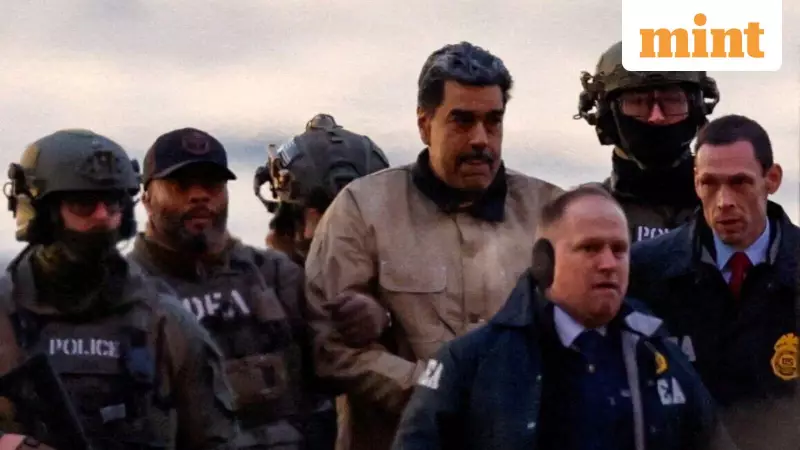
In a dramatic first appearance before a United States court, deposed Venezuelan leader Nicolás Maduro entered a plea of not guilty to federal drug trafficking and narco-terrorism charges on Monday. Maduro, who was brought to New York following his capture, defiantly declared himself an "innocent" and "decent man" while arguing he was unlawfully abducted.
Courtroom Drama and Pleas of Innocence
The hearing commenced at 12:02 pm local time (1702 GMT) in the Manhattan federal court, presided over by Judge Alvin Hellerstein. Maduro, dressed in jail-issued khaki pants and a blue short-sleeved shirt, was seated with his wife, Cilia Flores. The judge began by outlining the serious charges and informed the couple of their right to notify the Venezuelan consulate about their arrest.
Speaking through an interpreter, Maduro addressed the court, stating, "I’m innocent. I am not guilty. I am a decent man, the president of my country." He repeatedly asserted that he was a "kidnapped president" and a "prisoner of war." Throughout the proceeding, Maduro was respectful, taking extensive notes on a yellow legal pad and requesting that his writings "be respected" and returned to him.

When it was her turn, Cilia Flores, who appeared with bandages on her temple and eyelid, confirmed her identity as Venezuela's first lady. She also pleaded "Not guilty. Completely innocent." Her attorney, Mark E. Donnelly, revealed she sustained "significant injuries" during capture, potentially including rib fractures, and requested proper medical care, which the judge instructed prosecutors to provide.
Charges and Accusations Laid Out
US prosecutors have levied grave accusations against Maduro, alleging he orchestrated a vast cocaine-smuggling network. The indictment claims this network collaborated with some of the hemisphere's most violent groups, including Mexico’s Sinaloa and Zetas cartels, Colombia’s FARC rebels, and Venezuela’s own Tren de Aragua gang. These charges were originally cited by the previous Trump administration to justify Maduro's capture and transfer to the US for trial.
The presence of Drug Enforcement Administration agents in the courtroom, including Special Agent in Charge Frank Tarentino, underscored the case's significance. The legal proceeding, though brief and mandatory, marks the start of what is expected to be a protracted legal battle over the jurisdiction and validity of trying a foreign leader in an American court.
Emotional Exchanges and Next Steps
The hearing was not without confrontation. As Maduro prepared to leave, a man in the audience, later identified as 33-year-old Pedro Rojas, stood and loudly called him an "illegitimate" president, claiming to have been imprisoned by the Venezuelan regime. Maduro responded directly in Spanish, reinforcing his claim of being a kidnapped head of state.
The court proceedings concluded at 12:31 pm local time. Both Maduro and Flores agreed to remain in detention for now, with their attorneys retaining the right to request bail at a future date. The next court appearance for the Venezuelan leader is scheduled for March 17. This case sets a complex international precedent, intertwining issues of law, diplomacy, and the global war on drugs.