

Venezuela's political landscape has been thrown into turmoil following the dramatic capture of its former leader, Nicolás Maduro, by U.S. commandos. The regime is now scrambling to solidify its grip on power, with streets under heightened surveillance and citizens adopting a cautious stance.
A Swift Transition of Power
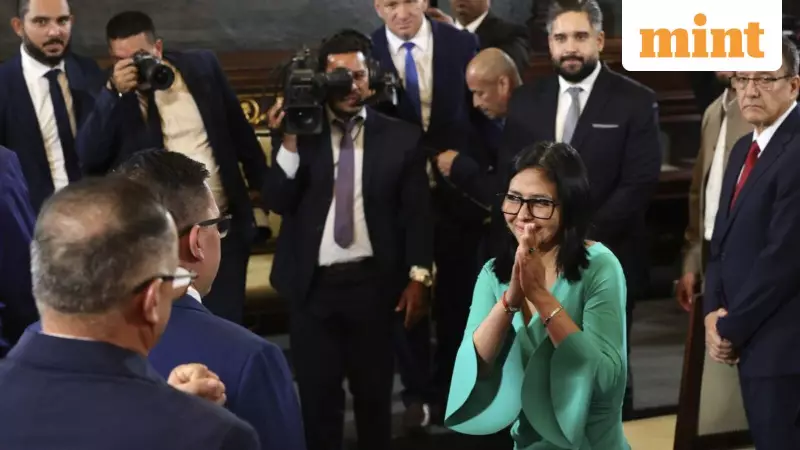
On Monday, 6th January 2026, Delcy Rodríguez, a top lieutenant of the ousted president, was sworn in as Venezuela's acting president in Caracas. In one of her first official acts, Rodríguez declared a 'state of external commotion'. This decree authorises security forces to search for and arrest individuals suspected of supporting the U.S. military operation that led to Maduro's capture along with his wife.
The show of force was immediate. Security checkpoints sprang up across the capital. Armed men, believed to be either state security forces or pro-Maduro civilian militias known as colectivos, conducted spot checks. They stopped drivers to inspect vehicles and even compelled people to unlock their mobile phones to scan for suspect messages. The country's main press union reported that at least seven journalists were detained, with three later released.

Loyalists Hold the Streets
Despite Maduro's physical absence, his influence remains palpable. The colectivos, paramilitary units notorious for brutally suppressing protests in recent years, were visibly active. They were seen guarding key locations over the weekend, including the presidential palace and a military site housing the mausoleum of Hugo Chávez, Maduro's predecessor. These armed civilians on motorbikes served as a stark reminder that Maduro's loyalists are still entrenched within the power structure.
In a parallel move to cement continuity, Maduro's hard-liners in the legislature, including his son known as Nicolasito, participated in a ceremony to swear in the National Assembly for a term extending until 2031.
A Nation of Resilience and Uncertainty
The reaction among ordinary Venezuelans has been a complex mix of fear, disillusionment, and weary resilience. Many felt unable to publicly celebrate Maduro's removal, unlike some of their compatriots abroad. Some resorted to briefly banging pots and pans from their windows on Saturday. For many, there is little sense of imminent change.
"There is no change at all," said Francys Machucas, a banking adviser in Caracas. "We are going to remain in the same situation because it’s the same people." She also expressed nervousness about former U.S. President Trump's statement that he would run the country, saying it did not inspire confidence.
Others, like lawyer Paula Gamez, hold a cautious, long-term optimism about a potential transition but doubt it will be swift, predicting no elections in the short term. Widespread confusion reigns, with many citizens, such as homemaker María Alejandra Álvarez, unsure about the exact events of the weekend or Rodríguez's true allegiances.
Amidst the political upheaval, the enduring spirit of a population hardened by years of hyperinflation, severe shortages, and a collapsed public service sector is evident. Close to a quarter of the population, some eight million people, have fled the country. Those who remain have developed ingenious survival mechanisms, from using messaging apps to track grocery supplies to taking jobs as caretakers for the homes of absent migrants.
This desensitisation extends to political violence. Passersby were seen casually taking photos at the bombed La Carlota air base, one of the sites targeted in Saturday's incursion. For others, like 70-year-old retiree Amelia Acosta, immediate practical concerns overshadow the political drama. Her top priority was finding a way to recharge her phone after explosions knocked out her power, leaving her without electricity and water.
As Carlos Rojas, a hot dog vendor in downtown Caracas, succinctly put it: "Governments come and go, but we’re still here, and we have to work." For now, Venezuela navigates an uncertain future under a new-old regime, its people focused on the daily struggle to adapt and survive.






