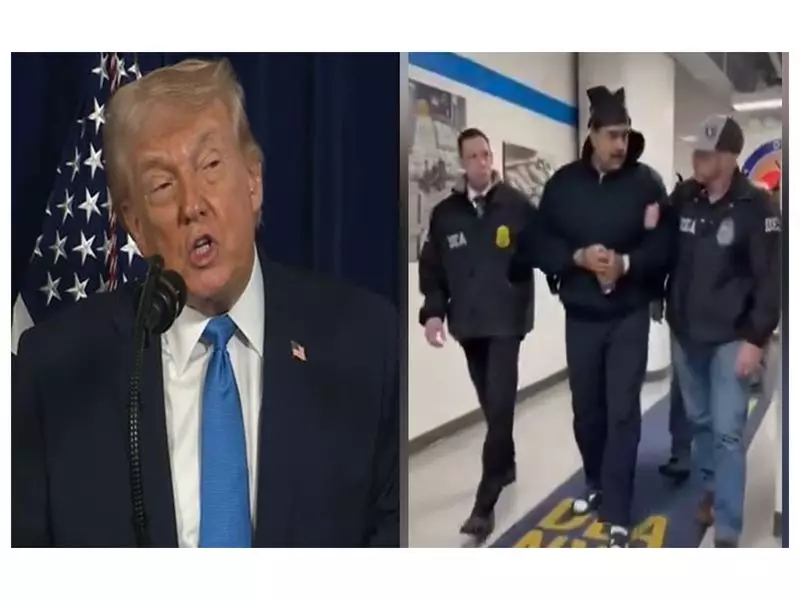
The United States has levied a series of severe economic sanctions against Venezuela, framing its actions as a necessary response to a complex web of threats emanating from the South American nation. The official justifications presented by Washington point to a triad of interconnected issues: the establishment of a socialist state, control over the world's largest oil reserves, and alleged state-sponsored narco-terrorism. This multi-pronged offensive has plunged Venezuela into a deep economic and humanitarian crisis, while sparking a fierce geopolitical debate.
The Core Rationale Behind the American Offensive
US officials have consistently articulated three primary reasons for their aggressive stance towards the government of President Nicolas Maduro. First and foremost is a fundamental ideological opposition to the socialist model implemented by the late President Hugo Chavez and continued by his successor. Washington views this as a direct challenge to democratic norms and free-market principles in its traditional sphere of influence.
The second, and perhaps most strategically significant factor, is Venezuela's vast petroleum wealth. The country sits atop the largest proven oil reserves on the planet. The US government alleges that the Maduro regime has mismanaged this resource, using oil revenues to entrench its authoritarian rule and fund activities contrary to American interests. By cutting off Venezuela's ability to sell oil on the international market, the sanctions aim to cripple the government's primary source of income.

Narco-Terrorism: A Grave Accusation
The third pillar of the US justification involves a serious criminal allegation. The American administration has formally charged President Nicolas Maduro and several top officials with "narco-terrorism." The US Department of Justice accuses the Venezuelan leadership of conspiring with the FARC guerrilla group from Colombia to flood the United States with cocaine, allegedly using drug trafficking as a weapon and a source of illicit revenue to keep the regime in power. This charge elevates the conflict from a political dispute to a matter of national security for the United States.
The cumulative impact of these sanctions has been devastating for the Venezuelan populace. The nation's economy has contracted dramatically, leading to severe shortages of food, medicine, and basic necessities. This has triggered a massive exodus, with millions of Venezuelans fleeing to neighboring countries, creating a regional refugee crisis.
Global Repercussions and Divided Opinions
The US campaign against Venezuela has not occurred in a vacuum. It has drawn sharp criticism from other global powers, notably Russia and China, who have significant economic investments in Venezuela's oil sector. These nations view the sanctions as a blatant example of American overreach and a violation of international law aimed at regime change.
Within Latin America, opinions are deeply divided. Some right-leaning governments have supported the US position, recognizing opposition leader Juan Guaido as Venezuela's legitimate president at Washington's behest. However, other left-wing and centrist nations in the region condemn the sanctions as coercive measures that primarily punish ordinary citizens while failing to resolve the political deadlock.
The situation remains a volatile stalemate. The Maduro government, backed by military support and foreign allies, has retained control despite immense pressure. The opposition, recognized by the US and dozens of other countries, lacks the power to dislodge him. The humanitarian toll continues to rise, and the geopolitical rift widens, making a near-term resolution appear increasingly elusive. The case of Venezuela stands as a stark example of how ideology, resource competition, and security concerns can converge to create a protracted international conflict with profound human costs.