
India's 100GW Nuclear Dream Hinges on Small Modular Reactors
India's ambitious 100GW nuclear power target by 2047 depends on Small Modular Reactors (SMRs) and private sector participation under the new SHANTI Act. Read the full analysis.

India's ambitious 100GW nuclear power target by 2047 depends on Small Modular Reactors (SMRs) and private sector participation under the new SHANTI Act. Read the full analysis.

NPCIL has launched its 2026 recruitment drive for the Tarapur Nuclear Power Station. Apply online from Jan 15 to Feb 4, 2026. Join India's premier atomic energy mission.

Meta Platforms has unveiled ambitious agreements to become an anchor customer for new and existing US nuclear power, aiming to fuel its AI ambitions with city-size electricity needs by 2030. Read the full story.
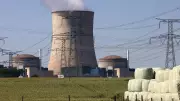
As India revisits nuclear power, experts highlight persistent industry delivery problems and novel hurdles with advanced reactors and fuel. Will this push last? Read the full analysis.

Venezuela's pursuit of nuclear technology with Iran and Russia reveals critical weaknesses in the global non-proliferation regime. Discover why experts say the NPT is no longer fit for purpose.

A landmark US-India partnership aims to develop thorium as a nuclear fuel, leveraging India's vast reserves. This move accelerates India's three-stage nuclear program and enhances energy security. Essential reading for UPSC aspirants.

NTPC Ltd is forging international collaborations with Rosatom, EDF & Holtec to achieve 30 GW of nuclear power by 2047, diversifying India's energy mix with SMRs and new fuel tech.

India and Pakistan exchanged lists of nuclear installations on New Year's Day under a bilateral agreement. The MEA confirmed the annual exchange aimed at preventing attacks. Read the full report.

India and Pakistan exchanged lists of nuclear installations under a 1988 pact, a key confidence-building measure. This marks the 35th uninterrupted annual exchange since 1992.
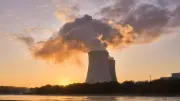
Top nuclear scientist Dr Anil Kakodkar discusses SMR challenges, PHWR scalability, and how India can fast-track its thorium program. Key insights on the new SHANTI Act and private sector role.

India's SHANTI Act ends state monopoly on nuclear energy, inviting private investment. Learn about the liability reforms, pricing debates, and the road ahead for clean energy goals. Read more.

Japan's Niigata assembly debates restarting the Kashiwazaki-Kariwa nuclear plant, the world's largest. A decision by Dec 22 could impact global energy trends. Read the full story.

India aims for 100GW nuclear capacity by 2047, leveraging new laws for private investment. We analyze the trade-offs between nuclear, renewables, and cost for a cleaner grid.

The US welcomes India's SHANTI Bill 2025, calling it a step towards stronger energy security ties and opening civil nuclear sector to private players. Read more.

The SHANTI Bill sparks debate on private sector involvement in nuclear energy. Can smart regulation ensure safety? Explore the implications for India's regional energy security.

President Droupadi Murmu has given assent to the SHANTI bill, a landmark law allowing private companies to build and operate nuclear power plants in India. Read how this reforms the energy sector.

President Droupadi Murmu grants assent to the Shanti Bill, enabling private sector participation in India's nuclear energy sector. A landmark move for energy security and clean power.

India's new SHANTI Bill allows private investment in nuclear energy and limits supplier liability for accidents. Learn about the policy shift and its implications for India's energy future.

India's Parliament passes the landmark SHANTI Bill 2025, opening the civil nuclear sector to private and foreign investment for the first time, aiming for 100 GW nuclear capacity by 2047. Read the full analysis.
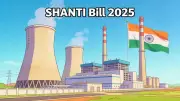
India's Lok Sabha approves the SHANTI Bill 2025, enabling private sector participation in civil nuclear energy to boost capacity and modernize safety regulations. Read the key changes.

India's proposed Shanti Bill 2025 allows private sector into nuclear energy but leaves critical accident liability questions unanswered. Read the full analysis of the bill's implications.

The proposed Shanti Bill 2025 aims to amend India's nuclear liability law, boosting foreign investment and domestic manufacturing for a clean energy future. Read the full analysis.

India's new SHANTI nuclear policy marks a significant liberalisation, aiming to boost energy capacity. However, experts raise credible concerns over relaxed liability norms and regulatory oversight. Read the full analysis.

India's new SHANTI Bill opens the nuclear value chain to private capital, aiming for 22.5 GW by 2032 and 100 GW by 2047 to boost energy security. Read more.

Lok Sabha passes SHANTI Bill 2025, allowing private firms to build nuclear power plants and removing supplier liability. Aims for 100 GW nuclear capacity by 2047. Read more.

The Lok Sabha has passed a landmark bill allowing private sector participation in India's nuclear energy sector. Union Minister Jitendra Singh hails it as a milestone for national development. Read more.

Congress MP Manish Tewari criticizes SHANTI Bill for diluting supplier liability, undermining regulator autonomy, and favoring corporate interests. He demands Joint Parliamentary Committee review.

As India revives its nuclear expansion with the Shanti Bill, aiming for 100GW by 2047, experts call for super-strict safety protocols and real-time data to prevent Chernobyl or Fukushima-like disasters. Read more.

India plans major changes to its civil nuclear law to boost capacity to 100 GW, aiming for clean energy dominance. Explore the key amendments and their impact.

Union Minister Piyush Goyal states the new nuclear energy bill will enable a continuous, reliable supply of clean energy, crucial for India's booming data centre industry. Discover how solar, wind, and nuclear will combine.