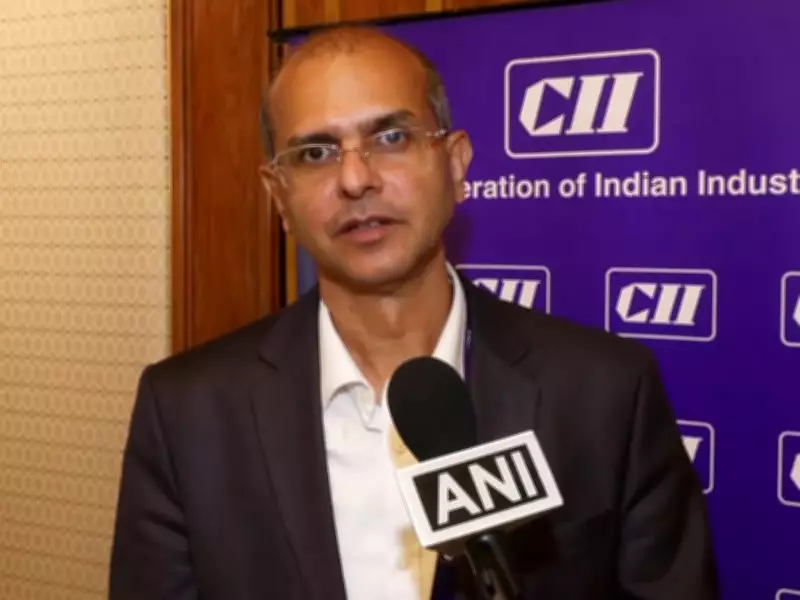
The government's push for cash flow-based lending is expected to significantly improve access to credit for micro, small and medium enterprises (MSMEs) by bolstering their financial health and enabling additional lending, according to Anurag Khandelwal, Partner at Price Waterhouse Chartered Accountants LLP.
Speaking to ANI on the sidelines of the CII Interactive Session on Credible Growth: Capital, Entrepreneurship & Financial Reporting, Khandelwal noted that government representatives highlighted measures to promote lending based on cash flows. "In the morning, there was a representative from the government authorities as well. They mentioned about making the investments based on the cash flows. So they are trying to help the MSMEs just to improve the overall cash flow situations and provide them additional lending," he said.
Implementation challenges and outlook
Khandelwal acknowledged that the reforms may face initial teething issues but expressed confidence in their success due to the government's sustained focus on the sector. "Some of these things... teething issues when you bring up any solution or you are trying to build any changes... Having said that, when you take the entire sector together with a clear focus from the government side, I think this is likely to flourish very soon, very quickly," he added.

Describing himself as a big fan of the MSME sector, Khandelwal highlighted that it contributes over 37-38 per cent to the Indian economy. He noted that the government has introduced several initiatives to support MSMEs, including improving access to finance.
Role of TReDS in addressing delayed payments
Highlighting the Trade Receivables Discounting System (TReDS), Khandelwal said the platform has helped address delayed payments by enabling supplier financing. "Historically, there have been issues when they were not getting paid in time and hence the working capital cycle was taking much longer. With this supplier financing arrangement coming in, at least the MSME gets paid in time and the corporates pay interest to the banks who are helping them to finance these transactions," he explained.
On governance and capital, Khandelwal emphasised that trust remains central to attracting investment and sustaining business growth. He added that investors are increasingly focusing not only on profits but also on how companies generate them, including governance standards and environmental, social and governance (ESG) practices.
Geopolitical and macroeconomic context
Khandelwal also noted that businesses are operating in an environment shaped by geopolitical tensions, macroeconomic uncertainty, technological disruption and climate-related challenges. India, he said, is also affected by global developments, including conflicts in the Middle East and Russia's conflict with NATO, which have disrupted supply chains and influenced interest rates.
Commenting on the government's recent initiatives, including free trade agreements (FTAs), Khandelwal described them as positive steps towards inclusive growth and the Viksit Bharat 2047 vision. He added that industry leaders have appreciated the government's reforms, particularly those aimed at supporting MSMEs.
Response to forced labour allegations
Responding to allegations by the US that Indian goods are produced using forced labour, Khandelwal said such claims should be assessed based on complete facts and should not be generalised. He added that while isolated instances may exist in parts of the unorganised sector, such practices are not common among large corporates focused on long-term growth.