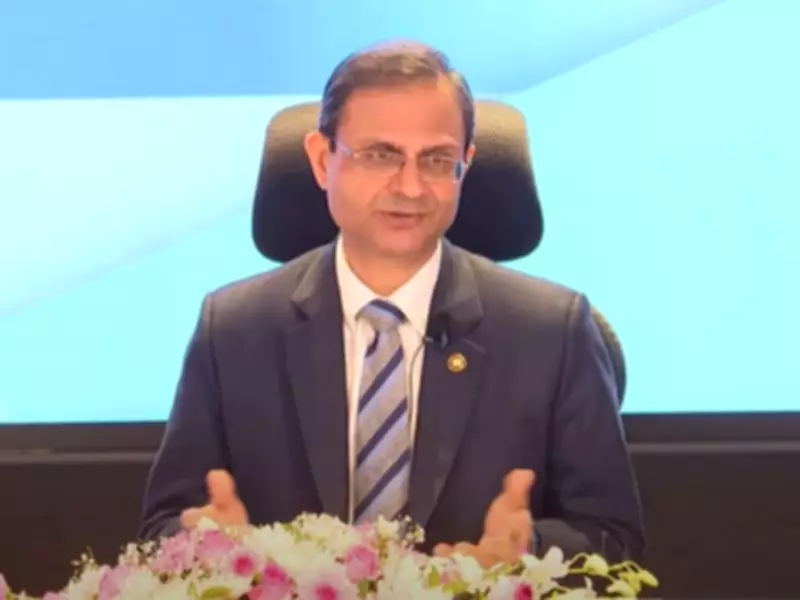
New Delhi [India], June 19 (ANI): Reserve Bank of India (RBI) Governor Sanjay Malhotra has emphasized that the Monetary Policy Committee (MPC) must remain vigilant regarding the inflation trajectory moving forward, particularly in light of the revision in fuel prices that occurred in May.
Fuel Price Impact on Inflation
"We need to be watchful of the inflation trajectory. Going forward, revision in retail prices of petrol and diesel in May would lead to higher fuel inflation in the coming months," Governor Malhotra stated in the minutes of the MPC meeting.
Food Inflation and Monsoon Risks
While the near-term outlook for food prices remains favorable, the Governor noted that risks stemming from a poor monsoon due to El Nino have escalated.

MPC Decision on Repo Rate
The MPC, during its policy announcement on June 5, decided to maintain the status quo, keeping the repo rate unchanged at 5.25 percent. This decision was unanimous among the committee members.
Governor Malhotra expressed a preference for a "wait and watch" approach and accordingly voted in favor of maintaining the policy rate while retaining the neutral stance.
Geopolitical and Weather Factors
The RBI Governor's policy approach is influenced by the evolving geopolitical scenario in West Asia and the potential impact of a poor monsoon.
Inflation and Growth Projections
The MPC revised its inflation forecast for 2026-27 upward to 5.1 percent, with a peak of 5.9 percent anticipated in the third quarter. Additionally, the economic growth projection for the current fiscal year was trimmed to 6.6 percent from the 6.9 percent estimated in April.
Governor Malhotra highlighted the uncertainty surrounding the assumptions made for inflation and growth projections. The extent of the conflict in West Asia and the intensity and geographical spread of monsoons could significantly influence the future course of inflation and economic growth.
Core Inflation Outlook
Although headline inflation for 2026-27 is projected to be on the higher side of the inflation tolerance band, the Governor pointed out that core inflation is projected at 4.7 percent for the fiscal year. When metals are excluded, core inflation decreases even further.
"Most of the increase in the projected headline inflation between the April policy and now is driven by food and fuel, which is supply driven. It may be a change in price level, which may or may not get generalised," the Governor observed.