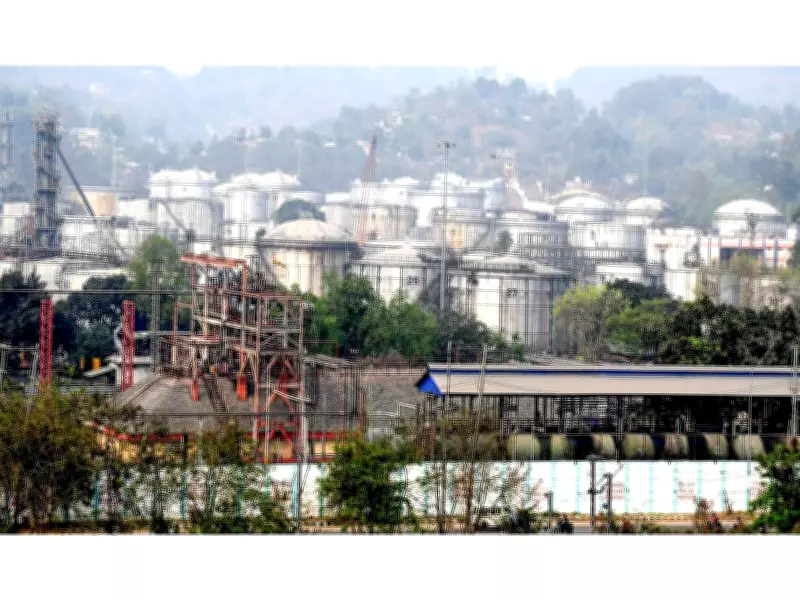
India's strong crude oil refining capacity significantly reduced the impact of recent energy crises stemming from West Asia, helping the domestic economy avoid the need for massive imports of refined petroleum products, according to a report by Ernst & Young (EY).
Refining Capacity Shields Economy
The EY report highlighted the evolution of India's petroleum economy, noting that while the country's dependence on imported crude oil has increased over the years, it has successfully built a substantial refining capacity to convert crude oil into petroleum products. This infrastructure has been instrumental in insulating the economy from price and supply shocks.
According to the report, India may continue to expand its refining capacity, which has already saved refining costs that would have been incurred if the country had been forced to directly import refined petroleum products. The report states, "India may continue to augment its refining capacity, which has helped save refining costs had India been forced to directly import refined petroleum products."

Rising Import Dependence and Domestic Production Decline
The report revealed that India's dependence on imported crude oil rose to over 90% in fiscal year 2026, up from 54.9% in fiscal year 1999. Meanwhile, domestic crude oil production fell to 26 million metric tons in FY26 from a peak of 35.9 million metric tons in FY12.
The growing demand for petroleum products has further driven the need for imports. Domestic consumption of petroleum, oil, and lubricants (PoL) products surged to 243.2 million metric tons in FY26, compared to 90.6 million metric tons in FY1999.
Energy Efficiency Improvements
Despite the increase in crude oil imports, India has steadily expanded its refining capabilities over the years. The report emphasized that this refining capacity has helped save costs that would otherwise have been incurred if India had been forced to directly import refined petroleum products.
According to EY, the country's energy efficiency has also improved over time. The energy intensity of India's output, as well as the use of petroleum products in GDP, has fallen over the years. This trend, the report said, augurs well for sustaining energy-efficient growth at a relatively high level over a longer period.
Strategic Reserves and Future Preparedness
Looking ahead, the report suggested that India should prepare for future supply and price shocks affecting critical commodities such as crude oil, gas, and fertilizers by building strategic reserves. It recommended augmenting India's strategic crude oil reserves to reduce vulnerability to external disruptions. The report also called for a detailed strategy covering the volume of reserves, purchase plans, and release mechanisms while taking into account carrying costs.
The report further said India should continue expanding its refining capacity to strengthen energy security and reduce dependence on imported refined products. At the same time, EY noted that the growing dependence on imported crude oil needs to be reversed through greater exploitation of domestically available crude resources. It also recommended accelerating the transition towards greener energy options and alternative sources of energy, including nuclear power.