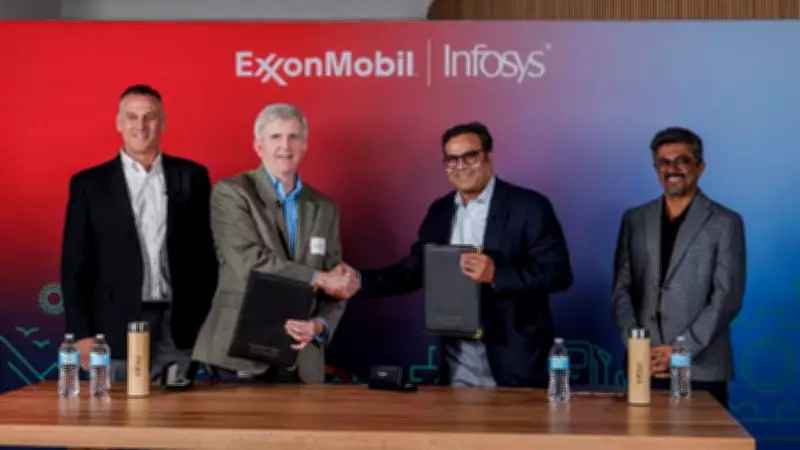
Infosys and ExxonMobil Deepen Collaboration on Advanced Data Center Cooling Solutions
In a significant move toward sustainable digital infrastructure, Infosys has announced the expansion of its strategic partnership with ExxonMobil. The collaboration focuses on the development and deployment of ExxonMobil Data Center Immersion Fluids, specialized cooling solutions designed to dramatically improve energy efficiency and optimize power utilization in data centers worldwide.
How the Partnership Will Transform Data Center Operations
The enhanced collaboration will leverage three key technological components: ExxonMobil's advanced immersion fluids, Infosys Topaz, and Infosys Cobalt. Together, these elements will create sophisticated cooling systems specifically engineered for artificial intelligence and high-performance computing workloads that demand exceptional thermal management.
Infosys Topaz, the company's AI-first service suite utilizing generative AI technologies, will enable real-time optimization of cooling operations. This intelligent system supports comprehensive energy use management, predictive maintenance capabilities, and the development of sustainable infrastructure through continuous monitoring and adjustment.

Infosys Cobalt, a comprehensive collection of services and platforms for cloud migration, will provide the foundational framework for deploying these advanced cooling solutions across diverse cloud and data center environments. The platform ensures seamless integration and operational support for enterprise clients adopting the new technology.
Target Industries and Implementation Strategy
The partnership will prioritize solutions for hyperscale cloud providers, global enterprises, and public sector organizations across multiple critical industries. Key sectors identified for implementation include:
- Financial services and banking institutions
- Telecommunications networks and providers
- Manufacturing and industrial operations
- Energy sector companies and utilities
- Government agencies and public infrastructure
This initiative represents a substantial extension of Infosys' ongoing commitment to energy innovation, decarbonization efforts, and cross-industry technological partnerships that address pressing environmental challenges while meeting growing computational demands.
Executive Perspectives on the Expanded Partnership
Ashiss Kumar Dash, Executive Vice President and Global Head of Services, Utilities, Resources, Energy and Enterprise Sustainability at Infosys, emphasized the strategic importance of the collaboration. "Our expanded collaboration with ExxonMobil marks a pivotal step in scaling next-generation solutions," Dash stated. "By leveraging Infosys Topaz for real-time AI-driven optimization and Infosys Cobalt for secure, scalable cloud deployment with ExxonMobil's advanced energy expertise, we are addressing the urgent need for more efficient high-performance digital infrastructure."
Dash further explained the expected outcomes: "This collaboration has the potential to deliver measurable results by reducing data center energy costs and carbon emissions, while empowering enterprises to scale responsibly and meet the demands of an AI-powered future."
Alistair Westwood, Global Marketing Manager at ExxonMobil Product Solutions Company, highlighted the synergy between energy expertise and digital innovation. "This collaboration reflects our commitment to innovation by allowing us to apply our energy and thermal management expertise to the evolving landscape of digital infrastructure," Westwood noted. "Infosys' suite of AI and digital services is enabling us to pilot and adopt infrastructure that is smarter, more efficient, and more resilient."
The partnership expansion comes at a critical time as global data center energy consumption continues to rise alongside increasing AI adoption and computational requirements. By combining ExxonMobil's specialized immersion cooling technology with Infosys' digital transformation capabilities, the collaboration aims to set new standards for sustainable data center operations while supporting the technological infrastructure needed for future innovation.