Manav Rachna University (MRU) is enhancing its science and engineering programmes for the academic session 2026-27 through strategic collaborations with government research institutions. These partnerships with CSIR-National Physical Laboratory (CSIR-NPL), Centre for Development of Advanced Computing (C-DAC), Institute of Pesticide Formulation Technology (IPFT), and CSIR-Central Electronics Engineering Research Institute (CSIR-CEERI), Pilani are integrated into select programmes, providing students with research internships, live project opportunities, and access to advanced laboratories.
Mandatory Internships and Practical Exposure
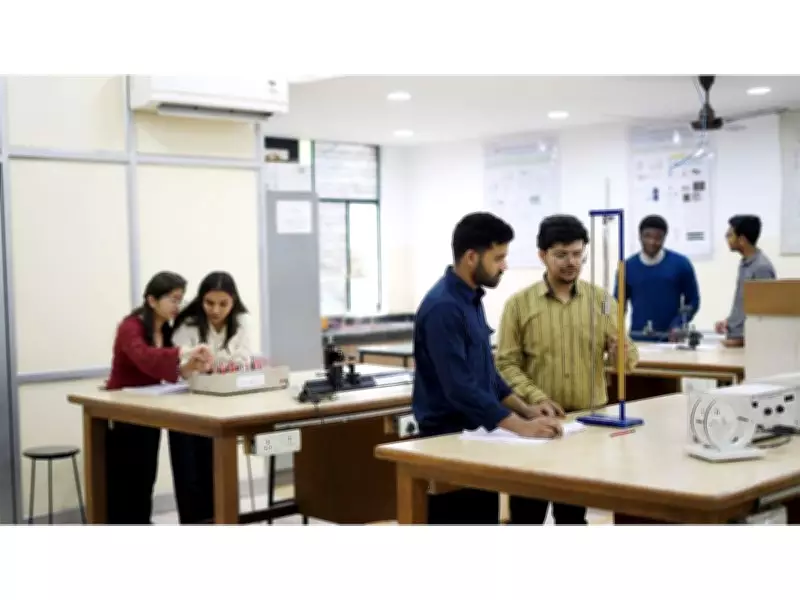
A key feature of MRU's academic model is the inclusion of mandatory six-month internships in select programmes. These collaborations offer structured opportunities for students to work on live projects, use advanced laboratories, and interact with scientists, gaining practical research experience as part of their degree.
Quantum Computing and Advanced Sciences
Students in M.Sc. Physics (Specialisation in Quantum Computing) undertake mandatory internships through MRU's collaborations with C-DAC and CSIR-NPL, focusing on quantum computing, quantum sensing, advanced computing, precision metrology, and advanced materials. The partnership with C-DAC, under the Ministry of Electronics and Information Technology (MeitY), also supports the B.Tech Computer Science (Specialisation in Quantum Computing) programme through curriculum inputs, expert interactions, and exposure to technologies aligned with India's National Quantum Mission.

Chemistry, Forensic Science, and Engineering
MRU's collaboration with CSIR-NPL supports M.Sc. Chemistry, B.Sc. (Hons.) Forensic Science, and selected B.Tech programmes, offering research internships, laboratory-based learning, workshops, expert lectures, and access to advanced scientific instrumentation in measurement science, environmental monitoring, advanced materials, and forensic applications. Students interact with scientists and gain exposure to nationally significant research.
Electronics and Communication Engineering
For Electronics and Communication Engineering students, the collaboration with CSIR-CEERI, Pilani provides hands-on exposure to semiconductor technologies, VLSI design, embedded systems, integrated circuits, and the Internet of Things (IoT). A CSIR-CEERI scientist serves as a Professor of Practice, and students undertake research internships and participate in live-funded projects. Two final-year ECE (VLSI Design) students are currently pursuing six-month internships at CSIR-CEERI, Pilani, working on IoT and Integrated Circuit Design projects.
Agrochemicals and Pest Management
Students in M.Sc. Agrochemicals and Pest Management gain practical exposure to agrochemical formulation, pesticide technologies, and sustainable agriculture through MRU's collaboration with IPFT. Industry exposure through Godrej Agrovet complements academic learning.
Quotes and Broader Impact
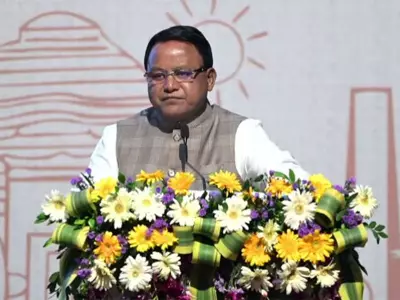
Dr. Deependra Kumar Jha, Vice-Chancellor of Manav Rachna University, stated, “The pace of change in science and technology makes continuous learning more important than ever. Universities therefore need to create academic programmes that encourage students to question, explore and apply knowledge in different contexts. Collaborations with government research institutions strengthen this approach by exposing students to diverse scientific environments and ways of thinking.”
Beyond student learning, these collaborations support curriculum development, faculty development, collaborative research, and expert-led learning, ensuring programmes remain aligned with scientific advancements and emerging industry requirements.