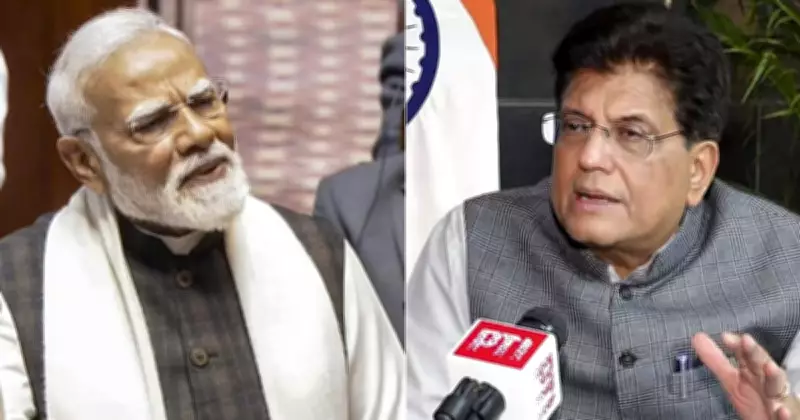
In a significant development on the economic front, Prime Minister Narendra Modi has publicly commended the recent series of trade agreements secured by the Indian government, highlighting their potential to boost the nation's economic growth and global standing. Simultaneously, the Prime Minister launched a sharp critique against the opposition Congress party, attributing current economic challenges to what he termed as "grave mistakes" and policy failures during the United Progressive Alliance (UPA) era.
Focus on Strengthening International Trade Partnerships
The Prime Minister's remarks come at a crucial juncture as India actively engages in negotiations to fortify its trade relationships with key global partners. Emphasizing the government's proactive approach, Modi underscored the strategic importance of these deals in creating jobs, attracting foreign investment, and enhancing India's export competitiveness on the world stage.
Anticipated India-US Joint Statement on Trade
Adding momentum to these developments, Commerce and Industry Minister Piyush Goyal revealed that India and the United States are likely to formalize their trade discussions with a joint statement in the very near future. According to Goyal, the two nations are poised to sign this significant document within the next four to five days, marking a pivotal step in bilateral economic relations.

This anticipated joint statement is expected to outline mutual commitments and frameworks aimed at resolving longstanding trade issues, facilitating smoother market access, and fostering greater economic cooperation between the world's largest democracy and one of its most crucial strategic partners.
Political Critique and Economic Narrative
In his address, Prime Minister Modi did not mince words when addressing the legacy of the previous Congress-led UPA government. He pointed to specific policy decisions from that period which, he argued, had hampered economic progress and left a legacy of structural weaknesses that his administration has had to diligently address.
The Prime Minister's dual focus—celebrating current achievements while critiquing past administrations—appears strategically aimed at shaping the political narrative around economic governance as the nation looks ahead.
Broader Implications for India's Trade Policy
These developments signal a robust and forward-looking trade agenda under the current government. The potential India-US joint statement, coupled with other recent agreements, suggests a concerted effort to integrate India more deeply into global value chains and secure favorable terms for its businesses and consumers.
As these diplomatic and economic maneuvers unfold, stakeholders will be closely monitoring the tangible outcomes and implementation of these proposed deals, which hold the promise of reshaping India's economic trajectory in the coming years.