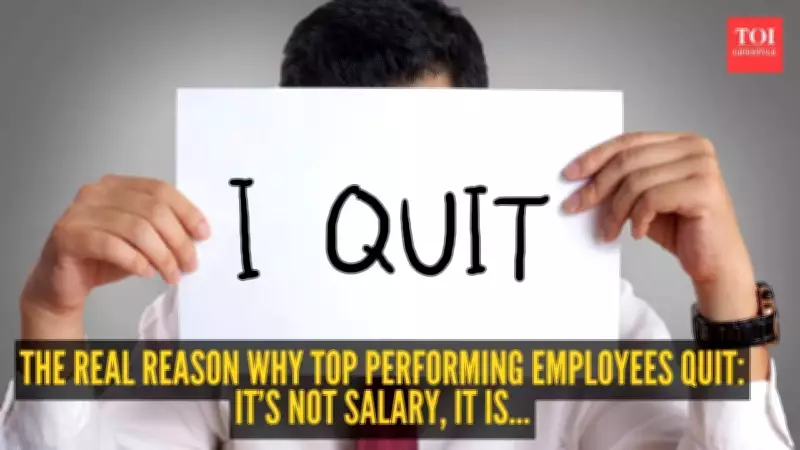
Workplace dissatisfaction often does not begin with long working hours or heavy tasks. It sometimes starts with a quieter, deeper wound: the feeling of being taken for granted. When someone pours their energy, talent, and time into a company and never hears a compliment in return, the spark slowly dims.
The Viral Story That Resonates
A recent viral post shared by Simon Ingari on social media highlights a quiet but powerful truth: many employees do not quit because of the work itself. They quit because they feel invisible at the workplace.
The story follows a top-performing employee whose salary grew modestly over three years. Starting at INR 80,000, it rose to INR 1,00,000 by the second year, and reached INR 1,20,000 by the third. On paper, it looked like steady progress. But in reality, his contributions far outpaced that incremental growth. He delivered consistently, solved tough problems, and strengthened the company’s performance, all without any meaningful recognition. And so, at the beginning of the third year, he submitted his resignation.

The Revealing Counteroffer
That is when something revealing happened. The same company that had previously cited budget constraints to limit his salary increase suddenly offered him INR 2,50,000 to stay. The raise only arrived when he was already ready to leave. By then, the gesture of a salary hike no longer felt like an appreciation; it felt like a last-minute negotiation. He chose to move on, accepting a role at another firm for a lesser salary of INR 2,00,000. It was not about the higher amount here. It was about the principle.
For two years, he had proven his value through action, but the company acted as if his worth did not exist until it was about to lose him. That moment taught him a hard truth about corporate culture: that an employee's loyalty only gets rewarded when they decide to quit. Appreciation and fair pay are dealt with reactively, not proactively.
A Wider Corporate Pattern
This is not just one story. It mirrors what many hardworking employees quietly live through every day. When you feel undervalued, it is not just about the salary. It is about fairness, respect, and being valued for your impact at work. When you do not get that recognition in a role, it can slowly erode your enthusiasm, even if your resume looks good.
For the employee, his decision was about more than money. It was about creating a boundary with his worth. He went to a place that not only recognised his value sooner but also signalled that it would invest in him. For the organisation, it was a missed opportunity, one that could have been avoided with greater appreciation sooner, better communication, and fairer compensation.
Key Lessons for Employees and Employers
The deeper lesson in this story is simple but powerful. Employees need to learn to see themselves clearly. Know your worth, articulate it calmly, and seek workplaces that match your contribution earlier, not after your resignation notice is on the table. At the same time, companies must learn that real retention does not come from last-minute offers. It comes from consistent respect, timely recognition, and compensation that matches performance.
When people feel valued, they do not just stay. They grow, innovate, and go the extra mile. When they do not, even the most committed performers will quietly plan their exit. The work might remain the same, but the heart behind it leaves long before the person does.
What do you think about this incident? Was the employee right in quitting the company for his principles, even if it meant a lower salary? Tell us in the comments below.