

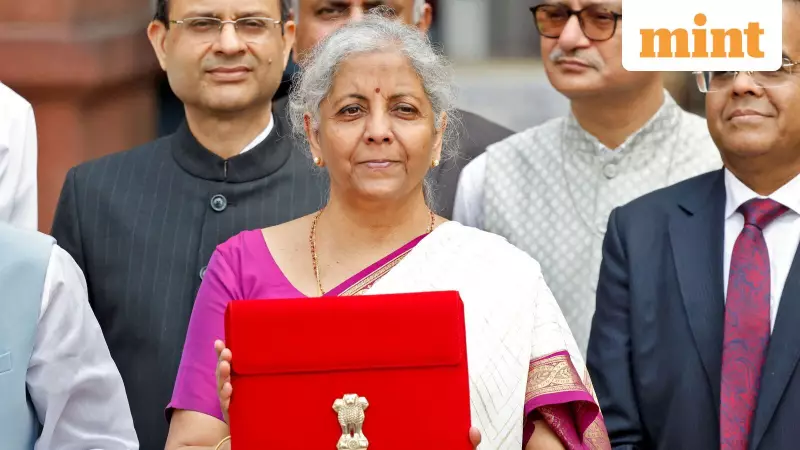
The stage is set for India's next major financial event, with the countdown to the Union Budget 2026 officially underway. Finance Minister Nirmala Sitharaman is expected to present the budget, continuing her tenure as the nation's finance chief. However, a unique calendar twist has sparked discussions in political corridors: the anticipated date of 1 February 2026 falls on a weekend.
Weekend Budget: A Precedent or An Exception?
This scheduling anomaly has led to questions about whether the government will stick to its traditional date or reschedule. Parliamentary Affairs Minister Kiren Rijiju has provided clarity, stating that the final decision rests with the Cabinet Committee on Parliamentary Affairs (CCPA), which will announce the date at an appropriate time. Historically, the government has maintained the February 1 timeline even when it coincided with a Saturday or Sunday.
Presenting the Union Budget on a weekend is not without precedent. In a recent example, the Budget for 2025 was delivered on a Saturday. Looking further back, former Finance Minister Arun Jaitley also presented budgets on weekend dates—28 February 2015 (Saturday) and 28 February 2016 (Sunday). This historical context suggests that a weekend presentation is a viable possibility for Budget 2026.

Beyond the Date: The Evolution of India's Budget
The Union Budget is steeped in tradition and has undergone significant transformation over the decades. One of the most visible changes in recent years has been in how the Finance Minister carries the document. Nirmala Sitharaman spearheaded this shift, first replacing the colonial-era leather briefcase with a traditional Indian 'Bahi Khata' (a red cloth folder) in 2019 for her maiden budget.
The evolution continued with the pandemic acting as a catalyst for digitization. The Union Budget for 2021-22 was presented using a digital tablet, marking a move towards a completely paperless process. This shift from briefcase to tablet symbolizes the budget's journey into the modern, digital era.
Another major structural change was the merger of the Railway Budget with the Union Budget. For 92 years, the railway finances were presented separately, usually a few days before the main budget. This practice ended in 2017, when the two were merged for the 2017-18 fiscal year, streamlining the presentation of the nation's accounts.
Memorable Moments and Enduring Rituals
The budget has witnessed its share of dramatic incidents. In 1950, a major security breach occurred when the budget was leaked before then Finance Minister John Mathai could present it in Parliament. This led to a change in the printing location, initially moved to Minto Road and later, post-1980, to the secured basement of North Block.
When it comes to marathon speeches, Finance Minister Nirmala Sitharaman holds a record. Her 2020 budget speech lasted for 2 hours and 42 minutes, making it the longest in duration. Interestingly, she was unable to finish the speech as she felt unwell, and it was later completed by then Lok Sabha Speaker Om Birla. However, in terms of sheer word count, the record is still held by former Prime Minister Manmohan Singh, whose 1991 budget speech contained a staggering 18,650 words.
The timing of the budget presentation has also evolved. Inherited from British colonial practice, budgets were once presented at 5 PM on the last working day of February. This changed in 1999, when the time was shifted to 11 AM to align with market hours, facilitate parliamentary business, and allow for same-day analysis by experts and stakeholders.
A Shift in Focus and the Sweet Prelude
The thematic emphasis of the budget documents has transformed over the years. Earlier budgets were often dominated by topics like disinvestment and fiscal consolidation. In contrast, recent budgets have pivoted towards digital initiatives, sustainable growth, and green development, with a strong focus on digital public infrastructure and technology-driven governance.

Amidst all these changes, one sweet tradition remains constant: the Halwa Ceremony. Held about a week before the budget presentation in the basement of the Finance Ministry in Central Delhi, this ceremony marks the start of the budget printing process. It is a ritual that symbolizes the beginning of the intense, locked-down period for the officials involved in preparing the crucial document.
As the nation awaits the CCPA's decision on the final date for Budget 2026, these facts and traditions highlight the rich tapestry of history, ritual, and modern adaptation that defines India's annual financial statement.





