

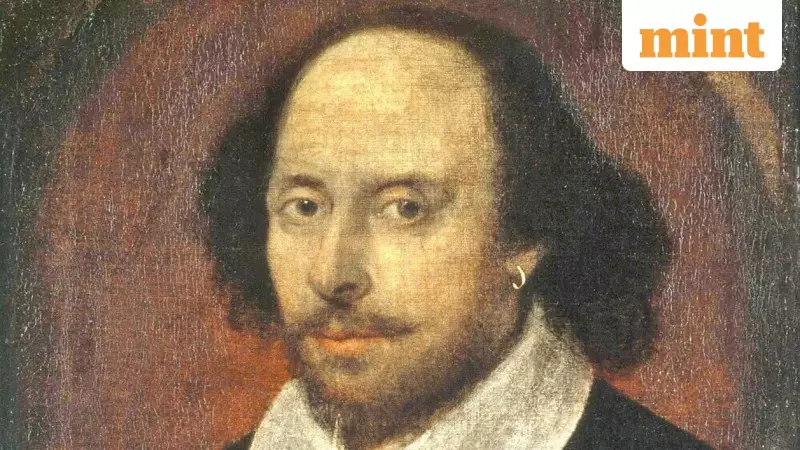
The timeless works of William Shakespeare, written over four centuries ago, found a striking resonance in the global economic theatre of 2025. The year's major events, from aggressive trade policies to central bank dilemmas and market volatility, seemed to play out like scenes from the Bard's most famous plays, offering a dramatic lens through which to view contemporary finance.
Global Colossus and the Steadfast Star
In a move reminiscent of a Shakespearean power play, former US President Donald Trump dominated the economic narrative. His persistent talk of imposing significant tariffs on trading partners created waves of uncertainty across the world. Drawing a parallel to Cassius's description of Julius Caesar, Trump seemed to "stride the narrow world like a Colossus." While economic theory suggested a unified global pushback, the reality saw widespread acceptance, with notable exceptions like India and China.
Markets, in their own theatrical response, coined the term 'Taco'—'Trump Always Chickens Out'—betting on a eventual reversal of harsh measures. This speculative strategy echoed Banquo's advice in Macbeth to "look into the seeds of time." Investors saw dips caused by tariff announcements as potential buying opportunities, anticipating a rebound.

Meanwhile, US Federal Reserve Chair Jerome Powell found himself in a relentless spotlight. Under pressure from the White House to cut interest rates more aggressively, Powell maintained a cautious stance due to inflation risks from tariffs, finally acting in September. His unwavering position brought to mind Caesar's declaration: "But I am constant as the northern star." Despite inflation remaining above the Fed's 2% target, further rate cuts are anticipated.
India's Economic Stage: Rupee, Gold, and Growth
The Indian economy presented its own Shakespearean subplots. The rupee's trajectory was a curious case. Even as the US dollar weakened globally, the Indian currency failed to gain strength, hampered by capital outflows and the absence of a trade deal with the US. It slid to a new level of ₹91 per dollar before recovering. The Reserve Bank of India's apparent reluctance to intervene heavily in the forex market led some to recall Marc Antony's words to the conspirators: "Take thou what course thou wilt." The rupee's future remains uncertain, pending stable foreign portfolio inflows and a US trade deal.
In contrast, gold enjoyed a remarkable rush in 2025. Soaring prices, driven by market uncertainty and demand from both investors and central banks diversifying reserves, proved the adage that all that glitters is not gold—except when it is. The rally extended to paper and demat forms of the metal, with silver also benefiting from the exuberance.
On the growth front, India's economy delivered a stellar performance. GDP growth for Q2 of 2025-26 hit 8.2%, surpassing optimistic forecasts. However, critics focused on the nominal GDP growth of 8.7%, sparking debate—a scenario where, as Troilus laments, achievements can mock you.
Defying the Doomsday Prophecies
Perhaps the most significant theme of 2025 was the failure of dire predictions. The feared global trade war did not materialize. India's exports and GDP did not decline. High inflation did not plunge the US into a recession. Contrary to many forecasts, crude oil prices settled in the low $60s per barrel against expectations of $80-plus, with fears blowing past "as the idle wind," in the words of Brutus.
The global economy proved resilient. The IMF projects world growth at 3.2% for 2025, with the US at 2% and India's growth for 2025-26 potentially reaching 7.3%. The year served as a lesson against believing the "juggling fiends" of excessive pessimism, as noted in Macbeth. As the world steps into a new year, the economic stage, much like life in Shakespeare's world, goes on.






